

Your service photo doesn't go on the application. Here's where it does.
Nobody hiring you wants your official portrait attached to a resume. The photo still matters, just not where most veterans put it.
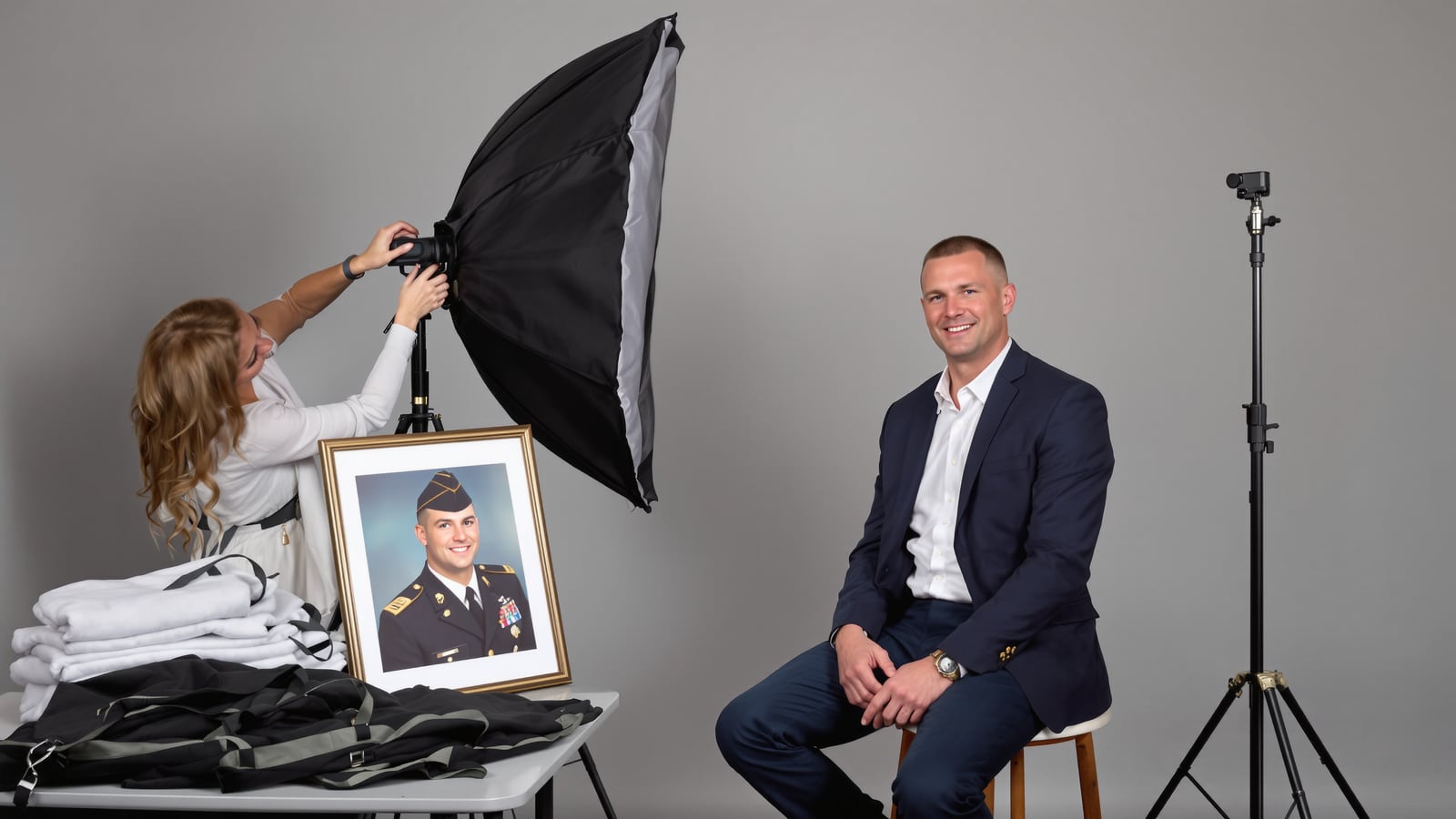
Quick answer: Leave photos off your resume and your application. Use a current civilian headshot on LinkedIn. Keep your official portrait as a supporting piece, and make sure everything in it matches your DD-214.
The premise is half wrong
A lot of transitioning service members assume the official portrait is the credential. Flag behind you, ribbons squared away, the best you've ever looked in a blouse or dress uniform.
It isn't. In the United States, resumes generally go out without a photo, because employers don't want to be seen sorting candidates by their appearance. Federal applications don't ask for one. Private-sector recruiters will often set an attached photo aside, and some will quietly wonder why you sent it.
What gets you hired is the paper behind the picture: your DD-214, your evaluations, your training records, your job title and what you actually ran. The photo is just the first thing a person sees online before they read any of it.
So the question isn't whether to put your service photo in your application. It's what the photo is doing when a hiring manager looks you up the night before your interview. And they will look you up.
Where a photo does matter
LinkedIn is the one. A profile without a picture gets passed over, and a profile with a bad one does you no favors either. Recruiters search by job title and skill, then click the profiles that look like a real, current person.
You have two candidates.
The official portrait:
- It's already done and it's free.
- It tells a recruiter at a veteran-friendly company who you are in half a second.
- It's often years old, sometimes from basic or your first duty station, and you look like it.
- Uniform plus a stiff pose can read as "still in," when you're trying to show you're ready for the next job.
A civilian headshot:
- It shows you in the clothes you'd wear to the interview.
- It looks like the person who'll walk in the door.
- It takes an hour to set up, and you have to ask someone for help.
My pick is the civilian shot as your main photo. Plain background, a window for light, a collared shirt or a jacket, shoulders up, a real smile. A friend with a decent phone can do it. Take forty shots and use one.
Then keep the official portrait in your "About" section or a featured post alongside a line on your service. That way it works for you without being the first impression.
Match it to the record
Here's the part people skip. If you do use the uniform photo anywhere, check it against your DD-214 first.
Rank, ribbons, badges, unit patches and your listed specialty should all line up with what your separation document says. Background-check companies verify service. A photo that shows a rank, a decoration or a school you didn't hold at separation hurts you, even if the mistake was innocent. Maybe it's from before a promotion, or a bad ribbon rack nobody caught.
If the photo and the paper disagree, fix the photo. Never argue with the paper.
Also know the rules on uniforms. Department of Defense policy limits wearing the uniform in ways that suggest the military endorses a business or commercial interest. A portrait on your personal profile is one thing. A uniform photo in an ad for your side business or consulting shop is another. Your service's own regulation governs this, and the rules are different for retirees, separated members and those still serving. Read it, or ask your installation's public affairs or legal office, before you post.
Get the records before you need them
The photo is the easy part. The record is where people get stuck.
Your DD-214 is the document employers, the VA and federal hiring offices all ask for. If you've lost it, you can request a copy at no cost. The National Archives runs the National Personnel Records Center, which keeps military personnel files, and its website walks you through the request. VA.gov points you to the same route.
Do it before you apply anywhere. A job offer that's contingent on verifying service shouldn't wait on a records request.
Federal jobs add another wrinkle. If you want veterans' preference, you'll need the right copy of your DD-214, and in some cases additional paperwork from the VA. USAJOBS spells out what each situation requires. Read the announcement closely, because the documents it asks for are the documents you'll be turned down for lacking.
And if you can't tell what your official personnel file actually contains, including whether it holds a photo, ask the records center. Don't assume. Files differ by branch and by era.
Make the whole package consistent
Hiring managers don't judge a candidate on a photo, a resume, a profile and a reference separately. They check whether they tell the same story.
- Your LinkedIn title, your resume and your DD-214 should name the same job, in plain English. Turning Your Military Record Into a Resume Civilians Can Read covers the translation.
- Your dates should match the record, down to the month.
- Your photo should look like the person who'll show up.
If you're still in, start this early. What to Do in the 18 Months Before You Take Off the Uniform lays out a timeline, and the records request belongs near the top of it.
What to do this week
- Request your DD-214 if you can't put your hands on it today.
- Shoot a civilian headshot in daylight and put it on LinkedIn.
- If you keep the uniform portrait, check rank, ribbons and badges against your separation papers.
- Read your service's regulation on wearing the uniform before it appears in anything commercial.
- Take the photo off any resume that has one.
You earned the uniform. The job market just wants to know who's walking through the door next, and the best way to show it is to look like him or her.
Ade Fisher
Young Men
Teaches the trades intake at a community college. Writes the manual he wishes his students arrived with.

Watch
Worth an hour of your evening
More from Military & Vets.
From channels we rate. Plays on YouTube.
Read next