

Your Dog Isn't Having Accidents. He's Sending Messages
Marking isn't a housetraining failure, so housetraining tactics won't fix it. Here's the order that does, starting with the vet and the right cleaner.
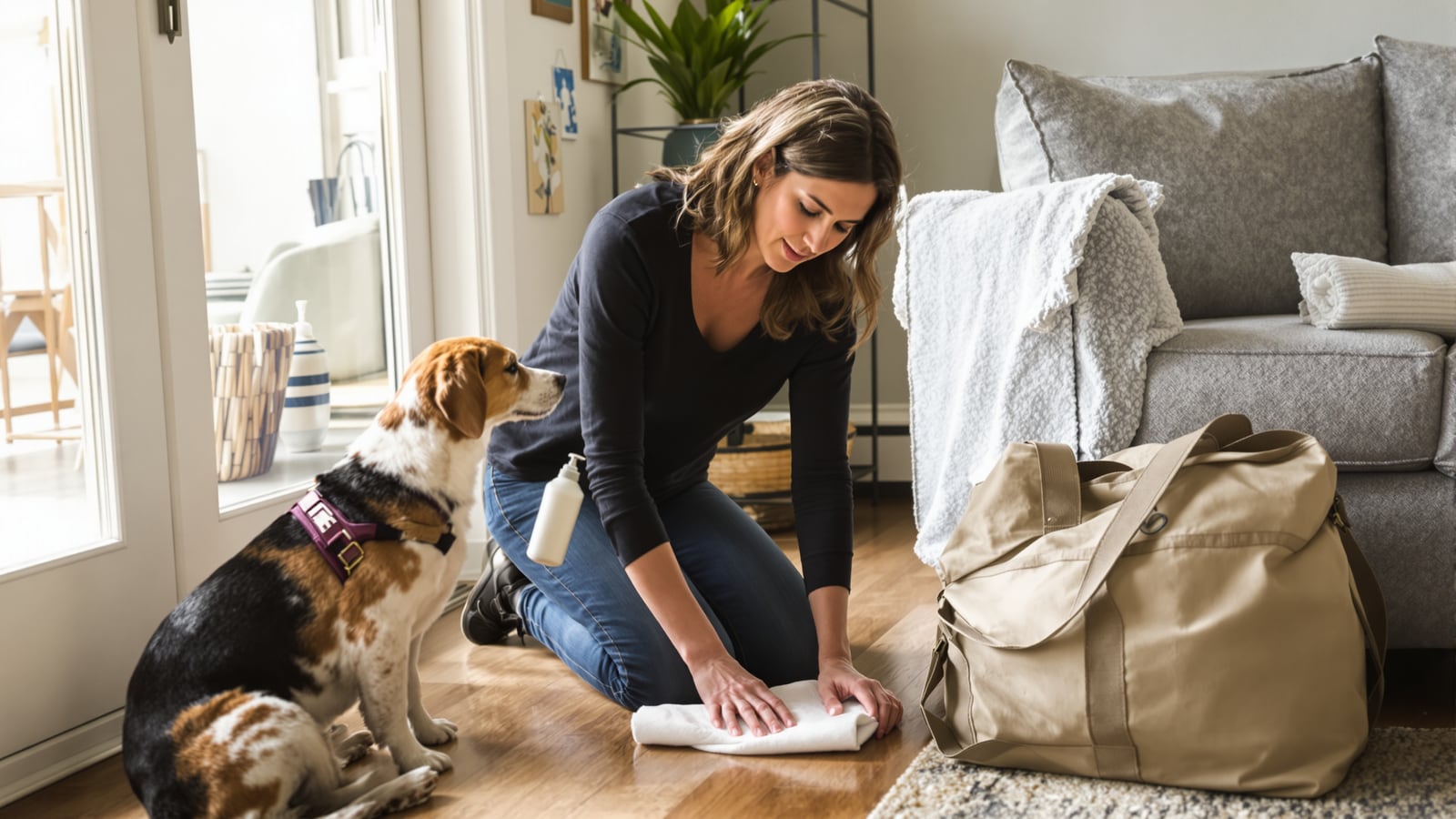
Quick answer: Rule out a medical cause with your vet first. Then clean every spot with an enzymatic cleaner, block the triggers, and stop the dog from rehearsing the habit. Skip the punishment. It makes this worse.
A friend drops his duffel bag by the front door. Your dog sniffs it for four seconds, lifts a leg, and adds a signature. Your friend laughs. You don't.
That's marking, and it isn't the same problem as a puppy who squats in the middle of the rug. A dog who's housebroken, who goes outside every morning like a gentleman, can still mark the corner of the couch. It's a small squirt on a vertical surface, not a full bladder emptied. Treat it like a potty-training failure and you'll spend months fixing the wrong thing.
Know what you're dealing with
Peeing is plumbing. Marking is communication. The dog is saying I live here, someone new showed up, or I'm nervous and this helps.
Here's how to tell them apart:
- Marking: small amounts, usually on upright things like furniture legs, curtains, door frames, bags, and the new dog bed. Often the same few spots.
- Plain accidents: a full puddle, usually on the floor, often when the dog's been left too long or is still learning.
- Something medical: sudden onset, a lot of little puddles, straining, or an older dog who's never done it before.
Males do it most, and neutered or intact doesn't make a dog immune. Females mark too. If you can't tell which you've got, watch him for a day. A dog who lifts a leg and sprays a tiny amount at three different spots is marking.
Start at the vet, not the spray bottle
Call your veterinarian before you do anything else. Urinary tract infections, bladder stones, diabetes, kidney trouble and age-related changes can all look like marking from the carpet's point of view. If your dog has suddenly started, is going far more often than usual, is straining, or you've seen blood, don't wait for the next paycheck. Get him seen.
If the vet finds nothing wrong, ask two more questions. Would neutering help a dog who's still intact? It reduces marking in many males, but it's no guarantee, and a habit that's been practiced for years can stick around afterward. And is there an anxiety component worth addressing? Your vet can talk you through that, including whether a referral to a trainer or behaviorist makes sense. That's their call, not mine.
Clean it like you mean it
This is where most owners quietly lose. Your dog's nose is vastly better than yours. If the spot still smells like urine to him, it's still a bulletin board, and he'll keep updating it.
Regular household cleaners don't solve it. Anything with ammonia is worse, since urine itself contains ammonia and the smell reads as an invitation. Buy an enzymatic cleaner made for pet urine. It breaks down the odor-causing compounds instead of covering them.
A few details that matter:
- Find every spot. A cheap UV flashlight shows old stains in a dark room. You'll find more than you expected. It's humbling.
- Soak, don't dab. Urine goes deeper than the stain. Saturate the area, let it sit as long as the label says, and don't rush it.
- Let it air-dry. Don't cover it or steam-clean it right away. Heat can set the smell into the fibers.
- Do the padding too. If it soaked through carpet into the pad or subfloor, surface cleaning won't be enough. It may need a professional, or a replaced section.
If you rent, do this properly now. A deposit conversation later costs more than a bottle of cleaner. Leave the place better than you found it.
Take away the targets
Dogs mark what smells new or smells like another animal. A guest's bag, a pair of shoes, a baby's gear, the carpet where the neighbor's dog stood at the window. Remove the temptation while you work on the habit.
- Put bags, laundry and shoes in a closet or up off the floor.
- Block access to the favorite rooms with a gate or a closed door.
- Keep the dog on a leash tethered to you indoors when you can't watch him. A dog attached to your belt can't sneak off to the back bedroom.
- Crate him when you can't supervise, if he's crate-trained. Most dogs won't soil where they sleep, and that's your best tool for breaking the cycle.
For a male who's actively marking, a belly band can protect your furniture while you retrain. It's a stopgap, not a fix. Change it as soon as it's wet, or you've traded one problem for a skin problem.
Catch it before it happens
The pattern you want to break is the dog walking up, sniffing, and lifting a leg with nobody noticing. Every time he does it uninterrupted, he's practicing.
So watch him. Sniffing hard at one spot, circling, and a stiffening posture are all tells. When you see them, interrupt calmly. A quick "Ah-ah," a leash tug, a move toward the door. Then take him outside and reward him the second he marks there. Treats in your pocket, delivered at the moment it happens, not thirty seconds later.
Marking outside isn't the enemy. You want him to do it outdoors, on the walk, in the yard. Give him a clear place to do it and make it pay off.
The basics help more than people expect. A dog who knows sit, stay and come has a job and a leader, and that steadies a nervous dog. If you haven't built that foundation, start with Sit, Stay and Come in Fifteen Minutes a Day. If the household is new or changed, such as a move, a baby or another animal, go back to the structure in What To Do The First Seven Days With A New Puppy. It works on adult dogs too.
What not to do
Don't rub his nose in it. Don't yell after the fact. Dogs don't connect punishment with something that happened five minutes ago. They connect it with you coming home angry and urine being present. A scared dog marks more. You've just made the bulletin board a little more urgent.
Be firm, be consistent, and be calm. A man who's in charge doesn't need to raise his voice.
What "permanent" actually means
Nobody can promise you a dog who'll never mark again. Anybody who does is selling something. But you can get very close to it, and the way you do is boring.
Rule out the medical cause. Clean so thoroughly the dog can't find the spot. Manage the triggers while the habit fades. Reward the right behavior outside. Keep it up for weeks, not days.
Most dogs improve noticeably with that. When the habit comes back, usually after a change at home, you already know the routine. Go back to leash tethering, re-clean, and reward outdoors. If it won't budge, bring in a certified trainer, and tell your vet what you've tried.
Your dog's not being spiteful. He's doing what dogs do, in the wrong place. Show him the right one, and don't quit before he gets it.
Wes Dunbar
Country & Skills
Grew up on an acreage and never quite left. Covers trucks, trades, land, and how to do the thing yourself.

Watch
Worth an hour of your evening
More from Dogs & Pets.
From channels we rate. Plays on YouTube.
Read next