

The septic inspection your home inspector didn't do
A passing home inspection says almost nothing about the buried tank and drain field you're about to own. Here's how to find out what you're buying.
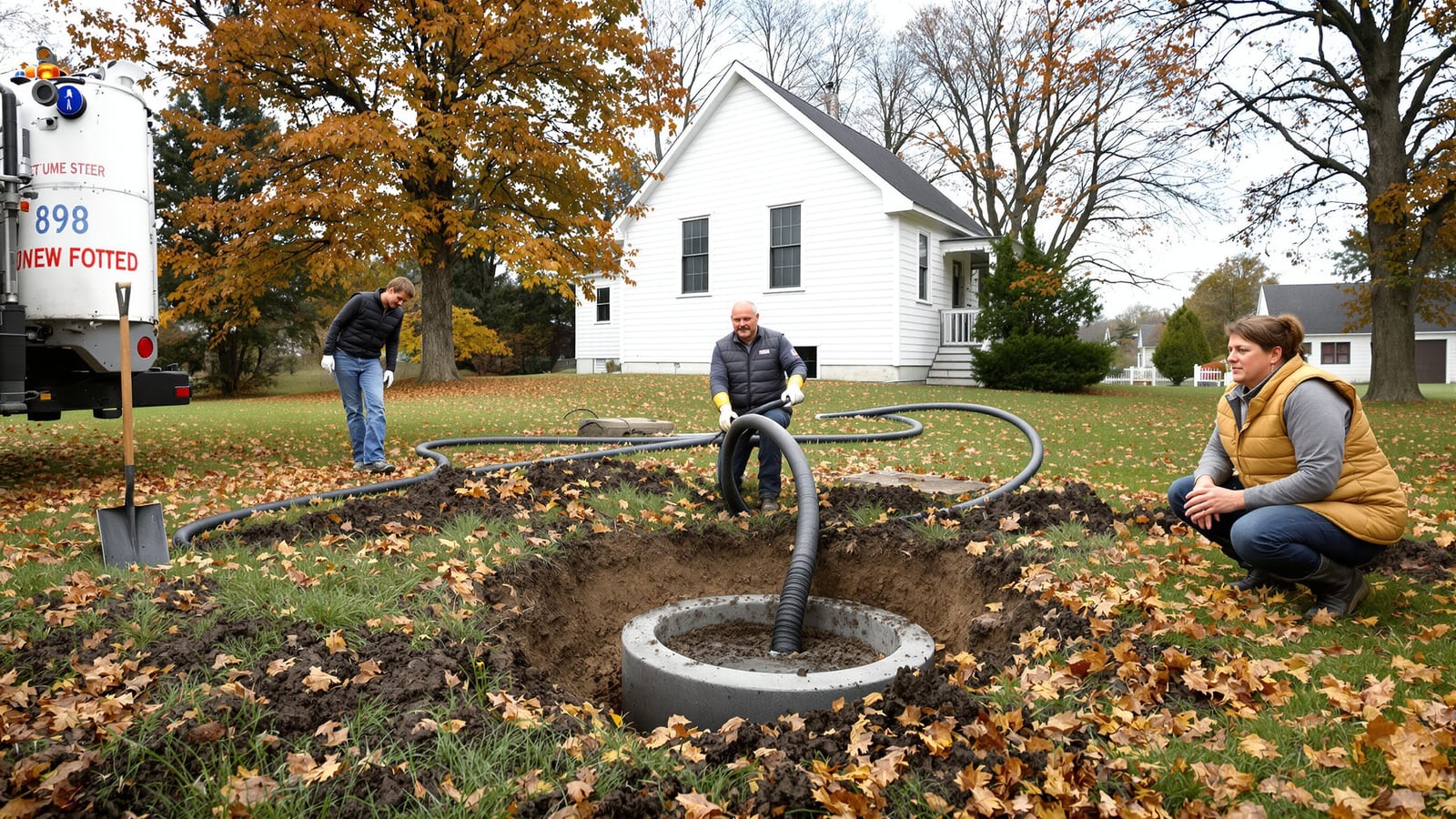
Quick answer: Hire a licensed septic inspector separate from your home inspector, and write it into the contract as a contingency. Make sure the tank gets pumped and the lids get opened. Pull the county's permit file before you spend a dime on anything else.
A general home inspector will run water in the sinks, flush every toilet and write "functioning at time of inspection." That sentence tells you the pipes leave the house. It doesn't tell you where they go, or whether the ground out there can still take the water.
On a municipal sewer, that gap doesn't matter. On septic, it's the most expensive gap in the whole purchase.
Why the flush test proves nothing
A septic system is two parts. The tank is a buried concrete, fiberglass or plastic box where solids settle out. The drain field (also called the leach field or absorption area) is a set of buried lines where the liquid soaks into the soil.
The tank is the cheap part. The field is the part that dies. And a field that's failing can look perfectly healthy for months, because the soil only gets overloaded when real water use piles up on it.
Picture a house that's been vacant since the estate sale. Two people lived there for years, now nobody does. The inspector flushes five toilets and runs the tubs for ten minutes. Nothing backs up. Move in with a family of five, add a few loads of laundry, and the yard gets soggy by the second month.
The inspection wasn't wrong. It was just a test that couldn't fail.
What a real septic inspection covers
Hire someone whose business is septic: a licensed inspector or a licensed pumping contractor. Many states license or certify them, and rules differ by state and county, so ask the county health department who's approved locally. Also ask whether the inspector has a stake in repairs. You want the opinion, not the sales call.
A thorough inspection usually includes:
- Locating the tank and exposing the lids. If the lids are buried, someone digs. Expect to pay a little extra for that.
- Pumping the tank. With the tank empty, the inspector can see the walls, the baffles and the inlet and outlet pipes. A full tank hides cracks and crumbling baffles.
- Checking the liquid level before pumping. If it's well above the outlet pipe, the field may not be accepting water.
- Watching for backflow from the field into the tank after pumping.
- Probing and walking the drain field. Soggy spots, a sewer smell, or grass that's suspiciously greener over the lines are all warnings.
- A hydraulic load test. Pushing a measured amount of water through the system shows how the field handles real volume. Not every inspector does one, so ask for it by name.
- Checking the pump, alarm and float switches if the system uses a pump chamber or an aerobic unit.
Some inspectors offer a cheaper "visual only" report. Skip it. It's the flush test with a clipboard.
Get the paper first
Before the inspector shows up, call the county health or environmental department and ask for the file on the property address. You're looking for:
- The original septic permit and the as-built drawing showing where the tank and field sit.
- The rated capacity, which is almost always tied to the number of bedrooms.
- Repair or replacement permits over the years.
- Any violation notices.
The bedroom count matters more than people think. If the system was permitted for three bedrooms and the listing says four, somebody finished a room without permission. That can mean an undersized system, trouble at resale, and a county that wants a say. Whether you or the seller carries that problem is something to settle with a real estate attorney, not guess at.
Ask the seller for pumping records too. A tank pumped every few years with receipts is a very different animal from one nobody's touched since the Clinton administration. The EPA's commonly cited guidance is every three to five years for a typical household, though your usage and tank size change that.
Where it goes wrong
The seller won't cooperate. Pumping and digging up lids on somebody else's property takes their permission. Put it in the contract up front, not after you've fallen in love with the kitchen.
The timing is bad. Frozen ground, a drought or a week of heavy rain can all skew what the inspector sees. A good one will tell you what the conditions allow them to conclude.
The report says "passed" and you read more into it than it says. An inspection is a snapshot. It can find a failing system. It can't promise a healthy one will last ten more years.
The tank location is unknown. Older properties sometimes have no records at all. A probe or a locator can find it, but a system with no paperwork is a risk in itself, and some counties will treat it as unpermitted.
Nobody asks about the well. Lots with septic often have a private well too. Distances between the two are regulated, and some loan programs and lenders ask for septic or water testing. Ask your lender early what they'll require.
Put it in the contract
Your agent and a real estate attorney can word this for your state. Customs vary widely: some states and counties require an inspection at transfer, and others leave it entirely to the buyer. What you want is a clause that does the following:
- Gives you a septic inspection contingency with its own deadline, separate from the general inspection.
- Requires the seller to allow pumping and exposure of the lids.
- Spells out who pays for the pumping, which is often the buyer, and is negotiable.
- Lets you walk away or renegotiate if the report finds a defect.
If you're in a competitive market, you can shorten the window, but don't drop the inspection. How to win a bidding war without waiving your inspection covers how to stay competitive without going in blind. And The Home Inspection Is Your Last Cheap Exit makes the broader case for why this window closes fast.
What the math looks like
These numbers are illustrations, not quotes or market data. Costs swing wildly by soil type, county, system design and how far the crew has to haul.
Say a septic inspection with pumping runs somewhere in the hundreds of dollars on a house priced at $350,000. Say a full drain field replacement, if the soil allows a conventional one, runs into five figures, and more if the lot needs an engineered system. The inspection costs a small fraction of one percent of the price. The surprise could cost several percent.
Now say the report finds a failing field. You've got options. Ask the seller to repair it before closing, ask for a credit, renegotiate the price, or walk. All of those are on the table only if you wrote the contingency. After closing, none of them are.
If you're weighing the whole budget, The Bank Will Approve You For Too Much House is worth a read. Keep a repair cushion for a system you can't see.
After you close
Treat the system like the piece of equipment it is.
- Pump on a schedule and keep every receipt. The next buyer will ask, and the paper adds value.
- Don't drive or park on the drain field. Compaction kills it.
- Keep trees and big shrubs off the lines. Roots find water.
- Stagger laundry across the week instead of five loads on Saturday.
- Flush toilet paper and nothing else. Wipes labeled "flushable" aren't.
- Go easy on bleach, solvents and the garbage disposal.
And if you ever sell, do what you'd want done for you: get the tank pumped and the records in a folder. Leave it better than you found it.
Laws, fees and requirements vary by state and county, so check with a licensed real estate attorney, your lender and a local agent before you sign anything. None of this is individual legal or financial advice.
A house with a failing septic isn't a bad house. It's a house with a price nobody's told you yet.
Ray Okonkwo
Money & Business
Former commercial banker turned small-business owner. Covers salary, credit, margins and the arithmetic nobody does before signing.

Watch
Watch how it's done
Picked for this article.
From channels we rate. Plays on YouTube.
Poor Pumper Society
Inspect The Septic Tank BEFORE You Close
Delaware Valley Septic, Sewer, & Storm
FAILED Septic Inspection for New Home Buyer
Read next