Your first month with hearing aids, and all that noise
The turn signal sounds like a jackhammer and your own voice sounds like a barrel. Both fix themselves, if you do the four weeks right.
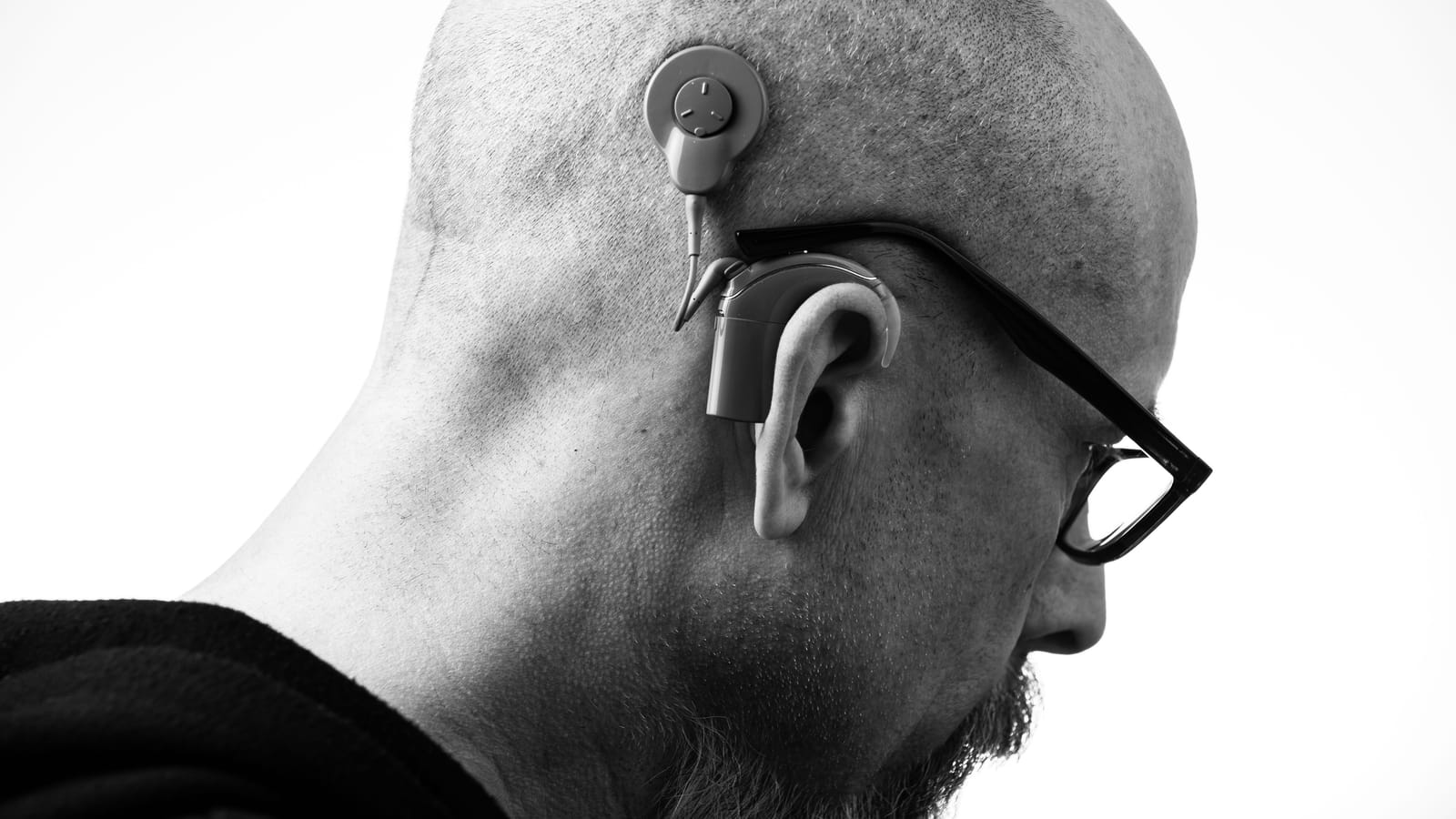
The turn signal will startle you. That's usually the first one. You pull out of the parking lot, flip the stalk, and something that used to be a polite tick is now a man with a hammer in your back seat. Then the refrigerator. Then the sound of your own pant legs walking.
None of that's a malfunction. That's your ears doing their job for the first time in about eight years, and your brain having no idea what to do with the delivery.
The devices are the easy part. The month after you get them is where most people quit, stick them in a sock drawer, and tell their wife it didn't take. So plan the month.
Don't debut them at a restaurant
Whatever you do on day one, do it alone and do it at home. A quiet house is the right laboratory, because it isn't actually quiet and you're about to find out how loud it's been all along.
Read a newspaper out loud for ten minutes. Sounds ridiculous. Do it anyway. You need your brain to lock your own voice, at normal volume, to the new signal, and reading aloud is the fastest way to do it.
Then run the kitchen faucet. Then crumple a grocery bag. You're not torturing yourself, you're building a reference library. Every one of those sounds was there last week. Your ears just weren't invoicing you for them.
Four to six hours the first day is plenty. Then take them out and let the day be quiet again.
Your own voice is the worst part, and it's temporary
Nobody warns you that you'll sound like you're talking into a coffee can. The technical name for it's the occlusion effect, and it happens because there's now something in your ear canal bouncing your own low frequencies back at you.
Two fixes. The fitter can open up the dome, which is the little rubber tip on the end, to let more sound vent out. Or the software can trim the low end. Both are five-minute adjustments at a follow-up.
What you should not do is decide silently that this is how it's going to be forever. Most guys who hate their hearing aids hate one specific, fixable thing and never said it out loud.
Keep a complaint log
Get a notebook or use the notes app on your phone. Every time something sounds wrong, write down three things: where you were, what the sound was, and what it sounded like.
"Tuesday, diner booth by the kitchen, could not separate my brother's voice from the dish tub."
"Thursday, hugged my granddaughter and got a whistle in my left ear."
That last one is feedback, and it usually means the fit is too loose or the volume is pushed past what the seal can hold. Your audiologist can chase it in about ten minutes, but only if you can tell her when it happens. "Sometimes it squeals" gets you nothing. "It squeals when I put on a ball cap" gets you a fix.
Bring the log to every appointment. Bring your wife too, because she's got a list of her own and hers is more accurate.
Ask if they verified the fit with a probe microphone
This is the single most important question in the whole process and almost nobody asks it.
Real-ear measurement means they put a thin probe tube in your ear canal alongside the hearing aid and measure what's actually arriving at your eardrum, then match it to the prescription your audiogram calls for. Every ear canal is a different shape and volume. Without that measurement, the fitter is working off a manufacturer's average and hoping.
If the answer is "we just use the software's first fit," you can accept it, but know that you're accepting a guess. Ask for verification. A good clinic does it without being asked.
Also know that your first setting is probably deliberately dialed below target. Most fitters ramp you up over several visits so the world doesn't feel like a fire alarm on day one. That's the acclimatization plan, and it means your six-week appointment matters as much as your first.
The five minutes that keeps them working
Almost every "my hearing aid died" call is a plugged wax guard. It's a tiny white filter at the speaker end, it costs pennies, and it comes in a little stick dispenser that pushes the old one out and the new one in. Change it monthly, or sooner if one side goes dull.
Wipe them every night with a dry cloth. Not a wet wipe, not alcohol on the microphone ports.
Get a drying jar or an electric dehumidifier for the nightstand. Sweat is what kills these things, and if you're outside in July doing anything useful, you sweat.
Put them in before your hat and take them out before it. Same with sunscreen and hair product. And they don't go in the shower, ever, no matter what the water-resistance rating says on the box.
Week three is when it gets hard
The house is fine by now. Then somebody suggests the steakhouse on a Friday night and you find out that amplification and understanding aren't the same thing.
Sit with your back to a wall, in a booth, as far from the kitchen and the bar as they'll seat you. Corners are your friend. Ask for the table away from the speaker even if it takes an extra ten minutes.
Learn the button. Most aids have a restaurant or speech-in-noise program that narrows the microphones to what's in front of you. On phone-connected models it's a tap in the app. Practice it in your kitchen before you need it in public.
And say the sentence out loud: "I'm using hearing aids, so look at me when you talk and I'll get all of it." People adjust instantly when you ask. What they can't adjust to is you nodding at a question.
They're not hearing protection
This matters and it gets missed. Hearing aids amplify. Some have loud-noise limiting, none of them are ear protection, and no responsible fitter will tell you otherwise.
At the range, take them out and wear muffs. If you want to hear range commands and your buddy's conversation between strings, that's what electronic muffs are for, and the good ones aren't expensive anymore. For anything at or above a lawn mower, chainsaw or leaf blower, same rule.
You spent decades earning this hearing loss on job sites, tractors and rifle ranges with no plugs. Don't spend the next decade adding to it.
Money, and the window
Medicare Part B doesn't cover hearing aids or the exams to fit them. Some Medicare Advantage plans include a benefit, so read yours. If you're a veteran enrolled in VA health care, ask about eligibility before you spend a dollar anywhere else.
Prescription aids run into the thousands for a pair. Over-the-counter devices, legal to sell in the US since the FDA rule took effect, start in the low hundreds and are meant for mild to moderate loss you can self-assess. They're a real option. They also come without the person who measures your canal and adjusts the low end when your voice booms.
Whichever you buy, get the return window in writing before you pay. Ask what's refundable and what's a restocking fee. Then actually use the window: wear them daily, log the problems, go back twice. A device you wore three times and returned taught you nothing.
What month two feels like
The refrigerator disappears. Not literally, your brain just stops filing it as news. Same with the turn signal, the pant legs, the paper.
What stays is the part you bought them for. Your grandson mumbles a joke at the far end of the table and you laugh at the same time everyone else does, instead of two seconds late off your wife's face.
That's the whole return on investment. Not the technology. The two seconds.
This is general information to help you think things through, not medical, legal or financial advice. Please check with your doctor, pharmacist or a qualified adviser before making a change.
Marcus Vale
Editor-in-Chief
Twenty years in magazines, most of it deciding what to cut. Writes about work, discipline and the decisions that compound.

Watch
Watch how it's done
Picked for this article.
From channels we rate. Plays on YouTube.
Doctor Cliff, AuD
Hearing Aid Acclimatization and Adaptation | Getting Used to Hearing Aids
JanatheAudiologist
Hearing Aids for the First Time : Adapting Day-by-Day. Learn What to Expect.
Read next