

Egress windows pay well, but most weekend guys shouldn't cut one
Sellers keep getting caught by a basement bedroom with no legal exit. Here's the honest math on installing egress windows on the side.
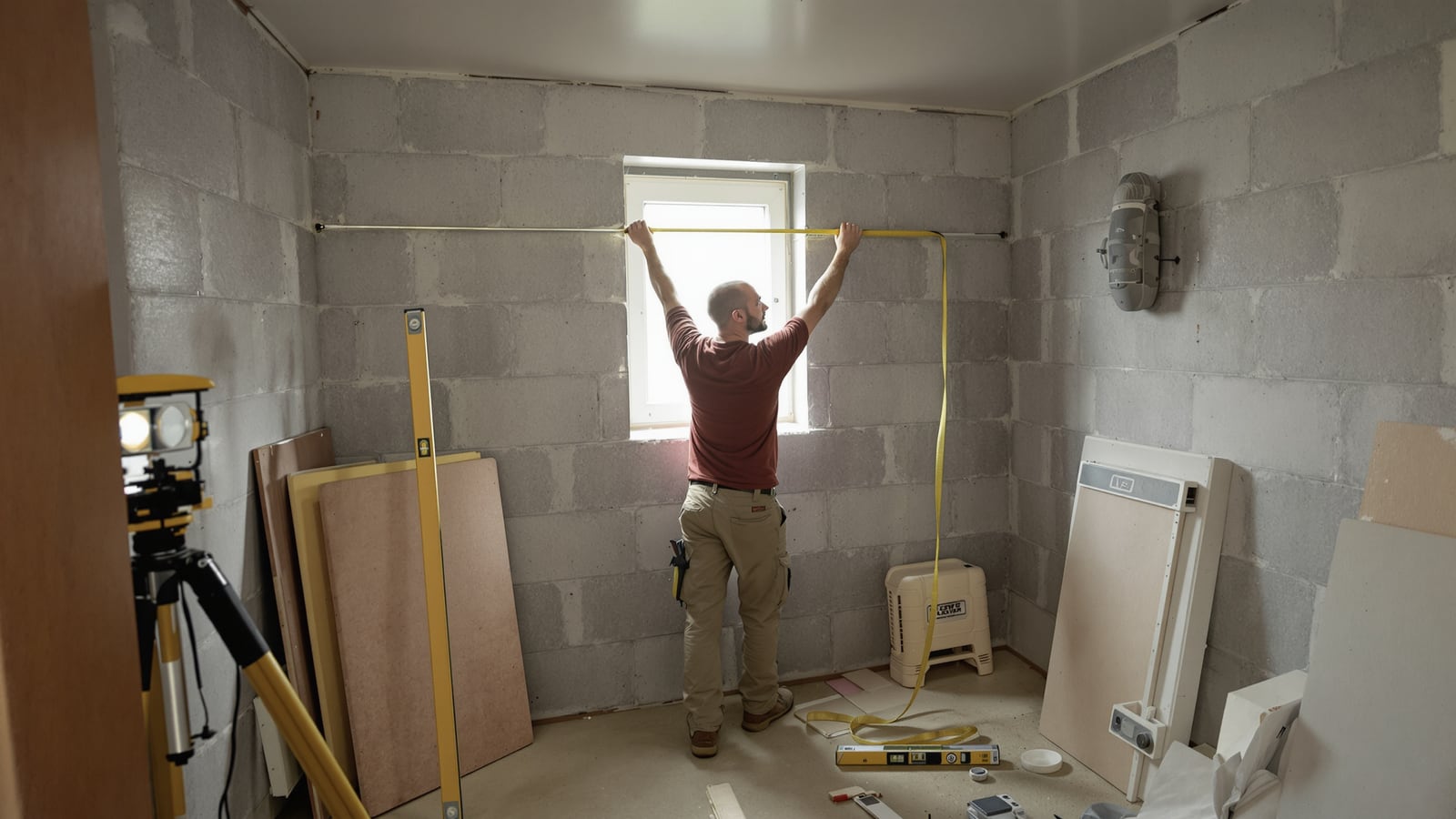
Quick answer: Cutting a new opening in a foundation wall is structural work. Most places require a permit, and many require a license. If you don't have one, the realistic side hustle is the work around the cut, or being the guy who coordinates the job. Don't be the guy holding the saw.
The problem you'd be selling
A basement bedroom needs a way out that doesn't involve the stairs. That's the idea behind an egress window, and the model building code (the IRC, which most states adopt in some form) spells it out. The opening needs at least 5.7 square feet of clear space, at least 24 inches of clear height and 20 inches of clear width. The sill can't sit more than 44 inches off the floor. The window well outside needs about 9 square feet of floor area and room to climb out. Once the well is deeper than 44 inches, it needs a ladder or built-in steps.
Those numbers shift by jurisdiction, and your local building department has the final word. Call them before you quote anything.
Here's why homeowners care. A finished basement with a "bedroom" and a single tiny window gets flagged at inspection. Sellers find out when a buyer's inspector or an appraiser says that room can't be counted as a bedroom. Then they scramble. That scramble is your market: somebody with a closing date, a flagged room, and no line in the budget for it.
Why it's not a weekend job
Count what's involved in one opening.
- Locating buried utilities before anyone digs. Use your state's utility-locating service. It's free and it's the law in most places.
- Cutting concrete or block. Wet cutting, a respirator, and a plan for the silica dust.
- Installing a header over the opening if the wall carries load from above. Depending on the house, an engineer may need to size it.
- Digging the well, often by hand in clay or with a rented mini excavator, and hauling the spoil somewhere.
- Setting the well, adding gravel and drainage so it doesn't fill with water, and flashing the new window.
- Passing inspection.
That's a crew job. It usually runs a few days, and longer when it rains, you hit rock, or the wall turns out to be something other than what the homeowner told you. If a poorly supported wall shifts, that's your name on the lawsuit. If a well fills with water in the first storm, that's your name on the callback.
My read: this is one of the few side hustles where the downside is a cracked foundation. Pressure washing can't do that. Neither can detailing a driveway, as in this look at the two-bucket detailing business.
Insurance, license, permit
This is where most guys' plan falls apart, so look at it before you buy a single tool.
License. Many states require a contractor or specialty license for structural work or for any job above a modest dollar threshold. Some don't. Look up your state's contractor board. Don't guess, and don't ask a buddy.
Insurance. A homeowner's policy won't cover you working on someone else's house. You'd need general liability at a minimum, and workers' comp if you ever have a helper who isn't a partner. Get quotes from an independent agent who writes for contractors, and ask specifically about excavation and foundation work. Some insurers exclude it or price it steeply for new businesses.
Permit. Pulled in your name or the homeowner's, depending on where you live. Skipping it is the fastest way to turn a sale-prep job into a failed inspection and a new problem for your customer. They hired you to remove a problem.
The math, with made-up numbers
I won't quote a price because it swings too much with region, foundation type, depth and soil. Get three local quotes from licensed outfits and you'll see the real range. Then run your own version of this:
Take the job price. Subtract the window unit, the well, gravel, a dumpster or haul-away, equipment rental, the permit, and the insurance share for that job. If you're subbing the cut to a licensed concrete cutter, subtract that too. What's left is your take for however many days you actually worked, including the quote visit, the permit trip, and the callback.
Say that comes to $1,500 net on a job that ate three days. That's $500 a day before taxes. Two jobs a month, and that's $3,000, and it's already about six working days on top of whatever your regular job is. Set aside a big slice for self-employment tax and income tax. This piece on setting money aside from dollar one walks through how. Those numbers are made up. Your quotes will tell you the real ones.
Notice what's missing from that math: the one job where something goes wrong.
The version that actually works
If you're not licensed for foundation work, don't pretend. Build around the cut instead.
- Finish work. After a licensed crew sets the window, somebody has to frame the interior, insulate, drywall, trim and paint. That's a normal handyman job, and it's priced like one. What to charge for Saturday handyman work covers that rate.
- Well prep and landscaping. Grading, drainage, decorative stone, and a cover that keeps leaves and kids out. Check whether your state treats excavation as licensed work.
- Coordinator. Some guys make a fair living walking a seller through it: inspect the basement, learn what the buyer's side will flag, bring in a licensed crew, and handle the finish. You earn on the part you can do without risking the house.
Ask the licensed contractor you're partnering with how they want to handle it. Many are glad to have someone reliable on the interior side.
When to skip it
Skip it if you don't have the license your state demands. Skip it if you can't get insurance at a price that leaves money on the table. Skip it if you're doing this to get rich quick off a seller's panic, because that's the wrong reason, and a rushed install is the one that fails.
Skip it too if you're not already comfortable on a jobsite. If you've never framed a wall, don't start by cutting one out of a foundation.
And if you're thinking about turning this into something bigger, read when a side hustle should become a business first. Egress work is the kind of job where the line between a side gig and a real business shows up the first time something goes wrong.
Do the part you're qualified for. Do it right. A buyer in that basement should be able to get out of it, and so should you.
Ray Okonkwo
Money & Business
Former commercial banker turned small-business owner. Covers salary, credit, margins and the arithmetic nobody does before signing.

Watch
Worth an hour of your evening
More from Side Hustles.
From channels we rate. Plays on YouTube.
Read next