

Gutter screens are an upsell, not a business
Screens can add real money to a gutter-cleaning route. Sold cold, they're a ladder-heavy way to work for less than you think.
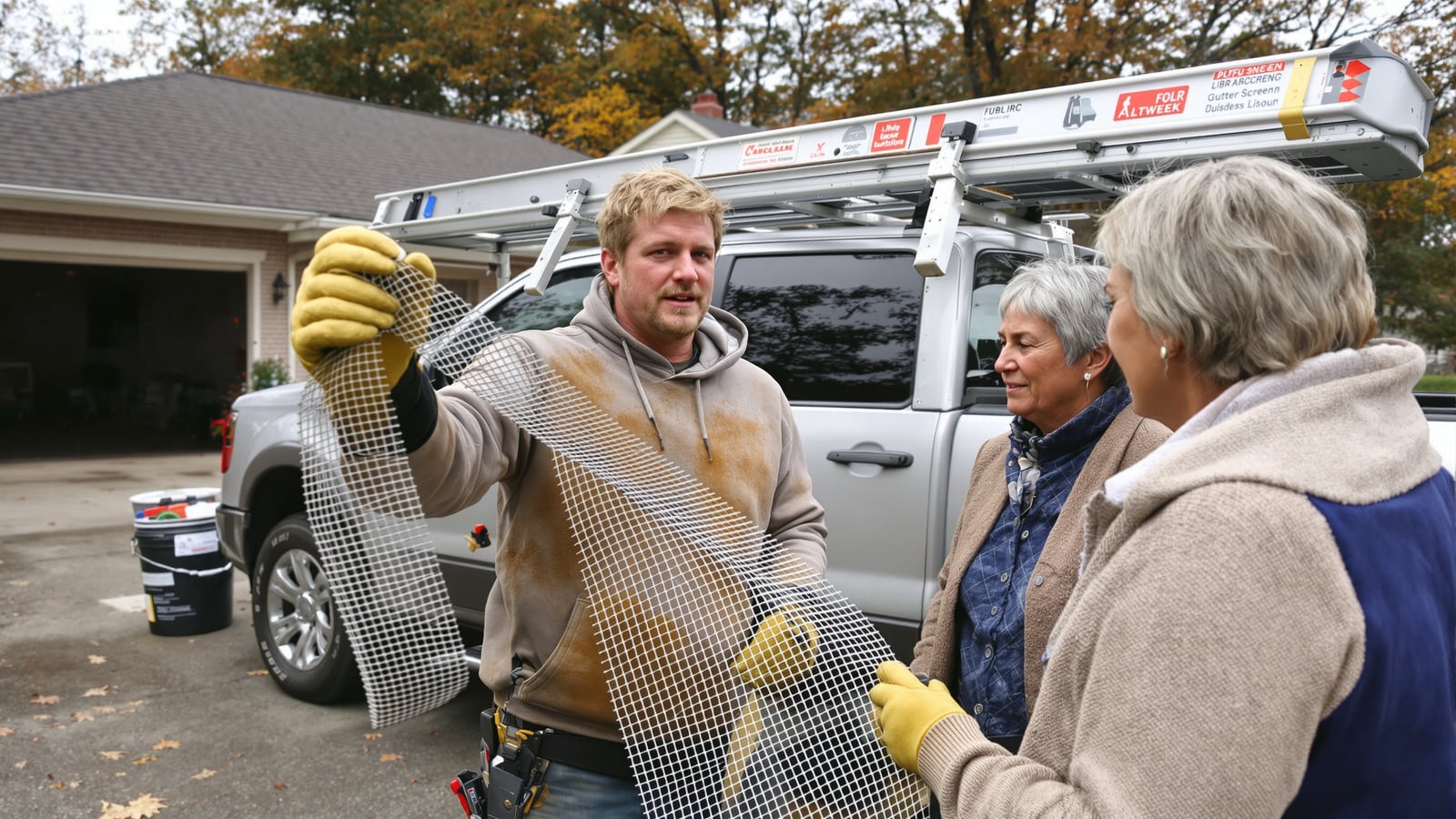
Quick answer: Sell screens to people who already pay you to clean gutters. One-story homes only, insured, with a written warranty that promises less debris and never none. Do it that way and it's a decent seasonal add-on. Do it any other way and it's a hard way to earn a modest wage.
You've just spent two hours scooping black muck out of a customer's gutters. She hands you a check, looks up at the roofline, and asks, "Isn't there something you can put on those so I don't have to call you again?"
That sentence is the whole business. You've got a warm lead standing in her own driveway who has already decided gutters are a nuisance worth paying to fix. Everything else in this piece is how to answer her without lying, losing money, or falling off a ladder.
Why it's an add-on and not a hustle
Cold-selling gutter screens means competing with franchises that have trucks, crews, ad budgets and financing. You'd be the guy with a 24-foot ladder and a Facebook post.
Cleaning is different. A homeowner who paid you in October is willing to hear your pitch. You've already seen the gutters, the pitch, the downspouts and the trees overhead, so you can quote accurately. And your first visit doubles as the prep work, since gutters have to be clean and flowing before anything gets installed over them.
If you're not already running cleaning jobs, start there. The pressure washing side hustle is a natural pairing, since the same customers want both.
What screens do and don't do
Know the product before you promise anything. The common types:
- Snap-in or drop-in screens (perforated aluminum or vinyl). Cheapest and easiest to install. Small debris and shingle grit can still sit on top or work through.
- Micro-mesh over a frame. Blocks finer debris, costs more, and can still develop a film of pollen and grit on the surface.
- Reverse-curve covers. Water clings to the curve and drops into the gutter while leaves slide off. They can handle heavy rain differently from mesh, but some mount under the first row of shingles. Check the shingle manufacturer's warranty before you lift anything on somebody's roof.
- Foam and brush inserts. Cheap and fast. Foam can hold moisture and sprout seeds. Brushes catch debris but need pulling and cleaning.
No screen means never cleaning again. Pine needles, maple seeds, pollen and roof grit will find a way. The honest line to a customer is, "This turns two cleanings a year into a quick brush-off every year or two." That's a good sell, and it's true.
Overpromise and you'll be back for callbacks, for free, in November.
The math, with made-up round numbers
These figures are placeholders so you can see the shape of a job. They aren't market prices. Get quotes from two local suppliers and price three local competitors before you trust any number.
Say a single-story house has 150 feet of gutter.
- You charge $8 a foot installed: $1,200
- Screens cost you $3 a foot: $450
- Fasteners, sealant, fuel, disposal: about $50
- Left over: roughly $700
Now the hours. Cleaning first, install, and cleanup runs about six hours for one person on a house like that. Add the hours nobody bills: the quote visit, the supply run, the drive, the follow-up. Call it nine. That's about $78 an hour before taxes, insurance and tool wear.
Respectable. Not a fortune.
Then comes the calendar. If the work is mostly spring and fall, and you can fit two or three jobs a month around a day job, that's roughly $1,400 to $2,100 a month in season before taxes, and close to nothing in a frozen January. A bad week of rain, or a customer who ghosts after a quote, shaves it further.
What it costs to start
You don't need a shop. You need:
- A solid extension ladder, the biggest single purchase, plus a stabilizer or standoff that keeps the ladder off the gutter itself
- Tin snips, a cordless drill, a tape, and a hand seamer or crimper if your product needs one
- Work gloves, eye protection, a tarp, a bucket, a hose, and a leaf blower or wet/dry vac
- Enough cash to buy materials for the first few jobs before the first deposit lands
Take a deposit that covers the material. Never finance a stranger's project on your own credit card.
Insurance, licensing and taxes
Insurance isn't optional here. A ladder, a roof edge and somebody else's house are a bad combination to do uninsured. Your homeowner's and auto policies usually exclude business activity. Call an independent agent and ask about general liability for home-service work, and what happens if you hire a helper, because workers' compensation rules vary by state.
Some states require a contractor or home-improvement license once a job passes a dollar threshold. Check with your state's licensing board before you quote, not after.
On taxes, self-employment income comes with self-employment tax on top of income tax. That means you owe more than most first-timers expect, and quarterly estimates may apply. Here's how to set money aside from dollar one. A CPA can tell you what your own numbers look like. This piece is general education, not financial or tax advice.
The ladder is the real cost
Falls from ladders put people in the hospital every year, and gutter work means you're leaning sideways, carrying things, and often tired.
Stay on one-story homes. Set the ladder on firm, level ground. Keep three points of contact. Don't work in wet or windy weather. If you or a helper does fall, get medical help right away, even if you feel fine.
The two-story house pays more per job. It's also where a side hustle can turn into a long layoff. Leave it for a full-time crew with the gear and the insurance.
When it's not worth it
Skip this if:
- You're uneasy on ladders. Don't talk yourself out of that.
- Most of your local homes are two or three stories.
- You don't have time for the cleaning that has to come first.
- You can't afford liability coverage.
- Your market has no tree cover and little debris. Nobody pays to fix a problem they don't have.
- You'd have to lift shingles on roofs still under warranty without knowing the terms.
If your hours are already full, a Saturday of handyman work may pay about the same with fewer ladders. And once the jobs start stacking up, read when a side hustle should become a business before you quit anything.
Make the pitch fit the product
Tell the customer what the screen will do, what it won't, and what a yearly brush-off looks like. Write the warranty in plain words. Show up when you said. Leave the yard cleaner than you found it, with every scrap of debris bagged and the downspouts running clear.
Do that for the woman in the driveway, and next year her neighbor will be the one asking about the ladder.
Ray Okonkwo
Money & Business
Former commercial banker turned small-business owner. Covers salary, credit, margins and the arithmetic nobody does before signing.

Watch
Worth an hour of your evening
More from Side Hustles.
From channels we rate. Plays on YouTube.
Read next