

Storm roof inspections pay in bursts and carry real risk
Homeowners need an honest look at their roof after hail or wind. Here's what to check yourself, when to call a pro, and whether doing it for money makes sense.
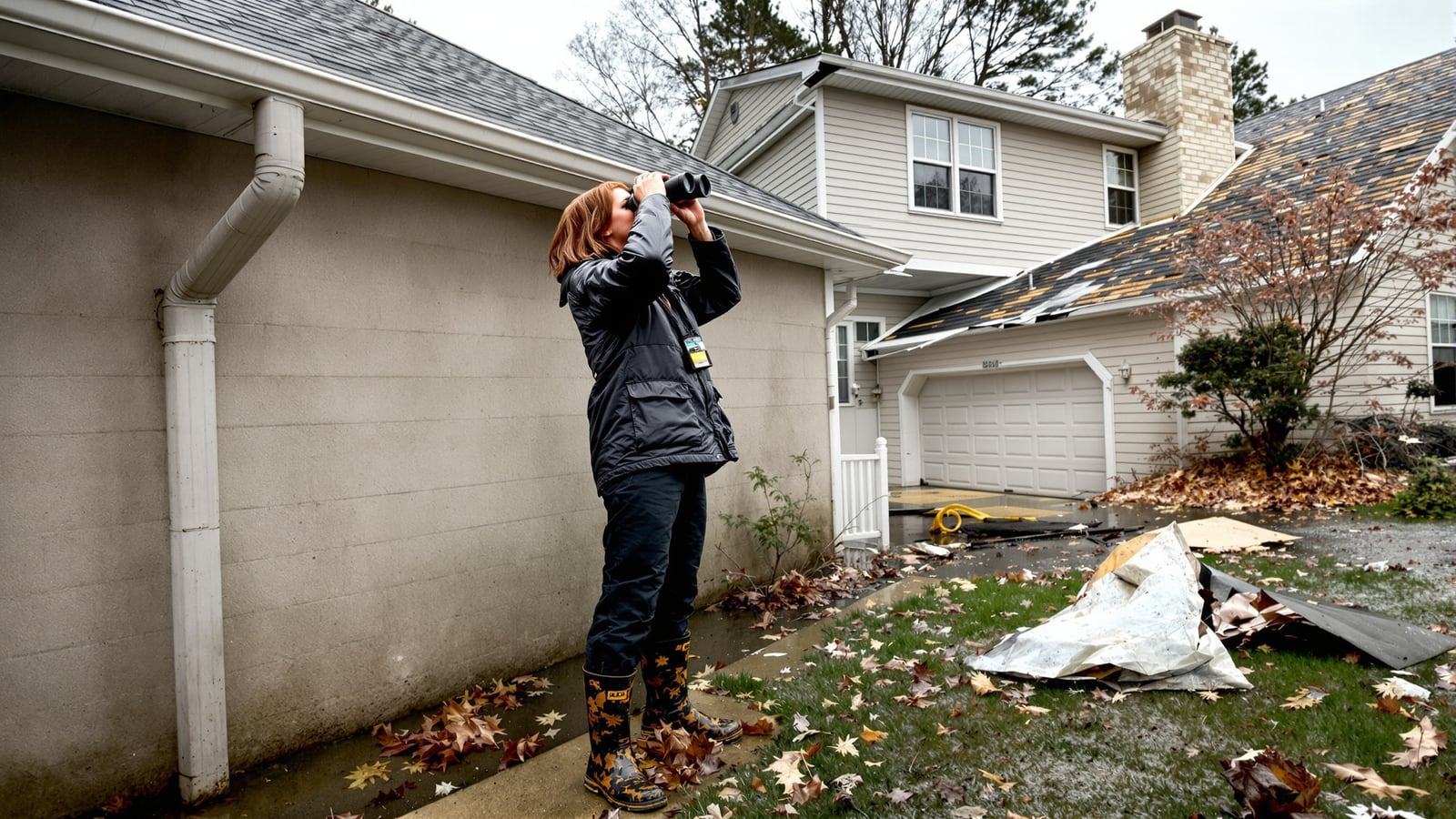
Quick answer: After a storm, check your roof from the ground, photograph everything, and call your insurer before you call a contractor. If you're thinking about doing inspections for pay, it can work. But it's seasonal, it's regulated in ways that vary by state, and the one thing you must never do is climb a roof without training and fall protection.
What a homeowner can do from the ground
You don't need a ladder. Walk the whole property with a pair of binoculars the morning after the storm.
Look for missing, curled or lifted shingles. Look for dark patches where granules have worn off. Check the flashing around chimneys and vents, because that's where leaks start. Look at the gutters and the ground under the downspouts. A pile of gritty, sand-like granules means the shingles took a beating.
Then go inside. Check the attic with a flashlight for daylight coming through, damp insulation or dark stains on the underside of the decking. Check ceilings for fresh brown rings. Water travels, so a stain in the hallway can come from a hole ten feet away.
Photograph all of it with the date on. Wide shots first, then close-ups. You're building a record, and the record is what an insurance claim runs on.
When to stop and call a professional
The ground check tells you whether there's a problem. It can't tell you how big it is. Call a pro when you see any of these:
- Visible missing shingles or exposed decking
- Water coming through the ceiling
- A sagging section of roof
- Hail larger than a quarter-sized dent pattern on your gutters, siding or car
- Anything you can't confirm from the ground
A roofer or independent inspector goes up, tests the shingles, checks the underlayment and tells you what's real. Hail damage in particular is easy to miss and easy to exaggerate.
If water is already coming in, a temporary tarp is worth doing right away. Most policies expect you to prevent further damage, and the receipt is usually reimbursable. Keep every receipt and read your policy for the specifics.
The door-knocker problem
After a big storm, trucks with out-of-state plates show up in your neighborhood. Some are honest. Plenty aren't. The pattern to watch for is a free inspection, a claim that you have major damage, pressure to sign something today, and an offer to cover or waive your deductible.
Don't sign anything on the porch. Don't sign over your insurance benefits to a contractor you met an hour ago. Waiving a deductible is illegal or restricted in many states, so check yours. Ask for the contractor's state license where one is required, proof of liability insurance and workers' comp, and a local address you can drive to. Get at least two written bids. A roofer who's still around next year doesn't need you to decide in an afternoon.
The side hustle: independent inspections
Here's the pitch. Homeowners distrust the roofer who inspects the roof and then sells the replacement, because he has a reason to find damage. An inspector who sells nothing but the report has something to offer: an unbiased set of photos and notes the homeowner can hand to an insurer or a contractor.
That's a real service. It's also a narrow one, and the rules matter more than the money.
Licensing varies. Some states license home inspectors, and some of those rules cover roofs. Many states also regulate public adjusting, which means negotiating or advocating on a claim for payment. Don't do that. Your report describes conditions. It doesn't argue for a settlement. Check your state's licensing board before you take a dollar.
Drones need a license. Flying one for pay in the U.S. requires an FAA remote pilot certificate under Part 107. Flying a drone over a roof beats climbing it. It's safer, it's faster and it makes better photos. But it's not a hobby flight once someone's paying you.
Climbing is where this goes wrong. Roofs kill and cripple people every year, and a wet, hail-battered roof is worse. If you don't have fall protection and training, stay on the ground and use the drone. No inspection fee is worth a fall. And if you do get hurt on someone else's property, your own health insurance may not be what you'd hoped.
The honest numbers
These are an example, not a promise. Your market will set your price, so call a few local inspectors and ask what they charge before you pick a number.
Say you charge $175 for a ground-and-drone inspection with a written photo report. Count the real time: 30 minutes of driving, an hour on site, an hour and a half writing the report, plus scheduling and follow-up calls. That's four hours, or roughly $44 an hour before costs.
Costs add up. A capable camera drone runs from several hundred dollars up, plus spare batteries. Add the cost of the Part 107 test, a tablet or laptop for reports, and general liability insurance. Many policies exclude drone operations, so ask an agent specifically about aerial work and about errors and omissions coverage. Both cost real money every year, and both matter, because a wrong call on a roof can end in a dispute.
Taxes come off the top. Self-employment tax runs 15.3 percent on net earnings before income tax. Set money aside from the first dollar. This guide on setting aside taxes on side income walks through how.
And the income is lumpy. A hailstorm hits your county and you might book ten jobs in two weeks. Then you might book none for two months. Don't plan around a steady monthly figure. Plan around a few busy weeks a year plus whatever you can pick up from home buyers and sellers who want an independent look.
When it isn't worth it
It's not worth it if you live somewhere with little hail or wind. It's not worth it if you don't want to deal with licensing paperwork. It's not worth it if you want steady weekend money, because storm work doesn't arrive on a schedule. And it's definitely not worth it if the plan involves climbing without training.
If you want something steadier with a lower barrier, look at weekend pressure washing or Saturday handyman work. Neither depends on the weather doing damage first.
If inspections do take off, know when a side hustle should become a business. The insurance and licensing questions get bigger the moment you hire anyone.
This is general education, not financial, legal or insurance advice. Talk to your state licensing board, an insurance agent and a tax professional before you charge your first customer.
Do the ground check. Take the photos. Make the honest call. A roof inspected right is worth the money. A roof inspected by a stranger who needs a sale isn't.
Ray Okonkwo
Money & Business
Former commercial banker turned small-business owner. Covers salary, credit, margins and the arithmetic nobody does before signing.

Watch
Worth an hour of your evening
More from Side Hustles.
From channels we rate. Plays on YouTube.
Read next