

Window washing pays when you sell the grime in the tracks
Glass is the easy part. The money's in the tracks, sills and screens homeowners finally notice in April. Hours, costs, taxes and when to skip it.
Quick answer: Done well, on the ground floor and by the house instead of by the pane, window cleaning can run a couple of Saturdays a month into the high hundreds or low thousands in spring and fall. It needs a cheap kit, a liability policy and a spine about pricing. It's not worth it if your area is thin on houses, if you won't carry insurance, or if you plan to compete on price.
Nobody calls for the glass
Most homeowners can wipe a window. What they can't stand to touch is the track at the bottom of it.
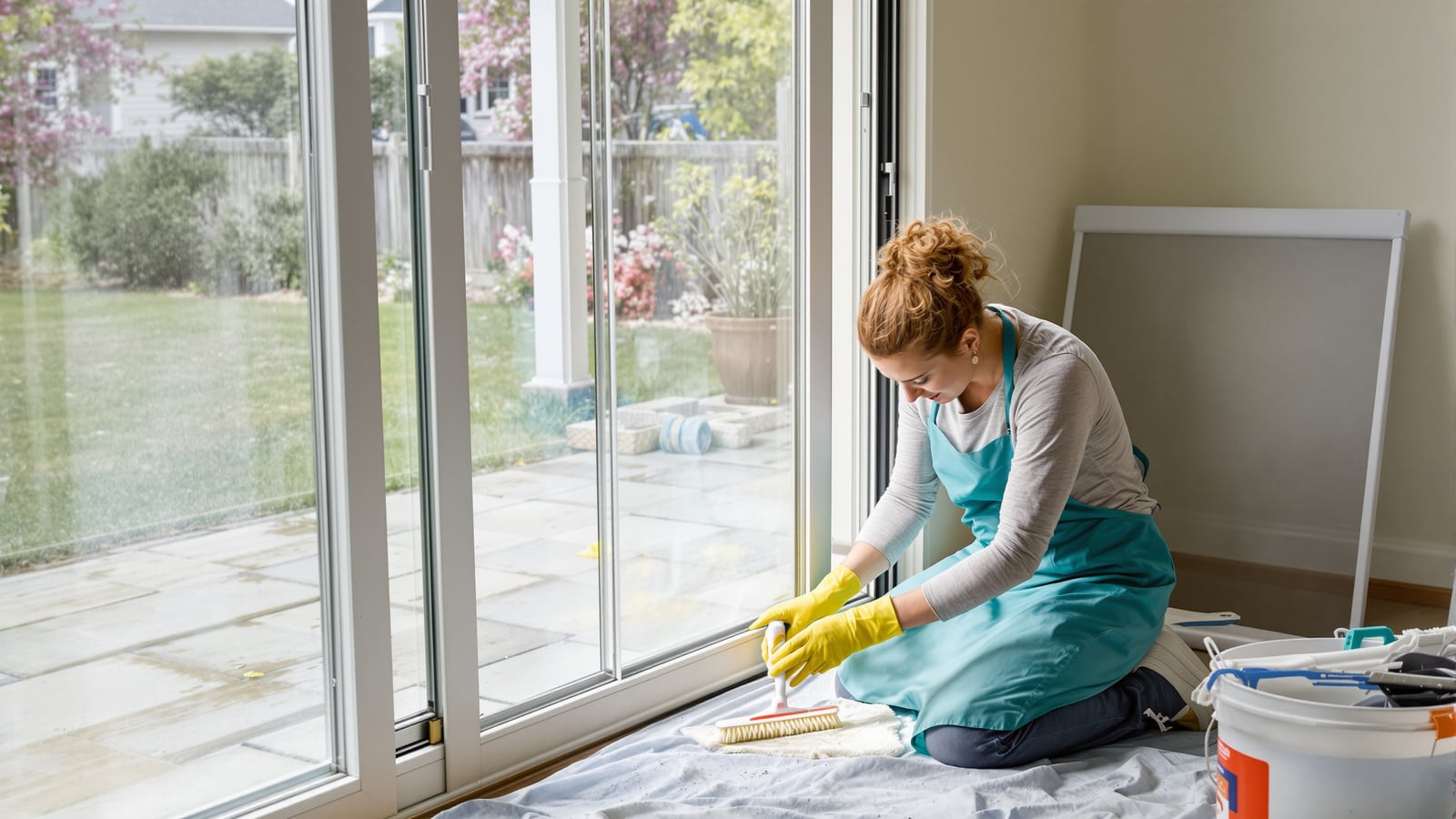
Open a slider in April and look down. Dead bugs, gray silt, a little black mildew in the corners, maybe a wasp nest the size of a thumb. The frame has a film on it. The screens look like they've been breathing exhaust all winter. That's the moment somebody finally picks up the phone.
So don't sell "window washing." Sell windows, screens, tracks and sills, one flat price for the house. The glass gets you in the door. The frames are why they pay you instead of doing it themselves, and why they won't haggle you down to the price of a bottle of blue spray.
The kit
You can start light. A basic professional setup runs somewhere around $150 to $300 depending on where you shop, and most of it is stuff you can buy this week:
- A 12 to 14 inch squeegee with a few spare rubber blades
- A strip washer (the fuzzy sleeve on a T-bar) and a bucket
- A razor scraper with fresh blades, for paint flecks and stickers
- A pack of microfiber towels, more than you think
- A stiff detail brush and a soft one for tracks
- A cheap vacuum with a crevice tool (you may already own it)
- Drop cloths or old bath towels for the floor under each window
- A sturdy stepladder, rated well above your weight
Add an extension pole later, once you've proven you want to keep doing this.
Keep it ground floor and stepladder height at the start. Second stories mean extension ladders, and a ladder fall is how a side hustle becomes a hospital bill. Say no to roofs, steep yards and anything you'd have to lean out to reach. A polite "I only do first-floor work right now" costs you one job. The other way can cost you a lot more.
What a job looks like
Here's an illustration. Your own numbers will differ, so use it as a template, not a promise.
Say it's a two-story house, but you're doing the 20 first-floor windows, doors and sliders, inside and out, with screens and tracks. Your first one will take about five hours. By your tenth you'll be closer to three and a half. Beginners almost always underquote the time on tracks. Hardened grime takes a scraper and a toothbrush, not a quick wipe.
If you charge $275 for that house, you're at about $55 an hour on the first job and nearly $80 once you've got a rhythm. Neither number includes driving, quoting and rescheduling, which can quietly add an hour per job. Check what local pros charge in your area before you set a price. Call two or three for a quote on a house like yours. It costs nothing, and it tells you where you fit.
Now stretch it across a month. Two jobs a Saturday is a solid, tiring day. Four Saturdays gets you eight jobs, about $2,200 gross on those numbers. Take out:
- Supplies and replacement blades: roughly $100
- Gas and vehicle wear: roughly $60
- Insurance, spread monthly: roughly $40
- Set aside for taxes: roughly 25 to 30 percent, about $550 to $650
You're left with something near $1,400 for around 40 hours of work. That's a real second paycheck. It's also a number you'll only see in spring and fall, at least in anywhere with winters. Two Saturdays a month is closer to $700, and January can be zero. Don't plan your mortgage around it.
Taxes and insurance
You'll owe self-employment tax on net profit, 15.3 percent for Social Security and Medicare, on top of regular income tax. That's why the 25 to 30 percent set-aside above isn't padding. Put it in a separate account the day the money lands. What to Set Aside for Taxes on Side Income From Dollar One walks through it, and a local CPA can tell you what applies to your state and your situation.
Insurance is the part people skip, and the part that matters most. Your homeowner's policy and your auto policy aren't built for work you do on other people's property. Get quotes for a general liability policy from an independent agent. For a small solo operation it commonly runs a few hundred dollars a year, though your quote depends on where you live and what you cover.
Here's why. Windows break. A bad squeegee angle on a hot day, a scraper on a stressed pane, a ladder foot on a flowerbed. Sooner or later you'll cause a customer a problem. If you've got a policy, you write the check and keep your name. If you don't, you're writing it out of your own pocket and hoping they don't tell the neighbors.
Ask your agent too whether you need a business license or registration where you live. That varies by city and state, and it's cheap to check.
Where the grime fights back
A few things go wrong the first season.
Hard water spots. White crust on exterior glass won't wipe off. Soak it with white vinegar and work it gently, but don't promise perfect. Heavy etching is permanent, and you don't want to be the person who said otherwise.
Scraping coated glass. Some modern windows have a coating on certain surfaces. Always use a fresh blade on wet glass, and don't scrape where you're not sure. If a customer's glass is already scratched, point it out before you touch it.
Pressure washing the frames. Don't. Water forced past the seals ends up inside the wall, and you'll own that. Frames get hand work. If a customer wants siding and driveways done too, that's a separate service with its own gear, covered in Weekend Pressure Washing and What It Actually Pays.
Weep holes. Those little slots at the bottom of many frames let water out. Clear them with a soft brush or a pick. If you plug one with cleaner or mud, the water backs up.
Do it like it's your mother's house
Put the drop cloth down before you open the window. Wipe the sill dry when you're done. Carry the dead bugs outside in the vacuum bag, not out the window onto their patio. Look around when you leave and fix the one thing you missed.
That habit, more than any trick with a squeegee, is what gets you the neighbor's call two weeks later. Customers remember the guy who left it cleaner than he found it.
Hold the line on price too. If someone wants half off because the house is "mostly clean," offer to skip the tracks and screens instead. Don't discount the work you're still doing.
When it isn't worth it
Skip this one if:
- You're in a dense apartment area with few houses, or in a place where almost every window is tall and far from the ground
- You won't buy insurance
- You hate ladders, or you'd be tempted to go higher than you should for a bigger check
- You want hourly pay in the first month. The first five jobs will be slow and underpaid, because you're learning
If it does fit, stay small and consistent for a season before you think about hiring anyone. When a Side Hustle Should Become a Business and When It Shouldn't covers that decision honestly.
This is general education, not financial, tax or insurance advice. Call a CPA and an independent insurance agent before you take your first dollar.
Start with your own windows this Saturday. Time yourself on the tracks. That number tells you what to charge.
Ray Okonkwo
Money & Business
Former commercial banker turned small-business owner. Covers salary, credit, margins and the arithmetic nobody does before signing.

Watch
Watch how it's done
Picked for this article.
From channels we rate. Plays on YouTube.
Trad-Man The Window Cleaner
HOW TO PROFESSIONALLY CLEAN WINDOW & DOOR TRACKS
Luke The Window Cleaner
How We Clean Residential Window Screens | The Ol Hand Method #windowcleaning #prowindowcleaning
Read next