

The shirt weight that lasts five years instead of two
Fabric weight predicts how long a shirt survives better than price or brand. Here's the range to buy in, and a ten-second test to run in the store.
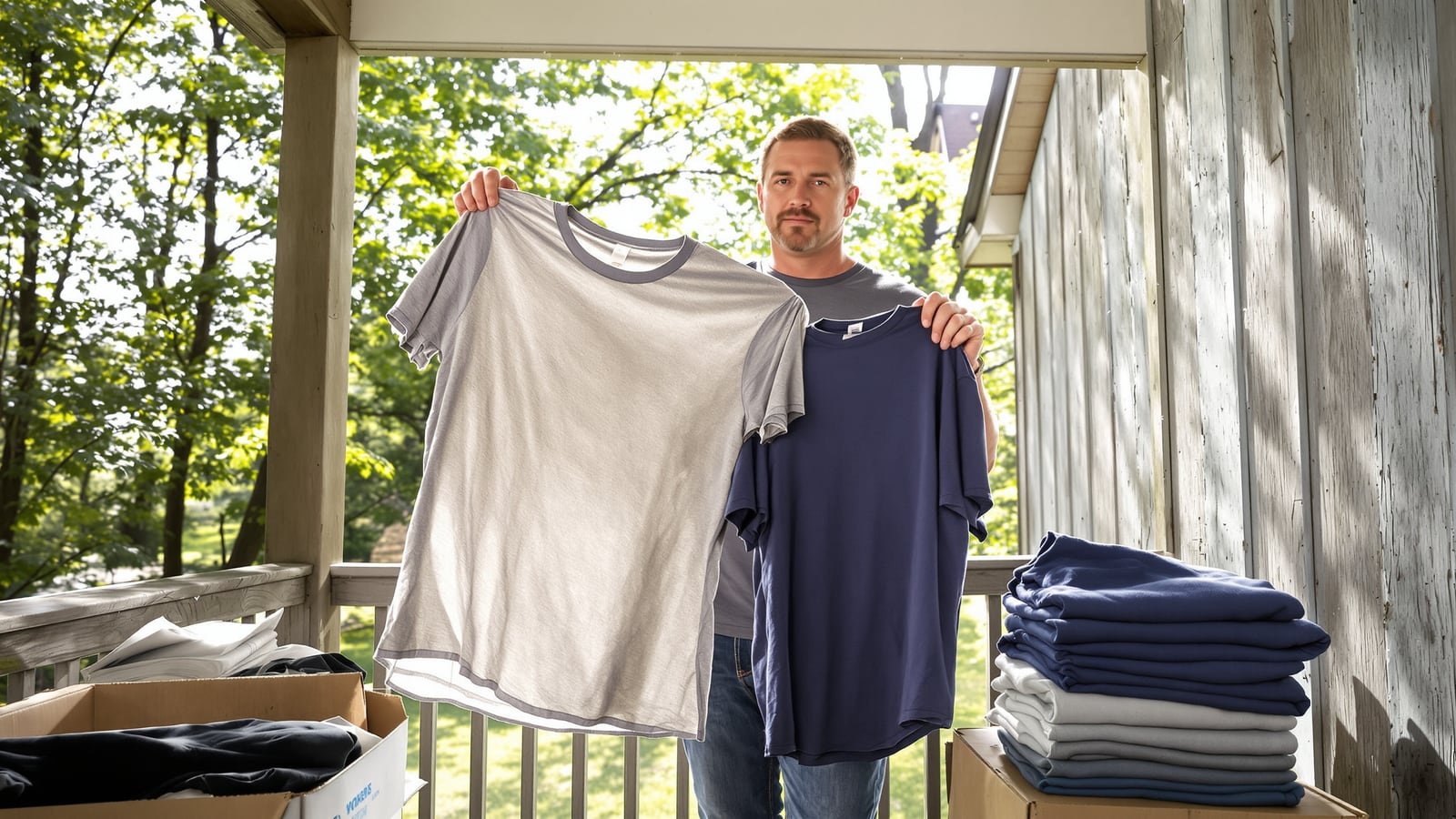
Quick answer: For T-shirts, buy roughly 160 to 220 GSM (grams per square meter). Too light and it thins at the collar and shoulders within a couple of years. Too heavy and you'll stop wearing it in July. If the tag doesn't list weight, hold the shirt up to a light. If you can see the bulb, put it back.
Why weight beats the label
Fabric weight is how much cloth there's in a given patch of shirt. More yarn per square inch means more material to lose before a hole shows up. It's the closest thing to a durability number a shirt has, and it's the one retailers talk about least.
Price doesn't track it well. A thin shirt with a famous name on the chest still wears through at the same rate as a thin shirt without one. You're paying for the name. The cloth is what's left after a hundred washes.
The rough ranges for knit tees:
- Under about 150 GSM: light. Cool in August and see-through in white. Expect thinning, and a collar that waves at you by year two.
- About 160 to 220 GSM: midweight. This is the sweet spot for most men, with real body and enough give to break in without sagging.
- Above about 220 GSM: heavy. Stiff at first, boxy through the shoulders, hot in summer. It can outlast everything you own, but only if you'll actually put it on.
Those are rules of thumb, not law. Mills and brands draw the lines a little differently, so use the numbers to narrow the field, not to settle it.
The ten-second test in the store
Most tags don't give you the number. Your hands will.
Hold it to the light. Stretch a section of the chest over your fingers and look through it. A tight, even weave that blocks most of the light is what you want. If you can read the sales sign through it, that's a summer-only shirt at best.
Pinch the hem. Fold the bottom edge and rub it between thumb and finger. You should feel two solid layers of cloth, not a slippery film. Thin shirts feel like you're pinching one layer folded over nothing.
Stretch and release. Pull the fabric hard sideways and let go. It should snap back. If it stays rippled or baggy, the knit is loose and the shirt will bag out at the elbows and hem the first month.
Check the collar. It's the first thing to go on any tee. A good one is a thick, ribbed band with a bit of spring. A thin, flat one will roll and stretch by the third wash. Look for a band that's visibly thicker than the body fabric, and for tape across the back of the neck, which keeps the neckline from stretching out.
The mistake that fools people
Weight alone doesn't settle it. A loosely knit 200 GSM shirt can be worse than a tightly knit 170, because open knits snag, twist and pill. Fiber matters, too. A long-staple cotton at a modest weight will outlast a coarse short-staple cotton at a higher one. You can feel the difference: the good one is smooth and a little cool, the other is fuzzy and dry.
So the order is fit, then fabric, then brand, and weight is the first thing to check inside fabric. Use it to rule shirts out fast. Then do the other tests on whatever's left.
And fit comes first for a reason. A well-made shirt that's too big in the shoulders wears out faster, because the extra cloth rubs where it shouldn't. The checks that tell you a garment actually fits are worth running before you worry about gram counts.
Button-downs and flannels play by different rules
On woven shirts, weight shows up in how the cloth hangs and how it behaves under your arm.
Oxford cloth. A good one feels slightly textured and substantial, almost nubby. It should hold a collar shape without starch. A thin, shiny "oxford" is just a dress shirt wearing a costume. It will fray at the cuffs and collar fold within two years of regular wear, because those edges take all the abuse.
Flannel. Heavy and soft, brushed on both sides, and it feels like a blanket. Cheap flannel is thin and fuzzy on the surface only. It pills almost immediately and loses its nap in the first dozen washes. Hold it to the light. A good flannel shows almost nothing through it.
Work shirts and chambray. Here you want a firm hand and a dense weave. A chambray that drapes like a scarf is made for looks, not for a shop floor or a weekend of yard work.
If you wear shirts to the office, the same logic applies to your dress shirts. Heavier broadcloth takes more cycles before it goes see-through at the elbows and thin at the collar edge.
When heavier is the wrong call
Be honest about your climate and your habits. A 240 GSM tee is a great shirt in October and a miserable one in a Texas August. If you sweat through shirts, a lighter cotton or a cotton blend might serve you better. You'll wear it, and a shirt you wear is a better value than a tank in the drawer.
Heavy cloth also takes longer to dry, wrinkles in different ways, and can read bulky under a fitted jacket. For layering under a blazer, a lighter midweight in the 160 to 180 range is the smarter call. It drapes clean and doesn't add a bulge at the waist.
And a lightweight shirt isn't junk by default. It's built for a job. Buy it for hot days, buy a couple, and expect to replace them every few seasons. Just don't pay midweight money for it.
Make a good one last
A good shirt dies faster than it should if you treat it like a bad one. Wash it cold. Turn it inside out so the face doesn't pill. Skip the hot dryer, because heat is what cooks the fibers and shrinks the collar band. Hang it, or pull it out slightly damp and finish it on a rack. We wrote the full case in the dryer is why your clothes wear out early, and it's the cheapest fix on this page.
Rotate, too. Wearing one favorite shirt four days a week wears the same spots on the same fibers. Three good shirts in rotation will outlast the one you wear to death.
When you're ready to build the rest of the drawer, ten garments that get you through almost any week is a sensible place to start.
The test that pays for itself
Next time you're in a store, take two white tees off the rack. Hold each to the light. Pinch each hem. Stretch each one and let go.
You'll know in ten seconds which one is going to quit, and it won't be the one you'd have guessed from the price tag.
Dean Shaw
Gear & Garage
Reads the warranty, the parts list and the long-term owner reviews before anything else. Trucks, tools, watches, and the cheap version that costs more.

Watch
Worth an hour of your evening
More from Style.
From channels we rate. Plays on YouTube.
Read next