
Quick answer: Set a hard turnaround time before you leave the car, and keep it even 200 feet from the top. Climb slowly and sleep lower than you climbed. If someone gets worse at altitude, go down. Down is the treatment.
At 6 a.m. in a Colorado trailhead lot, everybody is agreeable. At 12:40 p.m., three hundred feet below the top of a 14,000-foot peak, with gray towers stacking up to the west, the same group has a problem. Someone says, "We're so close."
They are close. That's what makes it dangerous. Nobody turns around from a bad spot. They turn around from a good one, and it takes a plan made earlier by people who weren't tired yet.
The turnaround time is a clock, not a place
Work backward from the weather. In many western ranges in summer, storms build in the afternoon, so the usual guidance is to be off the summit by around noon. That means starting in the dark with a headlamp. It also means your turnaround time might be 10:30 or 11, whatever the summit looks like when you get there.
Write it down. Say it out loud to the group at the car. Then the rule is simple: when the watch hits that time, you turn around, even if the summit is right there and even if you're still below the last pitch.
Add two more triggers while you're at it.
- Weather. Clouds building fast, dark bases, a wind shift, or the first distant rumble.
- People. Anyone with a headache that's getting worse, anyone who's stumbling or going quiet, anyone slowing down in a way that isn't normal for them.
Somebody has to be the one who says it. That person is unpopular for about ten minutes and then a hero, and it's usually the most experienced person in the group. If that's you, say it plainly and kindly, and don't apologize. You're not ruining the day. You're looking after the people you came with.
Before any of this, leave a plan with someone who'll actually act on it. Give them the trailhead, the route, your vehicle, who's with you, and a call-in time. Tell them when to phone the county sheriff, who runs search and rescue in most places, if you haven't checked in.
What altitude does
At 10,000 feet the air is still about 21 percent oxygen. There's just less pressure pushing it into you, roughly two-thirds of what you get at sea level. Your body adapts, but it needs days, not hours.
Acute mountain sickness feels like a rough hangover with no party. You get a headache, nausea, fatigue, dizziness and bad sleep. Being fit doesn't protect you. Strong, fast people often get hit hardest because they climb quickest.
What to do about it:
- Go up slowly. Above about 9,000 to 10,000 feet, wilderness medicine guidance generally suggests raising your sleeping elevation by no more than roughly 1,000 to 1,600 feet a night. Treat that as a rule of thumb, not a law.
- Sleep low. You can climb high in the day and come back down to sleep. It helps.
- Arrive early. Spend a night at 7,000 or 8,000 feet before you try anything at 12,000.
- Drink water, eat real food, and skip the alcohol the first night.
- Stop if symptoms start. Rest, hydrate, and don't go higher until it clears. If it's getting worse, descend.
Then there are the signs that mean the trip is over. Confusion. Stumbling or not being able to walk a straight line. Shortness of breath while resting, or a wet, rattling cough. Those can be the early signs of swelling in the brain or lungs. Go down right away, even in the dark, and get medical help. Don't wait for morning, and don't leave the sick person alone.
If you've had trouble at altitude before, talk to your doctor ahead of time about options. Prescription medications exist, and they aren't something to guess at.
The weather turns faster than the forecast
Temperature drops roughly 3 to 5 degrees for every 1,000 feet you climb. A 75-degree trailhead can mean a 45-degree summit before you count wind. Add rain at 40 degrees and you've got hypothermia weather in July.
Pull the National Weather Service point forecast for the summit elevation, not the nearest town. Check it the night before and again at dawn. Then watch the sky yourself, because the forecast can't see the cloud building over the next ridge.
If you can hear thunder, you're close enough to be struck. Get off the summit and the ridgeline first, and head lower. Don't shelter under a lone tree or in a shallow overhang. Spread the group out so one strike doesn't take everybody.
Weather you can't outrun is why layers matter more than anything else you pack.
What to carry, with rough costs
Prices run wide, but this is the ballpark.
- A real rain shell, $100 to $250. A poncho shreds in wind.
- An insulating layer, $80 to $250. Fleece or a synthetic or down puffy. Add a wool or synthetic base layer. Cotton holds water and steals heat, so leave it home.
- Warm hat and gloves, $30 to $60 together. Pack them in August.
- Headlamp plus spare batteries, $30 to $60. A day hike that runs long ends in the dark.
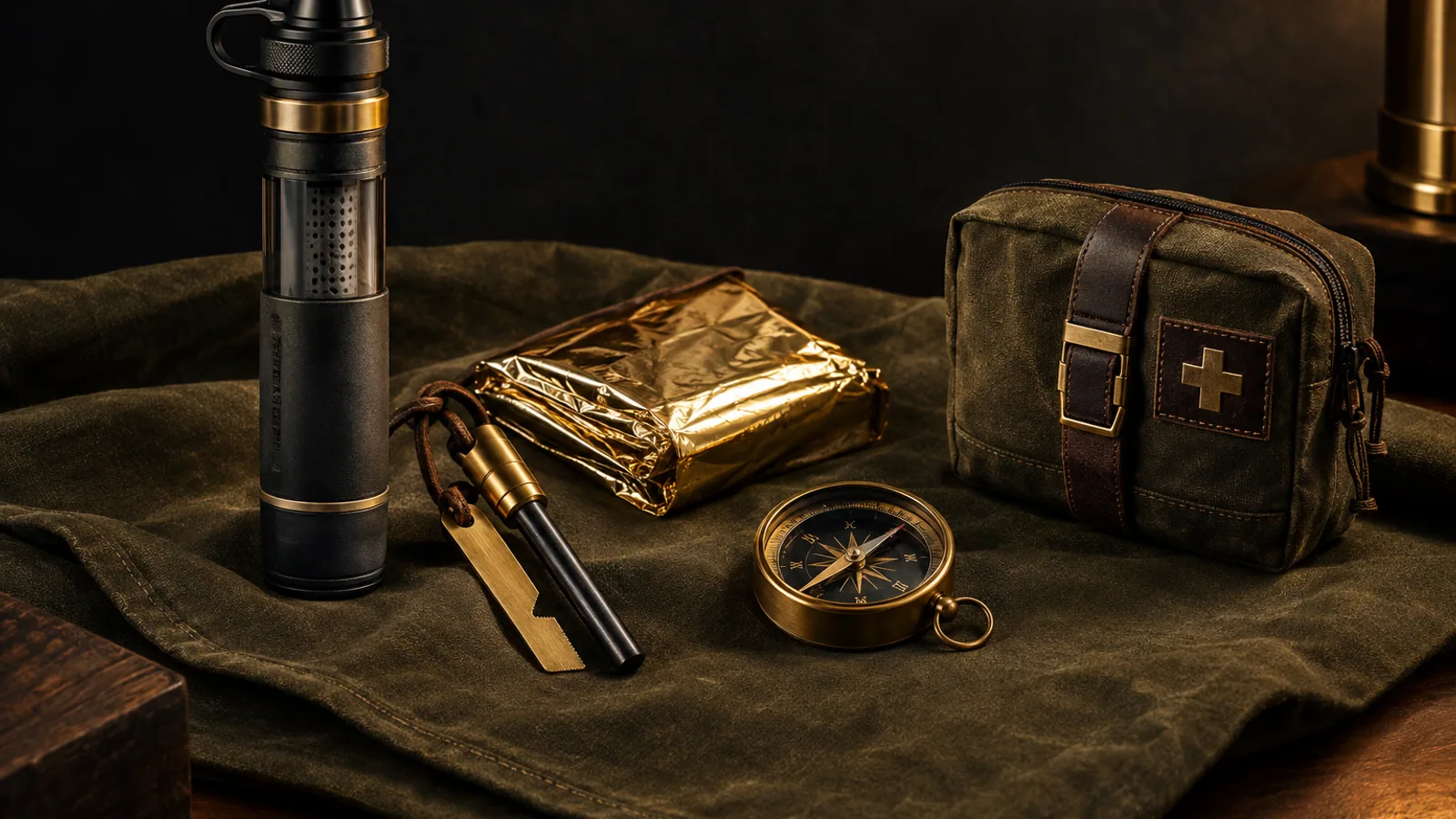
- Paper map and compass, about $15 and $25 to $40. Learn to use them. Download offline maps to your phone too, but don't bet your life on a battery that dies in the cold.
- Satellite messenger or beacon, roughly $300 to $400. Garmin inReach and ZOLEO devices also need a monthly plan. A personal locator beacon costs about the same up front and has no subscription. Either gets a call for help out where there's no cell signal.
- Emergency bivy or space blanket, $5 to $60. It weighs almost nothing and can turn a miserable night into a survivable one.
- Extra food and water, more than you think you'll need. Eating warms you.
Now the annoying part. All of this adds up to a pack that's heavier than you'd like. Everyone who's been caught out at 12,000 feet without it says it was worth the weight.
If it starts to go wrong
Stop early, not late. Put on the extra layers before you're cold. Eat something. Check the person who's gone quiet.
If you're off trail and not sure where you are, stop moving and read what to do in the first hour you're lost in the woods. The first hour is where most people either fix it or make it worse.
A broken ankle, a fall or a hypothermic partner needs trained hands. That's the case for taking a class before you need one.
Take a class before you need it
Reading helps, but it won't stand in for practice. A few options worth the money:
- Wilderness First Aid, usually a weekend course that costs a couple hundred dollars. It covers what to do when help is hours away.
- Wilderness First Responder, a week-long course and a serious step up. Courses from groups like NOLS and Wilderness Medical Associates cost several hundred dollars and up.
- An avalanche course, such as AIARE Level 1, before you go anywhere near snow-covered slopes.
- A guided first big peak. A good guide will show you how pacing, layering and turnaround decisions work in real time.
Many local alpine clubs and county search-and-rescue teams also run low-cost navigation and safety workshops.
Leave it better
Pack out everything you carried in, and a candy wrapper or two that somebody else didn't. Leave the summit register, the trail and the campsite cleaner than you found them.
Tell the people at the trailhead what the weather's doing. Offer a spare layer to the group that's heading up in cotton.
The summit has been there for ten thousand years. It can wait another weekend.
Wes Dunbar
Country & Skills
Grew up on an acreage and never quite left. Covers trucks, trades, land, and how to do the thing yourself.

Watch
Worth an hour of your evening
More from Survival & Self-Defense.
From channels we rate. Plays on YouTube.
Read next