

The recip saw wrecks things, the multi-tool finishes them
They look like cousins and they're not. One removes a wall. The other trims a door jamb to a sixteenth of an inch. Here's what each one cuts and what to pay.
Quick answer: Buy the reciprocating saw first if you do yard work, demolition or plumbing. Buy the oscillating multi-tool first if your projects are flooring, trim and tight repairs. Most homeowners end up owning both, and neither costs much more than a good pair of boots.
The difference in one sentence
A reciprocating saw is a crowbar that cuts. An oscillating multi-tool is a scalpel that sands.
The recip pushes a blade back and forth about an inch at a time. It's fast, rough and happy to go through whatever's in front of it, including the nail you didn't know was there. The multi-tool shakes a short blade through a tiny arc, a few degrees side to side, thousands of times a minute. It's slow, controlled and can cut flush against a surface without touching it.
Almost every bad purchase comes from mixing those two up.
What the reciprocating saw cuts
Anything you're about to throw away.
- Studs, joists and framing lumber, nails included, with a 6 TPI demolition blade in the 9-inch length.
- Tree limbs and shrubs. A coarse pruning blade chews through a 4-inch limb faster than a hand saw and without dragging out a chain saw.
- Pipe. Copper, PVC, black iron and steel conduit, each with the right blade. Cast iron drain pipe will cut too, slowly, and eats blades.
- Old fence posts, deck boards, rusty bolts and carriage bolts in a spot a hacksaw can't reach.
- Sheet metal and roofing, using a fine-tooth metal blade.
It doesn't cut straight lines to a pencil mark, and it won't do finish work. A recip cut leaves a ragged edge. That's fine when the piece is going in a dumpster.
Here's the trick most people learn the hard way. Keep the shoe, the flat plate at the front, pressed firmly against the work. If it floats, the saw bucks and chatters and the blade gets hot and dull. Brace it, let the blade do the cutting, and it feels like a different tool.
What the multi-tool cuts
Anything you're keeping.
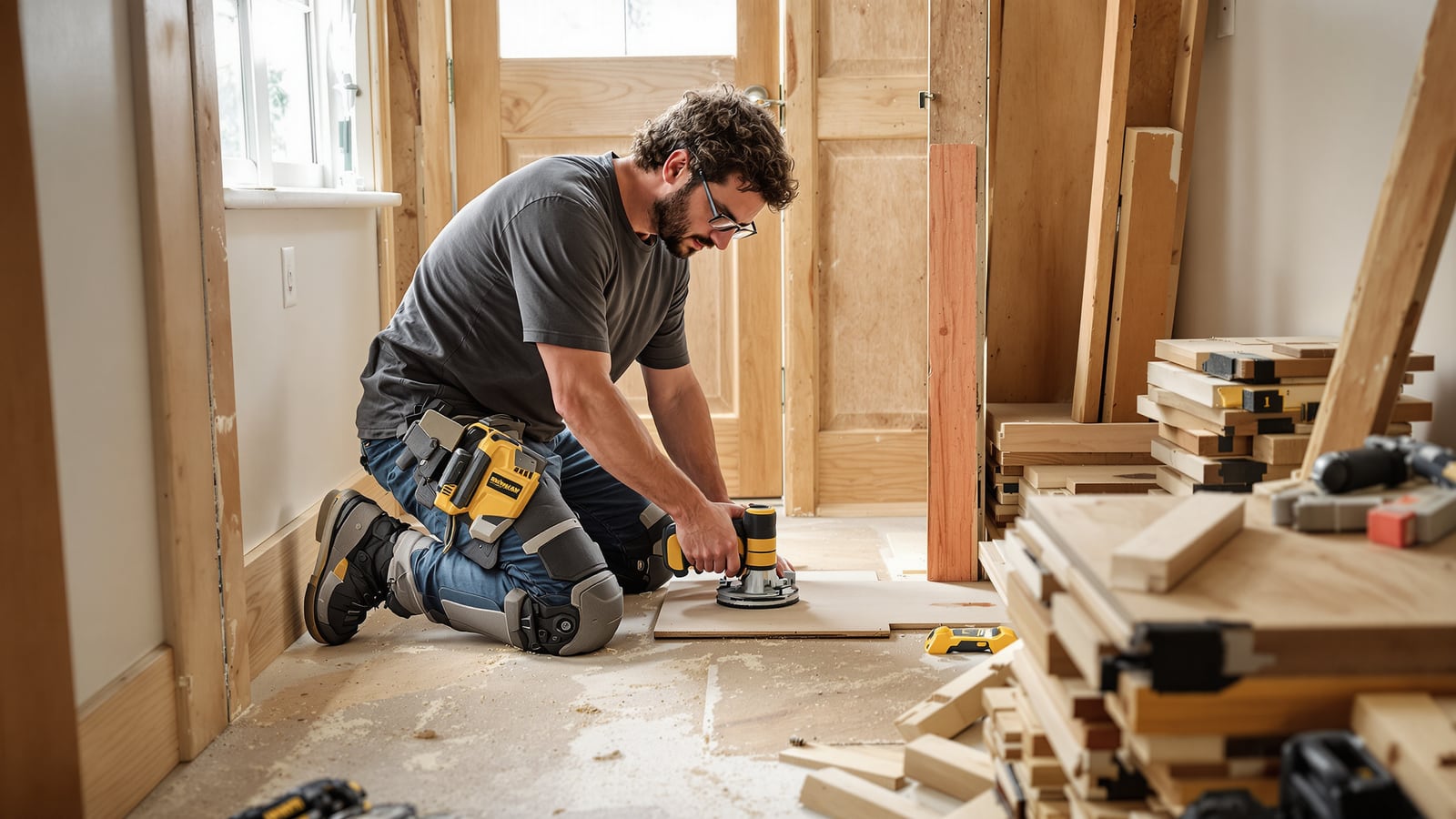
Say you're laying new flooring and the door jamb is in the way. Turn the multi-tool on its side, lay the blade flat on a scrap of the flooring, and cut the bottom of the jamb off so the plank slides under it. The cut is clean and sits exactly at the height you chose. A recip can't do that. A hand saw can, but you'll be on your knees for an hour.
That's the multi-tool's job. It does the following:
- Flush cuts on door casing, baseboard and trim.
- Plunge cuts into drywall or paneling for outlet boxes, without a starter hole.
- Cutting nails that stick out of a board you want to save.
- Scraping old caulk, adhesive and thinset, with a scraper blade.
- Grout removal with a carbide blade, a slow job but a controlled one.
- Sanding in corners with a triangle pad.
It's no good at big cuts. Run it through a 2x4 and you'll be there a while and the blade will smell like a campfire. Use it for precision and nothing else.
What to pay
These are ballpark street prices for bare tools, meaning no battery or charger. Check the shelf before you trust any number in an article, ours included.
Reciprocating saws
- Corded, entry level (Ryobi, Skil, Harbor Freight Bauer): roughly $50 to $90. Fine for a few jobs a year.
- Cordless mid-range (Ryobi One+ HP, DeWalt 20V, Makita 18V): roughly $100 to $200 bare. This is the sweet spot for most garages.
- Pro cordless (Milwaukee M18 Fuel Sawzall, DeWalt 20V Max XR): roughly $180 to $280 bare. Worth it if you demo weekly, not otherwise.
Oscillating multi-tools
- Budget (Harbor Freight Bauer, Ryobi, Skil): roughly $40 to $100.
- Cordless mid-range (DeWalt 20V, Milwaukee M18, Makita): roughly $120 to $220 bare.
- Fein Multimaster: roughly $200 and up, corded or cordless. Fein invented the category, and the blade grip and vibration control show it.
What the cheap one gets right and wrong
On a recip, the cheap one gets nearly everything right. It's a motor and a blade holder. The weak points are vibration, a shorter stroke that cuts slower, and a clumsy blade clamp. For a handful of cuts a year, buy the cheap corded one and spend the savings on good blades.
On a multi-tool, cheap is riskier. The motor's fine. The problem is the blade interface. A budget model can be tied to its own blade style, or loose enough that the blade wobbles and the cut wanders. Look for a tool-free blade change and a universal mount or the Starlock system, and check that the blades you want are sold at your local store. A cheap multi-tool with blades you can't find is a paperweight.
The blade matters more than the saw
A $60 recip with a good demolition blade beats a $250 one with a dull blade. This is the thing nobody mentions at the register.
Buy bi-metal blades from Milwaukee, DeWalt or Diablo, and match the teeth to the job:
- 6 TPI for wood and pruning.
- 10 to 14 TPI for pipe and thick metal.
- 18 to 24 TPI for thin sheet metal.
- Carbide or grit for cast iron, tile and anything abrasive.
Pick a length longer than the material is thick. And keep a few spares, because a blade that's cut one nail is already half used.
Safety, plainly
- Wear glasses and hearing protection. Both tools throw debris and make noise out of proportion to their size.
- Never cut blind into a wall. Shut off the breaker for that circuit first and use a detector. A recip blade finds wires and water lines without any warning.
- Pull the battery or unplug before a blade change. Blades also come out hot enough to burn, so let them cool.
- Clamp small work. A recip that grabs a loose piece will fling it or your hand.
- Keep both hands on the tool and your feet planted. If the blade binds, let go of the trigger and don't fight it.
Rent, borrow or buy
Don't rent either of these. At a day's rental rate you're a fraction of the way to owning one.
Rent the tools these two can't replace. A cast iron snap cutter beats a recip on a long run of old drain pipe. A tile saw does clean work that a multi-tool grinds through. A demolition hammer does the jobs that make a recip scream. The full breakdown is in The Tools You Should Rent and the Ones You Should Just Buy.
If you're choosing a battery system as you go, read How to Pick a Cordless Tool Platform You Won't Regret before you buy either one. And if you're building out the saw lineup, The Three Saws a Home Shop Needs and What They Cost shows where these two fit.
What we'd buy and what we'd skip
Buy: a mid-range cordless recip on whatever battery platform you already own, plus a pack of 6 TPI demolition blades and a pack of metal-cutting blades. Add a multi-tool from the same platform if you can, with a small kit of flush-cut, scraper and sanding accessories.
Skip: the giant 100-piece accessory kit. You'll use four of them.
Put both tools in the same drawer, with blades labeled, and they'll be there when the next door jamb needs trimming. After a recip has cleared a Saturday's worth of junk and a multi-tool has made a floor look like a pro laid it, you'll stop wondering which one to buy.
Dean Shaw
Gear & Garage
Reads the warranty, the parts list and the long-term owner reviews before anything else. Trucks, tools, watches, and the cheap version that costs more.

Watch
Worth an hour of your evening
More from Tools & Organizing.
From channels we rate. Plays on YouTube.
Read next