Shin splints or a stress fracture, and how to tell them apart
One hurts along a stretch of bone and warms up as you run. The other hurts on a spot the size of a dime and gets worse. Learn the difference before you lose a season.
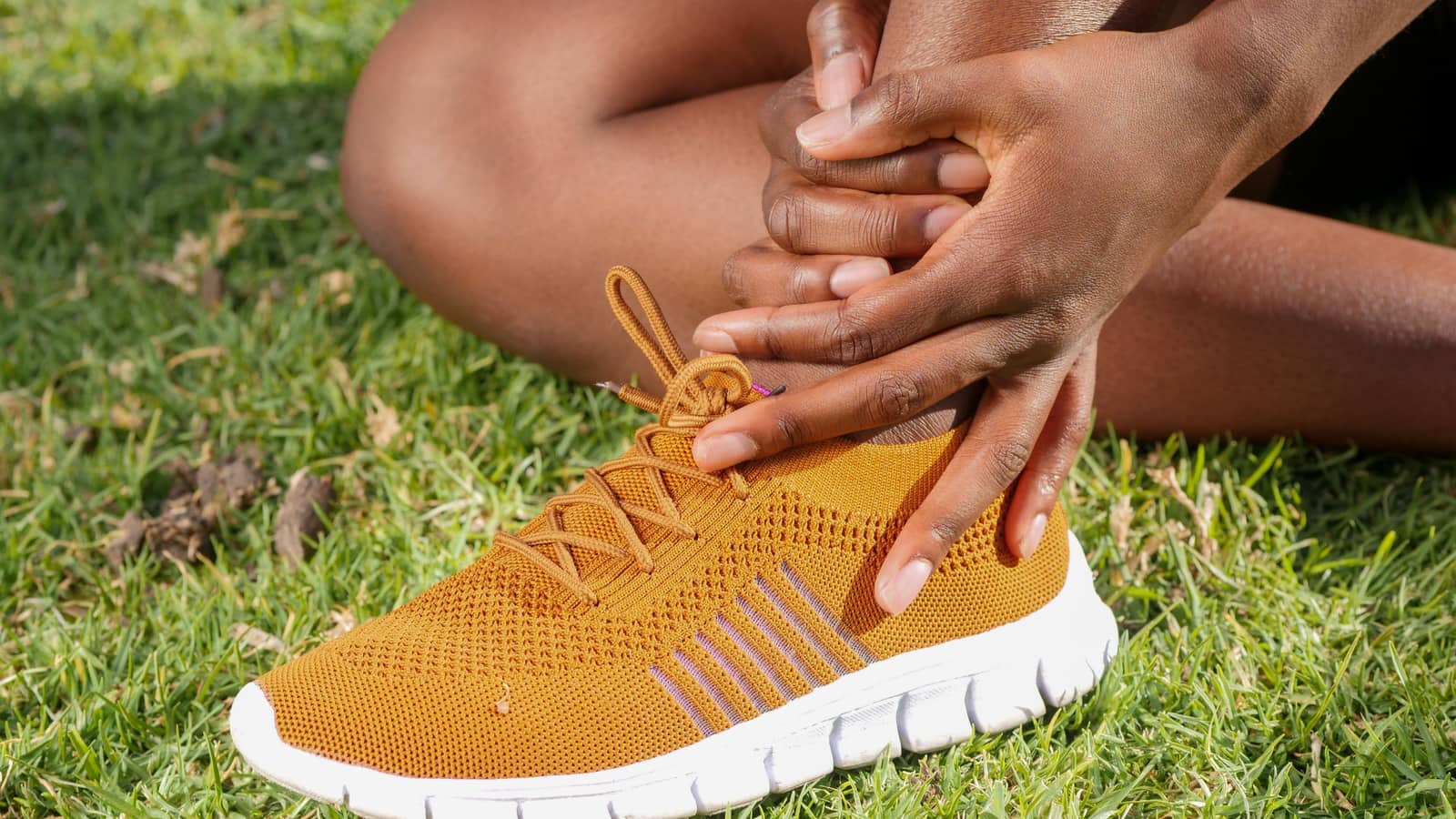
Put one finger on the sore part of your shin and press.
If the tenderness runs along a stretch of bone three or four inches long on the inside edge of your lower leg, you're probably dealing with medial tibial stress syndrome. Shin splints. Annoying, common, fixable.
If you can cover the worst of it with a fingertip and it makes you flinch, treat that as a stress reaction or a stress fracture until a doctor tells you otherwise. Pinpoint pain on bone is the one finding that should change your plans for the next six weeks.
That's the whole triage in two paragraphs, and most new runners never learn it. They learn instead that "everybody gets shin splints," they run through it, and in week seven they're in a boot for the summer.
The other tells
Shin splints usually warm up. First mile is rough, mile two feels better, and the ache comes back a couple hours after you stop. A stress fracture goes the other way. It's fine for the first few minutes, then it gets louder, and by the end of the run you're changing how you land to protect it.
Night pain matters. If the shin aches while you're lying in bed doing nothing, that's bone talking, not muscle and fascia.
Then there's the hop test. Stand on the bad leg and do ten small single-leg hops. Shin splints will feel achy and tolerable. A stress fracture tends to produce one sharp, specific, "nope" response on the first or second hop. If you get that, stop hopping. You just got your answer and there's no prize for confirming it eight more times.
None of this replaces a diagnosis. Go see a sports medicine physician or a podiatrist. And know this going in: a plain X-ray taken early often shows nothing at all, because the fracture line hasn't remodeled enough to be visible yet. A clean X-ray in week two isn't an all-clear. If the exam is suspicious, ask what an MRI would add. Some doctors will skip imaging entirely and just treat it based on how it behaves, which is a reasonable call.
Why it happens to new runners specifically
Bone adapts to load. It just adapts slower than your lungs and your motivation do.
Four weeks into running, your cardiovascular system feels great. You can hold a conversation at a pace that wrecked you in January. So you add miles, because the engine says yes. Meanwhile your tibia is still partway through a remodeling process that runs on a timeline of months, and in the early phase of that process the bone is briefly weaker than it was before you started.
That gap between how good you feel and what your skeleton is ready for is where almost every new-runner shin injury lives.
The old 10 percent rule, meaning don't raise weekly mileage more than about a tenth at a time, is crude and it isn't a law of physics. But it's a decent guardrail when you have no other data about yourself. Going from zero to a 10K plan you found online in three weeks isn't a guardrail.
Two other things load the dice. Old shoes, which most people replace by feel rather than by mileage, and manufacturers generally suggest somewhere in the range of 300 to 500 miles depending on the shoe and the runner. And underfueling. If you're running four days a week while eating like someone who sits at a desk seven days a week, you're asking your body to build bone on a budget it doesn't have. This is a real and well-recognized problem, and it shows up in women and men both. Skipping breakfast because you're rushing two kids out the door and then running at lunch is a pattern worth naming out loud.
What to actually do about shin splints
Don't stop moving. Stop hurting.
Drop the running volume until you can run without pain during or after, even if that number is zero for a stretch. Keep the aerobic work with a bike, a pool, an elliptical, a rower, whatever you have access to. The fitness you built isn't going anywhere in two weeks and panicking about that's how people re-injure themselves.
Then build the leg that failed you.
- Calf raises, both straight-knee and bent-knee. Three sets of 12 to 15, slow on the way down, most days of the week. Then load them. Hold dumbbells. Do them off a step. Soleus strength is the thing most new runners are missing.
- Tibialis raises. Heels on the floor, toes lifting against a wall or a band. They feel silly and they work.
- Hip abduction and single-leg work. Side-lying leg raises, step-downs off a six-inch box, single-leg deadlifts with a light weight. A hip that collapses inward makes the shin eat the difference.
- Cadence. Count your steps for 30 seconds on your next easy run and double it. If you're shuffling out long slow strides and landing well ahead of your body, shortening the stride slightly and picking up the turnover reduces the load per step. Small adjustment. Don't overhaul your form over a single number.
Surfaces help at the margins. If every run is on the same cambered shoulder of the same road, you're running with one leg permanently downhill. Flip direction, or find a track, or use a treadmill for a few weeks.
What to do about a stress fracture
Less, and for longer than you want.
Most low-risk tibial stress fractures are managed with a period of no running, often something like six to eight weeks, then a graded return that starts with walk-jog intervals. Your doctor will set that timeline, and some locations, notably the front edge of the tibia, the femoral neck and the navicular in the foot, are treated much more cautiously because they heal badly.
Ask your doctor two specific questions. First, is this a low-risk or high-risk site. Second, what's your vitamin D and calcium situation, and is that worth checking. Also ask about anti-inflammatories. There's an ongoing conversation in orthopedics about whether routine NSAID use interferes with bone healing, and your doctor's call on that should be made with your case in front of them, not by you and a search bar at 11 p.m.
What will get you is the halfway mark. Around week four you'll feel completely fine, because you've stopped loading the bone and pain at rest disappears long before the bone is done. That's not the finish line. That's the trap.
The version that actually survives a family
Three runs a week, for a year, beats six runs a week for five weeks and then a boot.
Make one of them short and easy, twenty minutes, no watch. Make one of them a run-walk, even when you don't need it, because the walk breaks are what let you add volume without adding impact. Make the third one the one you look forward to.
Add strength twice a week and keep it to fifteen minutes. Calf raises while the pasta water boils count. Perfect isn't on the menu when there's a second grader who needs a reading log signed.
And when your shin starts talking, press on it with one finger before you decide what it's saying.
Cal Brennan
Fitness
Strength coach. Trains fathers, tradesmen and desk workers, which means programs that survive a bad week.

Watch
Watch how it's done
Picked for this article.
From channels we rate. Plays on YouTube.
Bob & Brad
Shin Splints? Or Do You Have a Stress Fracture? 3 Signs Tibia Fracture
Mission Move Physical Therapy
Shin Splints VS. Stress Fracture: Learn How to Tell the Difference
Read next