The toenail corner you keep cutting wrong
Ingrown nails, thick yellow nails, and the exact point where home care stops working and you make the call.
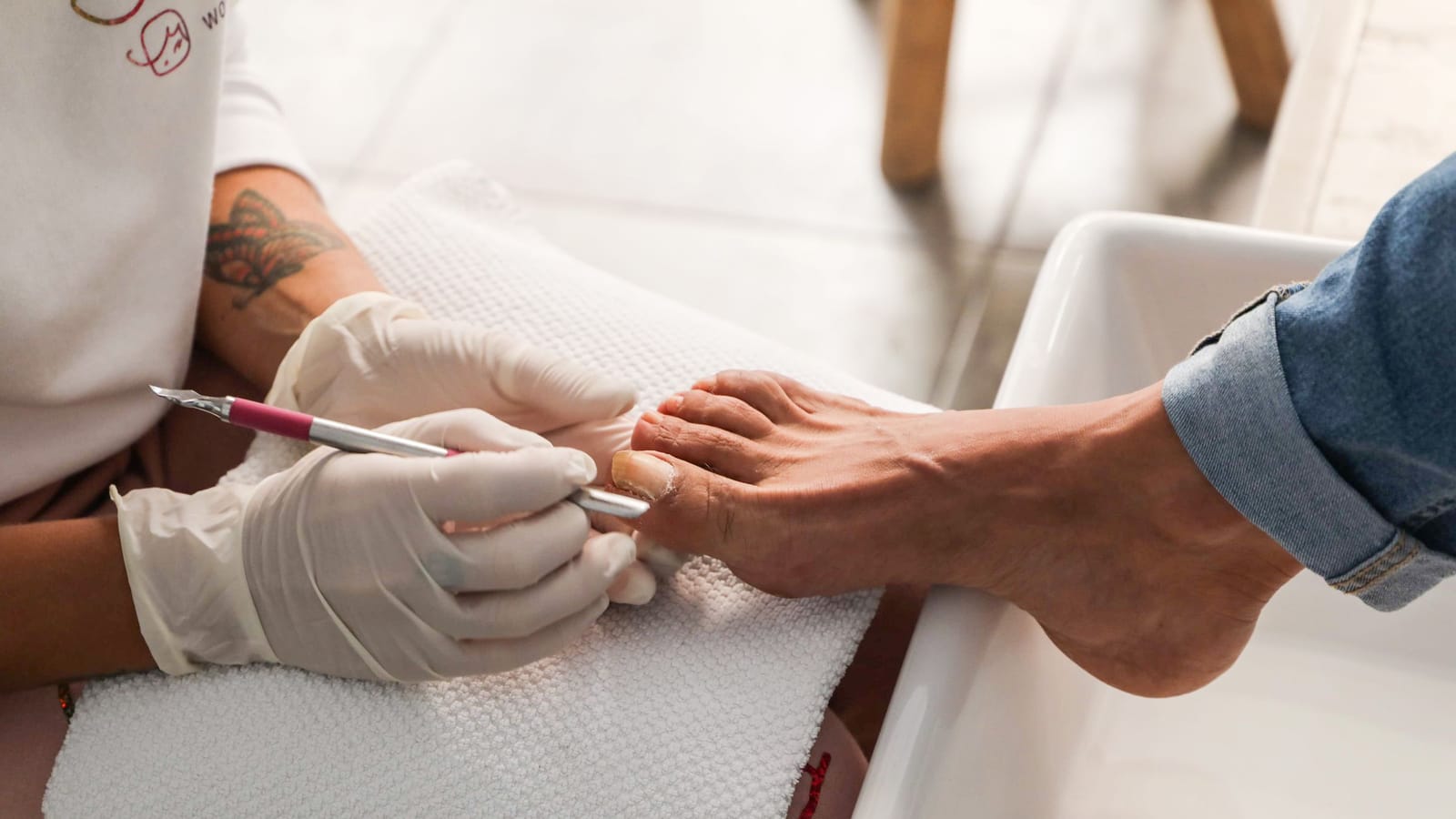
Cut straight across. Leave the corners where you can see them, sitting just past the skin. That's it. That one habit prevents most ingrown toenails, and almost nobody does it, because rounding the nail to match the toe looks tidier and feels better for about four days.
Then the corner grows back under the skin fold instead of over it, and now you've got a spike of keratin pressing into soft tissue every time you take a step in a work boot.
The big toe takes the hit ninety percent of the time. It's the widest nail, it gets the most pressure from the front of the shoe, and it's the one you jam when you carry a couch down a stairwell. Runners get it from shoes a half size too small. Teenagers get it constantly, partly because their feet grow faster than their parents buy shoes.
The first two weeks, done realistically
You feel it before you see it. Tenderness along one edge, worse when you press the side of the toe, and a shoe that suddenly feels narrow on one foot only.
At that stage the home plan is short:
- Soak the foot in plain warm water for ten minutes. Epsom salt is fine. It isn't doing anything magic. The warm water is what softens the skin and the nail edge.
- After the soak, push the skin fold gently away from the nail with your thumb. Not the nail. The skin. Ten seconds, both sides.
- Tuck a wisp of cotton or a short piece of dental floss under the corner so the nail edge grows over the skin instead of into it. Change it daily. It'll feel dumb. It works.
- Wear the widest shoes you own until the tenderness is gone, and cut the tip off an old sock if the seam presses on it at night.
The brief version everybody actually follows: soak once a day in the shower with the water hot and your foot in the corner, then push the skin back. Two minutes. The twice-daily fifteen-minute soak regimen is better. It also lasts about three days in a house with kids and a 6 a.m. alarm, which makes it worth zero.
Give it two weeks. If the pain is fading and the edge is coming free, you won.
The thing you're about to do in the bathroom
Don't dig the corner out.
Everybody tries it. You get the clippers in there, get a satisfying angle, snip off the offending point, and feel immediate relief. What you almost always leave behind is a splinter of nail buried in the fold, sharp end forward. It keeps growing. It keeps stabbing. Two weeks later the toe is twice as angry and now there's a bacterial infection in a puncture wound you made yourself.
Same goes for cutting a V-notch in the middle of the nail. That's an old barbershop myth. Nails don't grow sideways toward a notch.
When to stop managing it and make the call
Go now, not next month, if you see any of this:
- Pus, or a shiny swollen bead of tissue at the nail edge that bleeds when it's touched
- Redness spreading away from the toe, red streaking up the foot, or a fever
- Throbbing that wakes you up
- Any ingrown nail at all if you have diabetes, neuropathy, peripheral artery disease, or you're on chemotherapy or immunosuppressants
That last line isn't boilerplate. If sensation in your feet is reduced, you don't get the early warning the rest of us get, and a small nail injury can turn into a deep infection without much pain to announce it. In that case, skip the home care entirely and let a podiatrist handle the nail.
What actually happens at the podiatrist
People avoid this for years because they imagine something medieval. It's about twenty minutes.
You get a local anesthetic block at the base of the toe. That's the only part that hurts, and it's a few seconds. Then a narrow strip of nail along the offending edge gets removed, root and all. Most of the time the doctor applies phenol to that strip of nail matrix so it doesn't regrow. The nail comes back about eighty percent as wide as before and nobody notices unless you point it out.
You walk out. You wear a sandal or a cut-open sneaker for a few days, soak it daily, and it oozes for a couple of weeks, which is normal and looks worse than it is. Running is usually off the table for around two weeks. Cycling, rowing and lifting in a stiff-soled shoe are generally fine much sooner. Your podiatrist sets the timeline, not an article.
The partial procedure with phenol has a considerably lower recurrence rate than just pulling the nail and hoping. If somebody offers to remove the whole nail without treating the matrix, ask why.
Now the yellow, thick one
Different problem, different rules, and the first rule is the one everybody skips.
A thick, yellow, crumbly toenail isn't automatically fungus. Old trauma does it. So does psoriasis. So does years of a nail bed getting hammered by the front of a running shoe. A meaningful share of nails that look fungal aren't, and the treatment for a fungal nail is months long, so you want to know before you start.
Ask for a nail clipping to be sent for testing. They snip the leading edge and some of the debris underneath, send it off, and you get an answer. It costs you one appointment and saves you a season of treating the wrong thing.
What treatment really looks like
Topical lacquers and solutions exist. They're painless, they're safe, and you paint them on every day for roughly a year. Cure rates are modest, especially once the fungus is into the base of the nail. They work best on a mild case affecting the outer part of one or two nails.
Oral antifungals work better. The standard toenail course runs about three months, and it requires a conversation about your liver and every other medication you take, which is exactly why it's a prescription and not a suggestion from me.
Either way, filing the nail down matters. A thick nail is a fortress. Take the thickness off the top with a coarse file or have it debrided at the office, and topicals stand a chance of reaching the nail bed. Also trim the nail short and square so the shoe stops punishing it.
And understand the timeline. A big toenail grows out over roughly twelve to eighteen months. Even when treatment works, the nail you're staring at in month four still looks awful, because it's the same nail. Judge progress by the new growth at the base, not by the tip.
Laser treatment gets marketed hard. It's usually cash-only, it's usually several hundred dollars, and the evidence behind it's thinner than the marketing.
The maintenance that survives a Tuesday
Fungus likes warm, dark, damp. You control damp.
Dry between your toes with the towel, every time. Not the general vicinity of your feet. Between the toes. If you skip one, skip a different one.
Rotate two pairs of work shoes and two pairs of trainers so each gets a full day to dry out. Wool or synthetic socks, not cotton. Antifungal powder in the shoes if your feet sweat hard.
Treat athlete's foot the moment you see it, because the skin infection is what seeds the nail. Wear flip-flops on the gym floor and in hotel showers. Wipe your clippers with rubbing alcohol, and don't share them with the kid who has the same problem.
Buy shoes with a thumb's width in front of the longest toe, which on a lot of people isn't the big toe. Try them on at 5 p.m. when your feet have swollen. A half size up for running isn't vanity damage, it's how you keep your toenails.
None of this is a substitute for a doctor looking at your actual foot. It's the stuff that keeps you from needing one.
Your feet do about five thousand reps a day whether you programmed them or not. Spend the four minutes.
Cal Brennan
Fitness
Strength coach. Trains fathers, tradesmen and desk workers, which means programs that survive a bad week.

Watch
Watch how it's done
Picked for this article.
From channels we rate. Plays on YouTube.
The Well-Heeled
How to fix ingrown toenails at home - Podiatrist explains
StepSistersDPM
Ingrown toenail at home? Doctors say try this!
Read next