

A work shirt usually dies at the buttons, not the fabric
The fabric outlasts the buttons on most good shirts. What actually pops them off, how to sew one on to stay, and why real bone beats the plastic it came with.
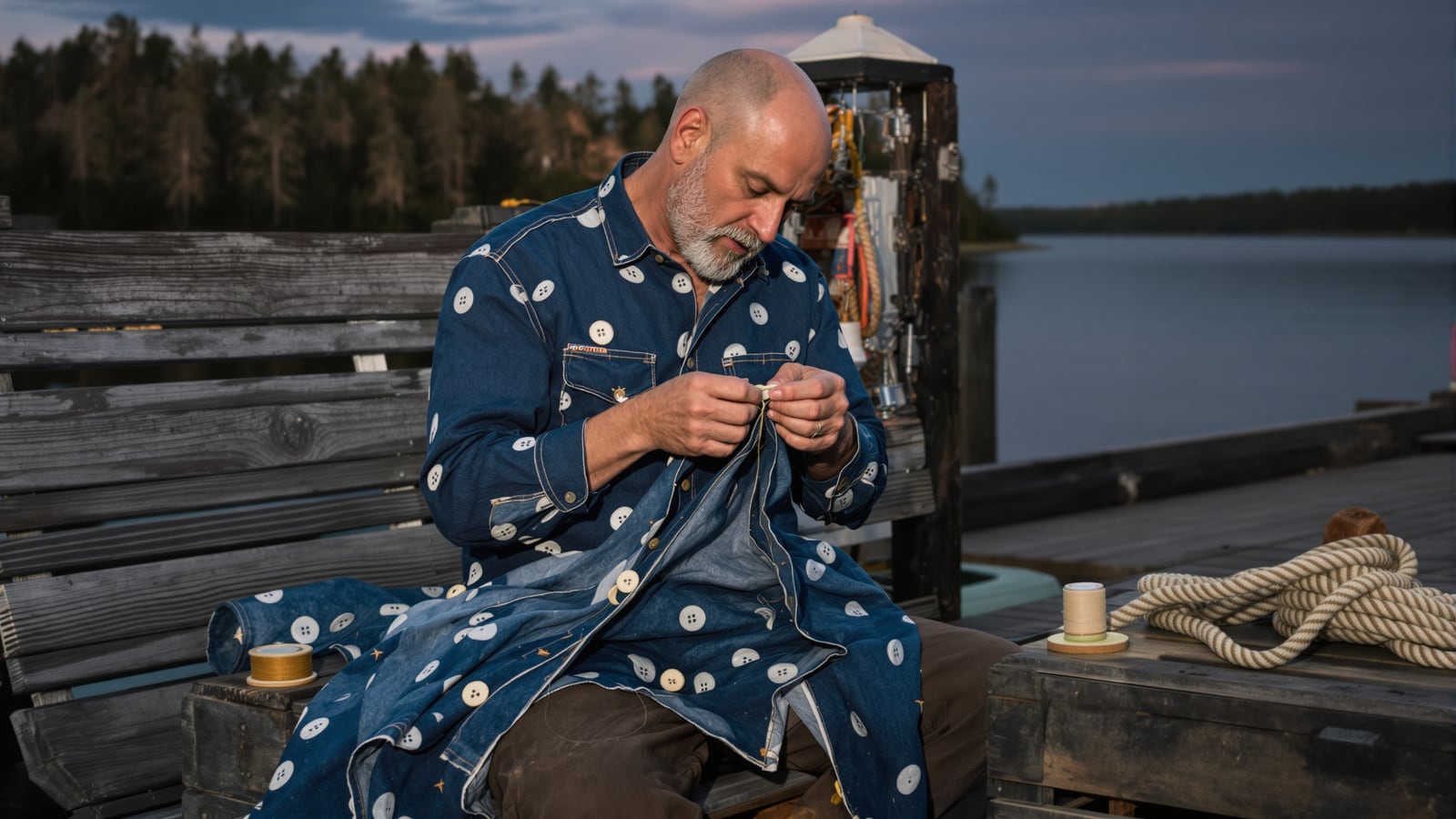
Quick answer: Most "broken" buttons are failed thread. Fix that first with a thread shank and eight or so passes. If you want a button that won't melt, craze or chip, swap the factory plastic for real bone or corozo.
The button usually isn't what broke
Pick up a shirt that's lost a button and look at the spot. Nine times in ten the button is perfect. It's sitting in a truck door pocket or a washer drum while the shirt wears a ragged gap.
Factory buttons are sewn on by machine with a single chain stitch. Pull one thread end and the whole stitch can run out like a zipper. Add a button that's pressed tight to the fabric with no slack underneath, and every tug on the placket lands straight on those few threads.
Then there's the holes. Cheap molded buttons often have sharp edges inside the holes. Every time the shirt flexes, that edge saws at the thread a little more. Six months of reaching, bending and lifting, and the thread lets go.
So the button isn't the villain. But the button you choose decides how much grief the thread has to put up with.
What actually takes buttons out
Impact. The lower buttons and the cuffs take the hits. A tailgate, a steering wheel, a belt buckle, the edge of a workbench. Thin plastic with a pressed rim chips or cracks, and a cracked button cuts its own thread.
Heat. A hot dryer tumbles buttons against the drum for forty minutes. A hot iron can warp or glaze a cheap polyester button in a second. You'll know the ones: they come out with a dull, wavy edge.
Solvents. Brake cleaner, acetone and some degreasers cloud and craze many plastics. If you work around any of that, you've probably seen buttons turn chalky.
Pressing machines. If your shirts go out to a laundry or cleaner, the press can crush a thin button. Pearl shell buttons are lovely and thin, and they're the first to go.
Plain neglect. A loose button gets a little looser every day, then takes a bad hit and disappears. Tightening one in thirty seconds beats replacing it with a mismatched button after the fact.
Why bone holds up
Bone is dense. It doesn't melt, so the iron and the dryer aren't a problem. Solvents that cloud plastic leave it alone. It's thick enough that a knock from a tailgate rarely does more than scuff it, and a well-polished one has smooth hole edges that don't saw at the thread.
It also looks right. A matte, slightly mottled button on a chambray or twill work shirt says something a shiny disk of polyester doesn't. If you've read our piece on workwear that still looks right after you clock off, this is one of the quiet details that does the work.
Now the honest part. Bone isn't indestructible. A hard enough blow on a thin edge will crack it. It can stain if you get oil on a bare one, and it can yellow over the years. And a good deal of what's sold as "bone" is plastic molded to look like it.
Here's how to tell on a spare button, never on the one on the shirt. Heat a needle with a lighter, then touch it to the back. Plastic softens and smells like hot chemicals. Real bone resists the point and gives off a burnt-hair smell. Real bone also has fine grain lines and little pits, and it feels heavier than it looks.
Corozo, a button made from a seed called tagua nut, is the other good choice. It's hard, takes dye well, and runs a lot cheaper than bone. For a work shirt it's about as good, and it's easier to find in the right size.
And be fair to plastic. A thick, well-made urea or melamine button with smooth holes can outlast a chipped bone one. The cheap thin kind is the problem, not plastic as a category.
Sewing one on so it stays
You need a needle, a spool of heavy-duty or button thread, and a toothpick or matchstick. Scissors, and about ten minutes.
- Cut a long piece of thread, about a forearm and a half. Double it through the needle and knot the end. Doubled thread is the whole game.
- Start from the back of the fabric, up through where the button goes, so your knot hides on the inside.
- Lay the toothpick across the top of the button between the holes. This creates slack.
- Stitch through the holes. Go up through one, down through the opposite, over the toothpick. For a four-hole button, run two parallel lines or an X. Make eight to ten passes. Pull firmly, but don't crush the button down.
- Pull out the toothpick. The button rises on its thread. Tug it toward the top.
- Wrap the shank. Bring the needle up between button and fabric, and wind thread tightly around the stems four or five times. That column of thread is the shank, and it's what lets the button sit properly in the buttonhole.
- Finish underneath. Push the needle to the back, make three small stitches in the same spot, and snip. Add a tiny dab of clear nail polish on the knot if the shirt gets heavy use. A little old trick, and it works.
Cuffs and the lowest button need the same method, just with a thinner shank so the button sits flatter.
Swapping the whole set
If the shirt's worth keeping, change all the buttons at once, not just the one that quit. A shirt with six factory buttons and one bone one looks like a repair job, and the plastic ones will fail next.
Before you buy, check three things. Match the diameter, because a button that's too big won't pass through the buttonhole, and one that's too small slips back out. Match the number of holes, usually four. And check the thickness, because very thick buttons can be hard to fasten on a snug buttonhole.
Buy a few extra. Carry a spare button and a small needle in the truck's glove box or your lunch bag. It beats walking around the job site with your shirt open.
Check the little bag too. Many good work shirts come with a spare button sewn inside the tail or in a plastic pouch. Most men toss it. Sew it onto the inside of the hem on a shirt you like, so the match is there the day you need it.
When to retire the shirt instead
If the fabric's gone thin around the placket, a new button just rips through it. Put the shirt in the shop rag pile and buy another. But if the cloth is sound and only the buttons are tired, you've got a good shirt hanging in the closet looking for ten minutes of your attention.
The shirt stays in service. You've also left it better than you found it, which is the whole code. The next time you pick it up, nothing on it is hanging by a thread.
If you wear jackets over your shirts all day, the same logic applies. See buy the work jacket once and wear it for ten years for the hardware worth checking before you buy. And if you're deciding what layers underneath, why your flannel shirt isn't keeping you warm is worth a few minutes first.
Tobias Reed
Style & Grooming
Spent a decade in menswear retail watching men buy the wrong size. Believes fit is ninety per cent of it and says so weekly.

Watch
Worth an hour of your evening
More from Country Style.
From channels we rate. Plays on YouTube.
Read next