

Your work gloves aren't wearing out, they're drying out
That crack across the knuckles didn't come from hard work. It came from a wet glove drying on the heater.
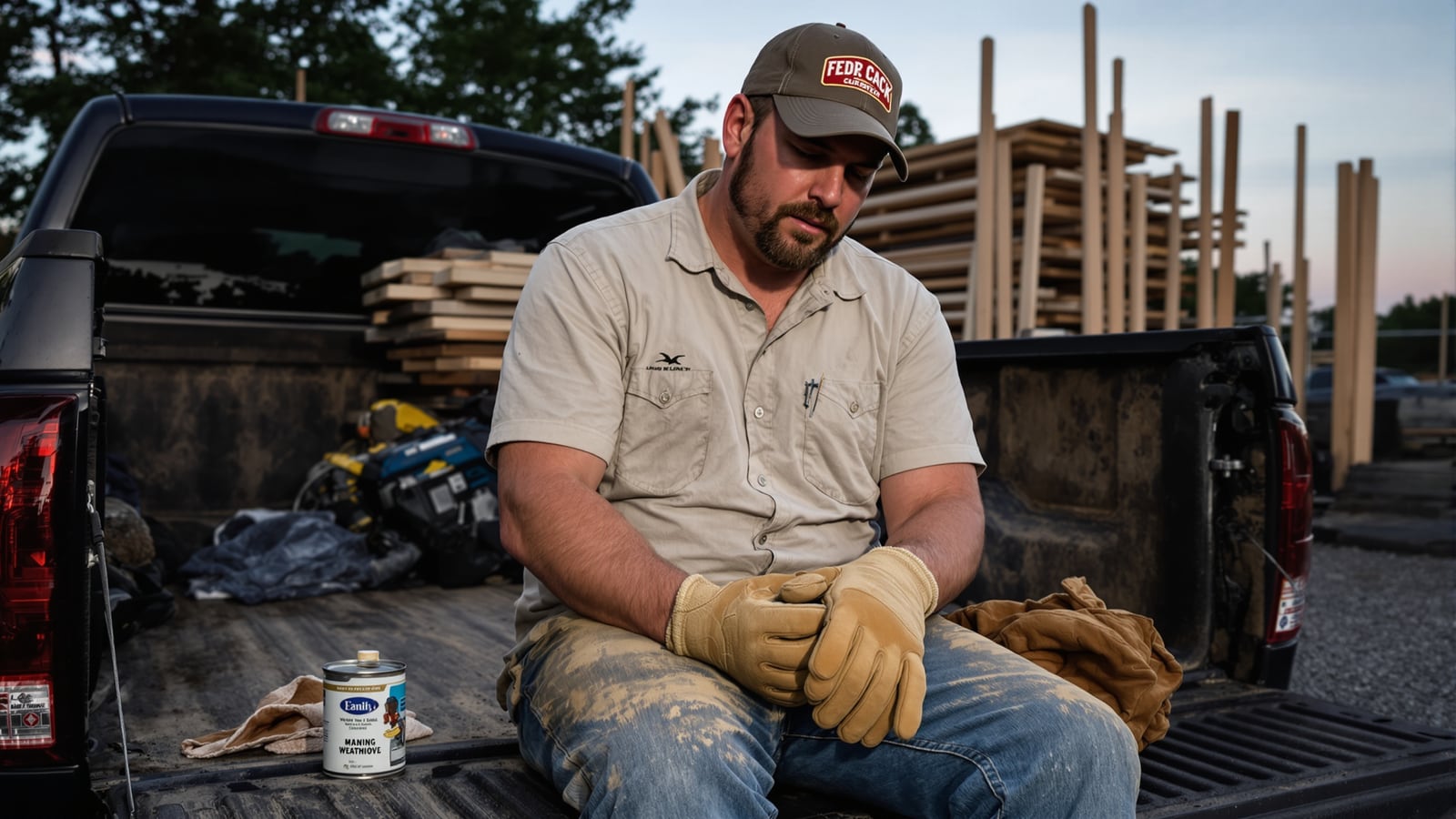
Quick answer: Leather cracks when the oils that keep its fibers slick are gone. Water, heat and sweat strip them out. Dry wet gloves slowly and away from heat, and work a thin coat of pure neatsfoot oil or a leather dressing into them while they're still a little damp.
The pair on the dash
Every farm and job site has the same pair. Tan once, now the color of a paper bag. Stiff as a board in the morning. A crack across each knuckle you could lose a dime in.
The owner will tell you he's hard on gloves. He isn't. He's hard on them in one specific way: he soaks them, then he dries them on the truck heater or the dashboard in July, then he does it again. The work didn't kill that leather. The routine did.
You can see it in how the damage lands. Cracks don't show up evenly. They show up where the glove bends most, at the knuckles, across the finger creases and in the web of the thumb. That's not wear. Wear is a thin, shiny, rubbed-through spot on the palm and fingertips. Cracking is a split in the surface that runs along a fold. Different cause, different fix.
What you're actually wearing
Leather is skin. Tanning stabilizes it so it won't rot, but it doesn't turn it into plastic. It's still a mat of tightly woven fibers, and those fibers glide over each other because they carry oil and fat. That glide is why a good glove flexes a thousand times a day and keeps going.
Pull the oil out and the fibers stop gliding. They stick to each other. The leather goes stiff, then hard, then brittle. Bend brittle leather at a knuckle and the surface can't stretch, so it splits. Every flex after that opens the split a little more.
So the cracking isn't a sign you used the glove. It's a sign you used it after it ran dry.
What pulls the oil out
Water and heat together. Soaking alone does some harm, since water carries oil out as it dries. Fast heat does the real damage. A glove left on a woodstove, a space heater or a hot dash loses its moisture so quickly the fibers shrink and lock in that stiff shape. You've seen the result: gloves that dry the shape of a clenched fist and never relax.
Sweat. A glove you wear all day is a small, damp, salty room. Sweat salts dry in the leather and draw out more of what's left. Heavy-use gloves go dry from the inside as much as from the weather.
Sitting in the sun. A pair left in the truck bed or on a fence post all summer bakes. The surface goes first, then the rest.
None of that's exotic. It's just the ordinary life of a work glove, handled carelessly.
How to dry them right
Wet gloves, end of the day. Do this.
- Knock off the mud and muck with a stiff brush or a dry rag. Don't rinse them again unless they're truly caked.
- Squeeze out water gently. Don't wring them. Twisting stresses the same fibers you're trying to protect.
- Shape them. Pull the fingers straight and open the cuff, then set them somewhere with moving air and no heat. A shelf in the mudroom works. So does a nail near an open window.
- Give them a night. Maybe two if they were soaked through.
Stuffing a little newspaper in each finger speeds it up and holds the shape. Change the paper once if it gets sodden.
The rule is simple. If the spot where you're drying them is too hot to hold your hand against comfortably, it's too hot for the glove.
Put the oil back
This step is what separates a pair that lasts five years from one that lasts one season.
Do it while the gloves are dry on the surface but still a touch cool and damp inside. Leather takes in oil best at that stage, because the fibers are loose and open. Bone-dry leather soaks it up unevenly and sits greasy on top.
Use pure neatsfoot oil, or a leather dressing with oils and wax. Read the label on neatsfoot. "Compound" usually means it's cut with something cheaper, and pure is the one you want. A beeswax-and-oil dressing also works well and adds some water resistance.
Put a little on a rag, not on the glove. Work it into the knuckles, the finger creases and the thumb web first, since those are the spots that fail. Then do the rest. Wipe off whatever hasn't soaked in after about twenty minutes. Let them sit overnight and flex them in your hands the next morning.
Two thin coats beat one heavy one.
The trade-off
You can overdo it. Soak a glove in oil and the leather goes soft and spongy, loses its shape and stops gripping well. A greasy glove on a wrench or a rope isn't a good glove. Oil them when they start to feel stiff or look pale and dry, not on a schedule just because you're bored. Once or twice a season is plenty for most people. Heavy daily use in wet conditions needs more.
Grade matters too. Full-grain gloves take oil and recover well. Split leather, the rougher underside layer common in cheap gloves, is thinner and less dense. It'll take a dressing, but don't expect miracles from it. If you're buying a pair you plan to keep, it's worth the extra money for the better hide. The same logic runs through how leather fails from neglect long before it wears out, and it applies to boots, belts and holsters as much as gloves.
Knowing when they're done
Oil can bring back leather that's stiff and dry. It can't close a crack that's gone through.
Retire the pair when the splits show daylight, when the surface flakes off in your fingers or when the leather tears as you flex it. A glove like that protects nothing, and a knuckle crack under load can open your hand.
Then do it right with the next pair. A good set of gloves belongs with the other things you buy once and look after, like a work jacket you can wear for ten years. Same habit. Same payoff.
The man with the paper-bag gloves will keep blaming the work. You'll know better. Hang yours by the window, give them their oil, and they'll still be soft when his pair is in the trash.
Tobias Reed
Style & Grooming
Spent a decade in menswear retail watching men buy the wrong size. Believes fit is ninety per cent of it and says so weekly.

Watch
Worth an hour of your evening
More from Country Style.
From channels we rate. Plays on YouTube.
Read next