

Why the blend work shirt outlasts the pure cotton one
Fabric weight gets all the attention, but weave and fiber decide how long a work shirt lasts. Here's what to check on the tag before you buy.
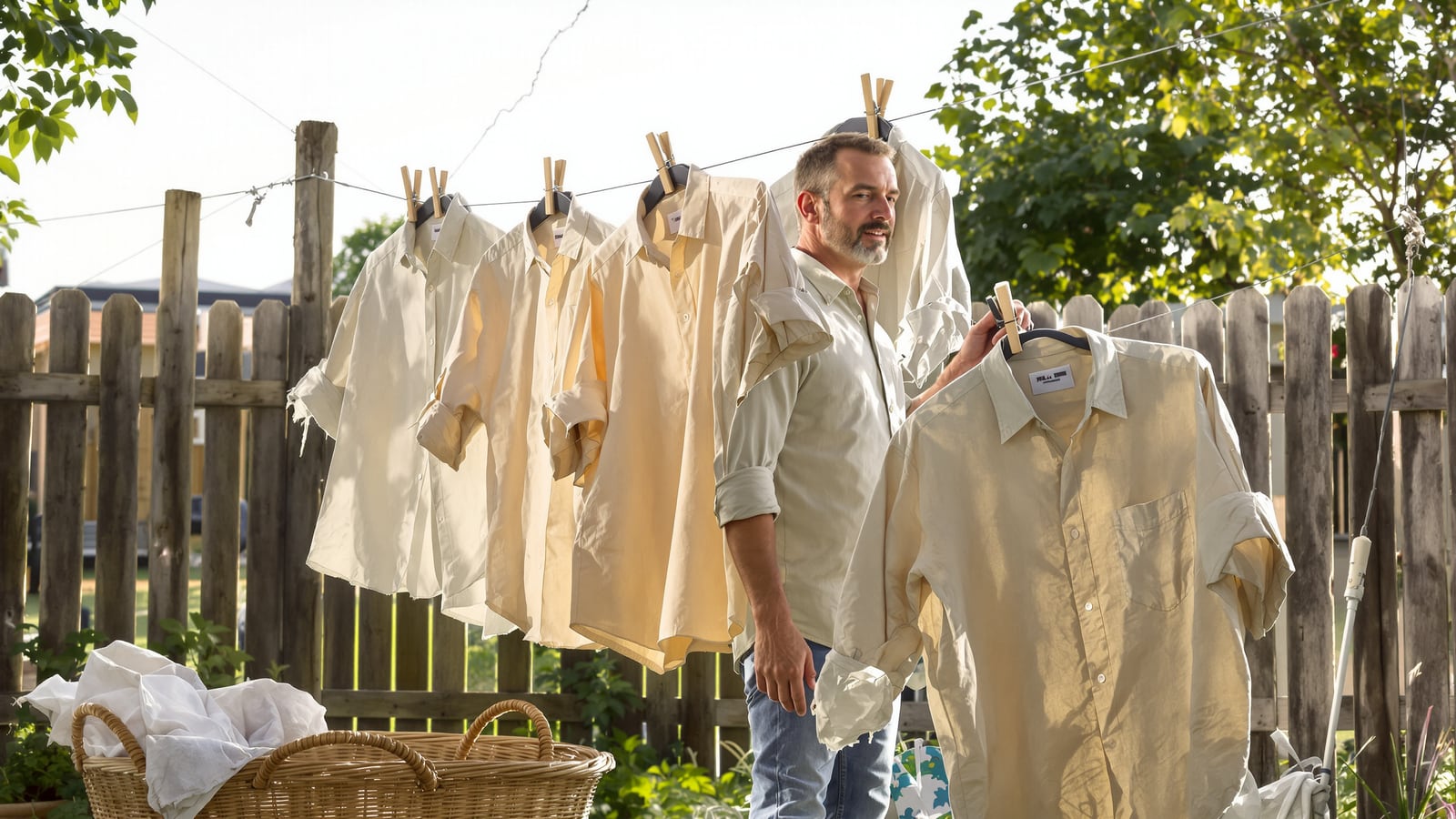
Quick answer: For daily hard use, buy a mid-weight twill in a cotton-polyester blend. Weight sets how it feels. The blend sets how long the collar, cuffs and elbows hold together. The exception is anything near sparks, torch work or open flame, where you want 100 percent cotton or a flame-resistant shirt, never a blend.
Pick up two shirts that look identical on the rack. Same color, same price, same stitched pocket. One is pure cotton and one is a cotton-poly blend. Flip the collar and read the tag. That tag will tell you more about your next two years of work than the brand on the pocket.
Most men shop by feel. They rub the fabric, decide the heavy one must be tougher, and carry it to the register. Sometimes they're right. Often they've bought a shirt that's stiff, hot and frayed at the cuffs by spring.
What the weight number actually measures
Fabric weight is ounces per square yard. Take one square yard of the cloth, put it on a scale, and that's your number. Tags don't always print it, but good makers list it online.
Roughly, it breaks down like this:
- 4 to 5 ounces: chambray and poplin. Light, cool, fine for a summer day, soft early on.
- 5 to 7 ounces: the twill work shirt. This is the sweet spot for most jobs.
- 8 ounces and up: canvas, duck, and shirt-jacket territory. Closer to a jacket than a shirt.
Heavier means more cotton per square yard, and that means more to wear through. It also means more weight on your shoulders in July, more sweat held in the cloth, and a longer wait to dry on the line.
Here's the trade-off nobody puts on the tag. A heavy all-cotton shirt wears out slowly in the middle of the panel and fast at the edges. The edges are where you live.
Weave beats weight
Two shirts at six ounces can wear completely differently because of how the threads cross.
Plain weave is over one, under one. Poplin and chambray are plain weave. It's light and breathable, and it's also the first to snag, since each thread is held in place at every crossing and a single break starts a run.
Twill is a diagonal pattern, with each thread floating over two or more before it ties down. You can see the diagonal ribs if you hold it to the light. Those longer floats let the threads pack tighter, so twill resists abrasion better and hides dirt better too. A twill shirt with a little grease on the sleeve still looks like a work shirt. A plain-weave one looks like a stain.
Oxford and basket weaves are softer and dressier. Fine for the office. Not what you want hauling fence posts.
Canvas and duck are tight plain weaves in heavy yarn. Tough, but stiff, and they take a season to break in.
For a daily-wear work shirt, twill in the 5 to 7 ounce range is the answer for most men. Our piece on buying jeans you can actually work in makes the same case for denim: weave and finish matter as much as the heavy number.
Where a cotton shirt actually dies
It isn't the middle of the back. Run through the list of failures on any shirt you've retired:
- The collar edge. Fold, sweat, and friction against a coat or a neck strap. It frays white, then splits.
- The cuffs. Hay twine, wire, truck door, tool bag. They go before anything else.
- The elbows. Leaning on tailgates, workbenches, fence rails. The fabric thins until you can see your skin through it.
- The underarm seam. Sweat plus stretch. Cotton weakens when it stays damp, and this seam stays damp.
- The pocket corners. Pens, pliers, tape measures pulling down all day.
Notice that none of those is about thickness. They're all abrasion and moisture. And that's exactly where a blend earns its keep.
What the polyester does
Polyester is a synthetic fiber that's strong, doesn't absorb much water, and resists abrasion well. Blend it with cotton, commonly in a roughly two-thirds to one-third split, and the shirt picks up three real advantages.
It holds together at the edges. Synthetic fibers are tougher against rubbing, so collars and cuffs outlast their pure cotton cousins.
It dries faster. Cotton soaks sweat and stays wet. A blend lets go of moisture sooner, which means less time sitting in a damp underarm seam, and less of the slow rot that goes with it.
It shrinks and wrinkles less. You can wash it hot enough to get it clean and pull it out looking like a shirt instead of a rag. For a man who wears the same four shirts in rotation, that's a bigger deal than it sounds.
The uniform-supply brands, makers like Red Kap and Dickies, built their reputation on blended twill because shops, route drivers and crews wash shirts constantly. They figured out long ago that a shirt has to survive the laundry as well as the job.
The honest case for pure cotton
Concede the real points. Pure cotton breathes better. It feels better against the skin on a hot day, doesn't hold odor the way synthetics can, and ages into something soft and handsome if you baby it. A good heavy cotton shirt that you wear a few days a week and wash gently can last for years, and it'll look better at five years than a blend will.
And there's one place where cotton isn't a preference, it's a safety rule. Polyester melts. Sparks from a grinder, a welding spatter, or a flash fire can turn a blend into a hot molten film stuck to skin. If your work involves torch work, grinding, burning brush or anything with open flame, wear 100 percent cotton at minimum, or better, a shirt rated flame-resistant. Check your employer's requirements and the tag. Don't guess on this one.
What to buy and what to skip
Buy: a 5 to 7 ounce twill, blended with polyester, with a collar that has stitched stays, double-needle seams at the sides, and buttons sewn on with a shank, not just tacked flat. Pull on a seam gently in the store. If you see thread peeking through, put it back.
Buy for hot work: a lighter blend, with vented back or short sleeves, and rotate two or three so none of them get worn every day.
Skip: the thin pure cotton work shirt at a bargain price. It'll feel nice in the store and fray at the cuffs in six weeks. Skip the very heavy cotton shirt unless you work in cold weather, because it's a jacket pretending to be a shirt. If that's what you need, the work jacket piece covers it properly.
And if you're wearing a flannel for warmth, know that weight isn't what keeps you warm either, as we cover in why your flannel isn't keeping you warm.
Make it last
Wash cold or warm, not hot, and hang it up to dry when you can. Fix a loose button the day you see it. Re-stitch a seam that starts to open before it spreads. A shirt that's gotten ten minutes of care every few months will outlast one that's gotten none, whatever the tag says.
Buy the right fabric, then treat it like it cost you something. It did.
Tobias Reed
Style & Grooming
Spent a decade in menswear retail watching men buy the wrong size. Believes fit is ninety per cent of it and says so weekly.

Watch
Worth an hour of your evening
More from Country Style.
From channels we rate. Plays on YouTube.
Read next