

Go Heavier Than You Think With a Jig in the Weeds
A jig and pig isn't a finesse bait. In thick cover, it's a crowbar with a skirt, and most anglers fish it too light and too fast.
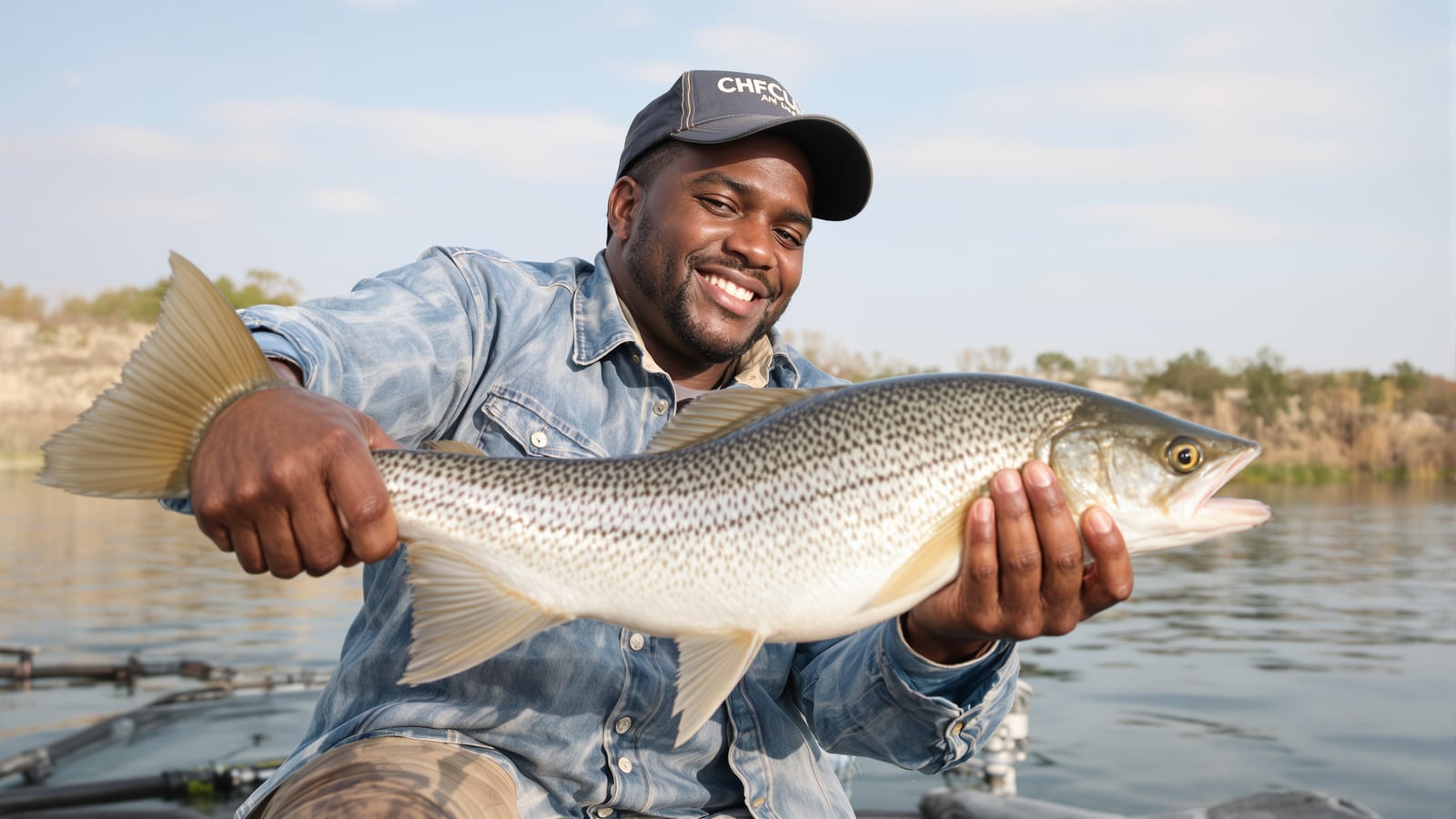
Quick answer: In thick weeds, use a heavier jig than feels reasonable (3/4 ounce to 1 1/2 ounces for matted vegetation), braided line, and a stiff rod. Let it fall, then wait. Most bites show up as a tick in the line or a line that just stops.
The mistake that costs you fish
You pull up to a bay choked with hydrilla or a mat of lily pads. It looks like a place no lure should go. So you tie on a 3/8-ounce jig, because light seems polite.
It lands on top of the mat and sits there like a dead leaf. A bass under that canopy can't see it, can't hear it, and has no reason to come out for it.
A heavier jig goes through. It breaks the surface, drags its trailer down through the stems, and drops into the shade where the bass are sitting. That's the whole idea. The thick stuff is where largemouth hide from summer sun, ambush bluegill, and stay cool. You're not fishing around the cover. You're fishing inside it.
Weights that work as a starting point:
- 3/8 to 1/2 ounce for pitching to pad edges, scattered weeds, and the outside of a bed.
- 3/4 ounce for moderate grass and patchy mats.
- 1 to 1 1/2 ounces for punching through a solid mat. If it keeps bouncing off, go up again.
If you can't tell whether it's too heavy, it isn't.
The gear, and why it's stiff
This is the one part of bass fishing where light tackle works against you.
Rod: Seven feet, three inches to seven feet, six inches, heavy or extra-heavy power, fast action. You need leverage to turn a fish's head out of a jungle, and a long rod lets you pitch accurately without a big overhead cast.
Line: Braid, 50 to 65 pound test. It doesn't stretch, so you feel the tick, and it slices through weed stems instead of wrapping on them. Fluorocarbon is fine around wood and rock, but in vegetation, braid is the standard. The trade-off is that braid is loud on a spinning-style knot and it'll cut your thumb if you wrap it wrong. Wear a glove or be careful when you break off a snag.
Hook: A stout, heavy-wire hook, around 4/0 or 5/0, with a weed guard (fiber bristles or a wire guard). The guard is what lets the jig slide through vegetation without collecting a salad on every cast. It also hides some bites, which is why your hook-set has to be violent.
Reel: A baitcaster with a fast-ish gear ratio, 7:1 or higher. You'll be taking up slack and cranking fish out of the cover in a hurry.
The pig
The original "pig" was a strip of pork rind on the back of the jig. You can still buy it in a jar, packed in brine, and it works. It has a slow, fluttering fall that plastic doesn't quite copy.
Most anglers now run a soft plastic craw trailer instead. It's cleaner, cheaper, and doesn't dry out in the boat. Pick one with claws that add bulk and some drag on the fall. Either choice is respectable. Use the pork if you like the old way, plastic if you want to keep your truck smelling normal.
Color is simpler than the catalog suggests. Green pumpkin and black-and-blue cover most water. Go darker in stained water and natural in clear water. Spend your attention on where you're casting, not on the color.
How to fish it
Pitch the jig to a hole, a pocket, or the shaded base of a clump of weeds. Thumb the spool as it lands so it enters the water quietly, then let it fall on a semi-slack line.
Here's the part everyone rushes. Most bites come on the fall. Watch the line where it enters the water. If it twitches, jumps sideways, or stops sinking before it should, there's a fish on it. Don't wait to feel weight.
If nothing happens, lift the rod tip a foot, shake it once, and let it drop again. Do that two or three times in the same spot, then move. A fish that's there will usually commit within a few seconds. Fish a clump of weeds, not an acre of them.
The pace should feel almost lazy. If you're reeling your jig back fast, you're fishing it like a crankbait, and a crankbait is the wrong tool for the cover.
The hook-set
When the line moves, reel down until you feel weight, then drive the rod up and back hard. A jig has a heavy hook with a weed guard, and a soft hook-set just bends the guard and misses. Set it like you mean it.
Then keep the rod high and keep reeling. A bass that stays in the weeds wraps you up, so you have to move it immediately. With 50-pound braid, you can drag a fish across the top of the mat to the boat or bank. It looks rough, but that's how it's done.
Wear polarized sunglasses. They help you see the cover, and they protect your eyes from a heavy jig coming back at you on a bad cast or a fast hook-set.
Where it doesn't fit
A jig and pig isn't an open-water bait. Over a clean, flat bottom with no cover, you'll do better with a crankbait or a swimbait.
It's also slow. If the bass are aggressive and chasing, you'll cover more water with a spinnerbait or a frog, and a frog is often the better choice over a thick mat in the heat of the day. Plenty of anglers fish a frog first and come back through with a jig to catch the ones that missed.
And jigs aren't cheap. Losing two in a morning stings. Buy them in packs and tie a stout knot so you're losing the jig to the cover, not to your own knot.
Keep it or let it go
A bass that eats a jig in thick weeds is usually hooked deep and well. If you're keeping fish, check your state or provincial rules. Licenses, size limits, slot limits, and bag limits all vary, and some waters have special regulations. Our guide to size limits, slot limits and the rules that keep fish coming explains how to read them.
If you're letting it go, wet your hands, keep it out of the water as briefly as you can, and read how to release a fish so it actually lives. Both are good fishing. Neither makes you a better or worse sportsman.
If you fish from a kayak, a heavy hook-set and a big fish in the weeds can tip you over faster than you'd think. Read Kayak Fishing Without Going Swimming before you try to horse a bass out of the pads from a seat six inches above the waterline.
Tie on the heavy jig. Go where you didn't think you could. That bass has been waiting under the mat all summer for somebody to drop something in.
Wes Dunbar
Country & Skills
Grew up on an acreage and never quite left. Covers trucks, trades, land, and how to do the thing yourself.

Watch
Worth an hour of your evening
More from Fishing.
From channels we rate. Plays on YouTube.
Read next