

Why your egg white is rubbery before the yolk is warm
A set white and a runny yolk aren't a trick of timing. They're a heat problem, and the fix costs you one teaspoon of water.
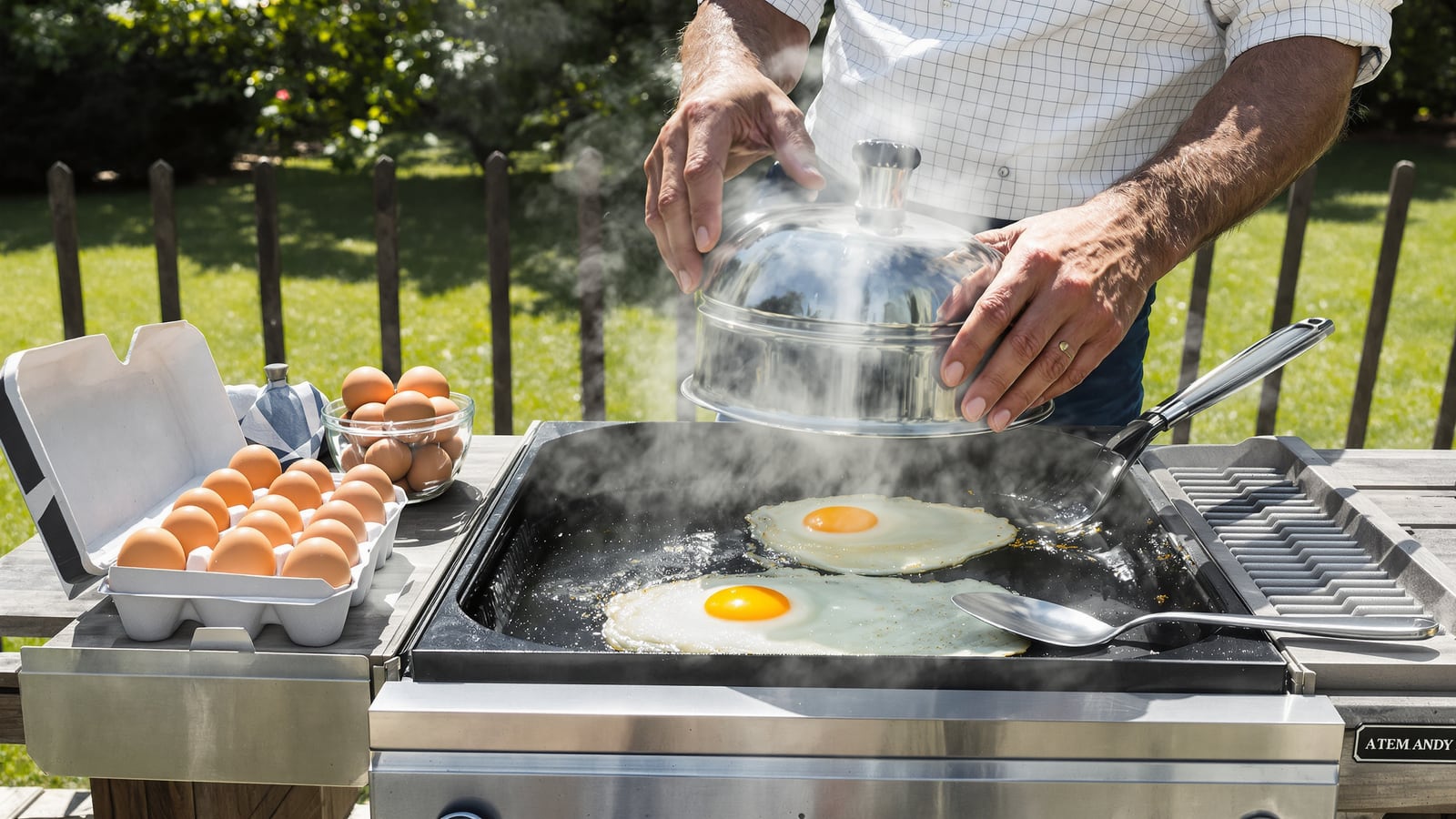
Quick answer: Use medium-low heat, not medium-high. For fried eggs, add a teaspoon of water and cover the pan for the last minute or two. For boiled, 6 to 6½ minutes in boiling water, then ice. The steam does what the pan can't.
Two deadlines, one pan
An egg white starts to set around 140°F and gets properly firm closer to 180°F. The yolk starts to thicken around 150°F and turns chalky past about 160°F. Those ranges overlap, which is why this feels like a trick.
It isn't. The white has to get hotter than the yolk, and your job is to point the heat at the white.
A hot pan does the opposite. It blasts the bottom of the white, which goes from set to crisp to leathery while the thick, clear white hugging the yolk hasn't moved. You wait for that clear jelly to turn white, the bottom turns to rubber, and the yolk firms up anyway from the sitting. Everybody has eaten that egg.
Rubbery is simple chemistry. Heat tightens the proteins, and tight proteins squeeze out water. The hotter and longer, the tighter the squeeze.
Fried: the lid method
This is the one to learn first, because it works every time and it's hard to ruin.
- Set a nonstick or well-seasoned pan over medium-low. Add a pat of butter and let it foam, not brown.
- Crack the egg into a small bowl first. You'll catch shell and you won't break the yolk against the pan.
- Slide it in. Leave it alone for about a minute, until the edge goes white and the underside stops looking wet.
- Drip a teaspoon of water at the edge of the pan, not on the egg, and cover with a lid right away.
- Give it one to two minutes. When the clear jelly around the yolk has gone white and the yolk still shimmers when you nudge the pan, slide it out.
The steam heats the top of the white from above, so the white sets all the way across while the bottom stays tender. The yolk, sitting in the middle, only gets a warm bath.
No lid? Tilt the pan and spoon the hot butter over the clear patch around the yolk until it turns. It takes a little longer and it's a good skill, but the lid is easier.
You'll notice the edges won't be crispy. If you want lacy, brown edges, that's a different egg: hotter pan, more fat, and a yolk that's more likely to cook through. Plenty of people like it that way. Just know that you're choosing it.
If you cook in cast iron, give it a minute to come down from hot before the egg goes in. A pan that's been preheated hard will do the rubber trick to you in thirty seconds. And if your pan has you worried, your cast iron pan is probably not ruined.
Boiled: the clock and the ice
Soft-boiled eggs fail for a different reason. People start them in cold water, and the time the water takes to heat varies with the stove, the pot and the amount of water. That makes the timing a guess.
Start in boiling water instead.
- Bring a pot of water to a full boil, deep enough to cover the eggs by an inch.
- Lower the eggs in with a spoon, straight from the fridge. Turn the heat down to a steady simmer.
- Set a timer. For large eggs, 6 minutes gives a runny yolk and a white that's just set. 6½ gets you a thicker, jammy yolk. Seven minutes is where the yolk starts to go firm at the edges.
- Move the eggs to ice water for at least two minutes.
The ice matters more than people think. Without it the egg keeps cooking from the heat trapped inside, and your 6-minute egg turns into an 8-minute egg while you're finding the egg cups.
Egg size changes everything, so treat those times as a starting point. Jumbo needs another half minute or so. Your first dozen eggs are the calibration. Write down the winning time and tape it inside a cupboard.
Peeling a soft egg is delicate work, since the white is barely set. Crack it all over, then peel it under a trickle of cold water. Eggs that are a week or two old peel far better than ones fresh from the farm stand.
Poached: the strainer trick
Poached eggs look like a restaurant skill. They mostly come down to fresh eggs and calm water.
Crack the egg into a fine mesh strainer over a bowl and let the thin, watery white drain off for a few seconds. That watery part is what makes feathery ragged strands in the pot. Slide what's left into a small cup.
Bring a pot of water to a bare simmer, just tiny bubbles on the bottom. A rolling boil tears the white apart. A splash of vinegar helps the white hold together, but you'll taste it a little if you use a lot.
Tip the egg in gently and set a timer for 3 minutes. Lift it with a slotted spoon and set it on a towel. Press the white lightly with a finger. It should feel firm, and the yolk beneath should give like a water balloon.
The touch test
Once you've done this a dozen times you won't need a timer on a fried egg. Watch the white. When no clear jelly is left near the yolk, you're done. Then press the very edge of the yolk with the back of a spoon. If it feels loose and springy, you're in business. If it feels firm, you've gone too long.
Pull the egg a few seconds early. It keeps cooking on the plate.
One note on safety
A runny yolk isn't risk-free. Raw and undercooked eggs can carry salmonella, and the risk is small for most healthy adults but matters more for small children, pregnant women, older adults and anyone with a weakened immune system. If that's your household, cook the yolks firm or buy pasteurized eggs, and ask your doctor if you're unsure. For everyone else, buy eggs from the refrigerated case, keep them cold at home, and toss any with cracked shells.
Do it on a Saturday
There's no cheaper practice for heat control than a carton of eggs. Make four on Saturday morning, one at a time, and change one variable each time: the heat, the lid, the timing. You'll learn more about your stove in twenty minutes than you will from a month of dinners.
Once you've got it, you've also got the base of six meals you should know by heart. Almost all of them are better with a runny yolk on top.
Wes Dunbar
Country & Skills
Grew up on an acreage and never quite left. Covers trucks, trades, land, and how to do the thing yourself.

Watch
Worth an hour of your evening
More from Food.
From channels we rate. Plays on YouTube.
Read next