

Plant broccoli for fall and quit fighting the May heat
Cabbage, broccoli and cauliflower want cool soil. Most people plant them when it's about to get hot, then blame the seed.
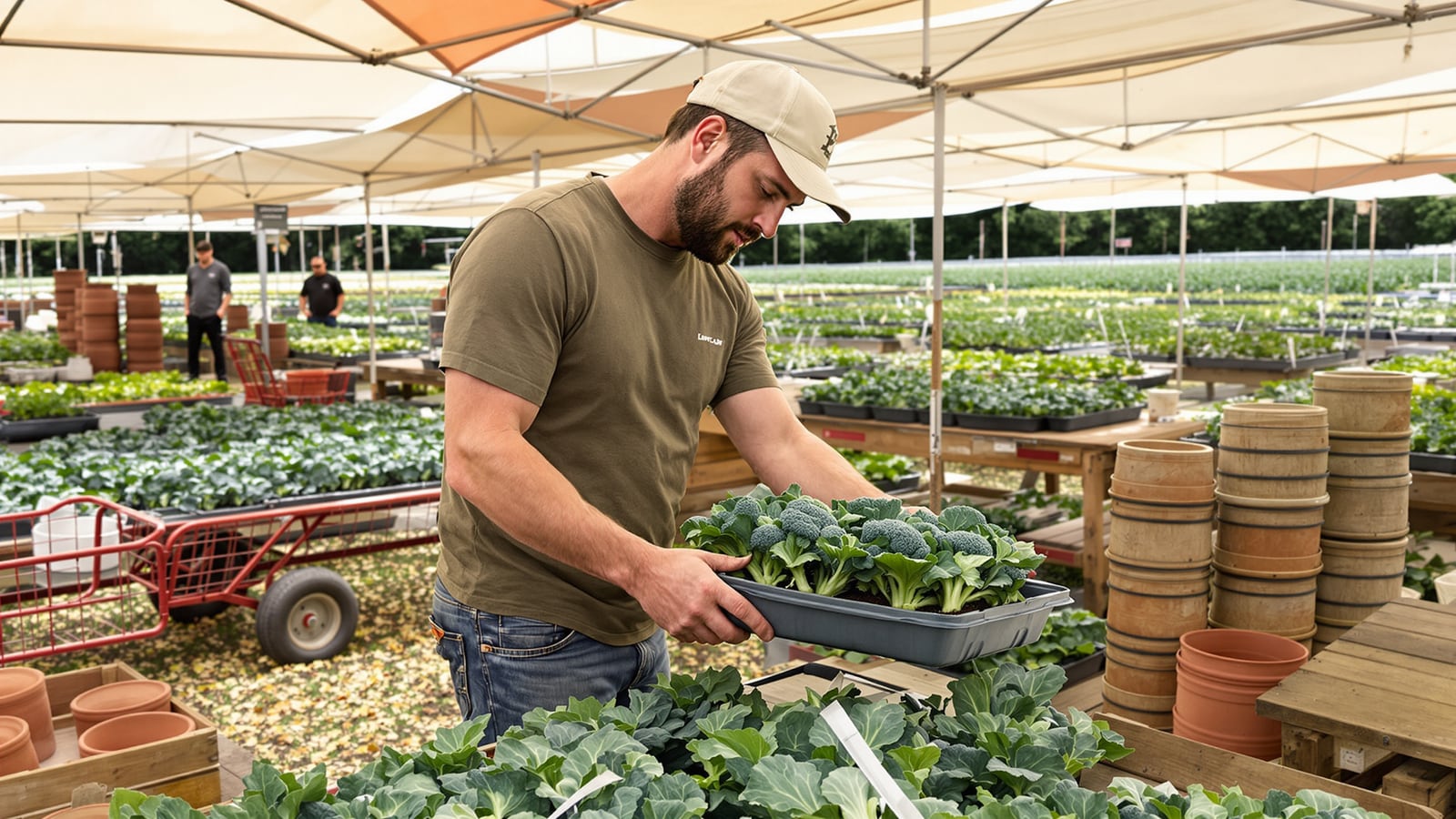
Quick answer: These three crops grow best when daytime air runs roughly 60 to 70 degrees. Plant them so they mature in that window, either early spring or, better, fall. Count backward from your first fall frost, not forward from the day the garden center puts out six-packs.
The mistake that wrecks the crop
You buy transplants the first warm weekend in May. They look great. You set them out, water them, feel good.
Then June shows up. Broccoli that should have made a tight, dense head throws a loose one, or flowers outright. Cauliflower makes a "button," a golf-ball-sized head the size of a walnut. Cabbage heads out small and bitter, or bolts into a flower stalk.
Nothing was wrong with the plant. It was growing into heat it was never built for. Cole crops are cool-season plants, and when they get hot, stressed or checked early in life, they quit on vegetables and go for seed.
The fix isn't better fertilizer. It's the calendar.
Spring works, but only inside a narrow window
If you garden in the cold-winter zones, say 3 through 6, spring is a real option. The plants take light frost fine once they've been hardened off. The goal is to get them in the ground three to four weeks before your average last frost, so they size up before summer arrives.
That means starting seed indoors six to eight weeks before transplant. If you've never done it, start seeds indoors and skip the garden center six-pack. You get to choose varieties, and you hit the date instead of taking what's on the shelf in the second week of May.
Not sure what zone you're in or what it means for your dates? Your hardiness zone decides what lives and what dies covers it. Zone is only half of it, though. Your local last-frost and first-frost dates are what you plan around.
The trade-off: spring plantings are a race. A hot week in early June can end it. Cauliflower is the pickiest of the three and the one most likely to button if it sits through a cold snap or a dry spell as a young plant.
Fall is the better season
In most of the country, fall gives you what spring can't. The soil is warm so seedlings establish fast. Then the air cools just as the plants hit their stride. Heads mature in steady, cool weather, and a light frost makes cabbage and broccoli sweeter.
In zones 8 through 10, fall is the main season. Planting runs from early autumn into winter, because summer is the hard stop, not winter.
Here's the arithmetic. Say your first frost lands around October 20.
- Your packet says broccoli takes 70 days from transplant. Count back 70 days and you're at August 11.
- Add a cushion. Days get shorter and cooler in fall, and plants grow slower than the packet promises. Add two weeks and you're transplanting around July 28.
- Seedlings need about five weeks indoors or in a shaded spot. Sow seed in the third week of June.
Those dates are an example. Use your own frost date and the days-to-maturity on your own packet. Cabbage and cauliflower run longer or shorter by variety, so check each one. Packets also split "from seed" and "from transplant," and mixing those up costs you three weeks.
What goes wrong in July
Setting out transplants in midsummer is the part nobody warns you about.
The soil is hot and dries out fast. A seedling that went into a 95-degree afternoon bed without help will wilt, stall, or die. A few things keep it alive:
- Plant in the evening or on a cloudy day.
- Shade new transplants for the first week with a board propped on the south side, or a piece of shade cloth.
- Water daily until the roots take hold, then back off.
- Mulch two to three inches deep with straw or shredded leaves. Mulch keeps the root zone cooler and holds moisture. It's the single best fix for hot soil.
Cabbageworms are heaviest late summer into fall. The little green caterpillars chew holes and hide in heads. Cover the bed with floating row cover from day one, anchored along the edges, and moths can't lay eggs. A roll costs little next to a ruined bed. If you skip the cover, check leaf undersides every few days and pick them off by hand.
Three crops, three personalities
Broccoli is the forgiving one. Cut the main head while the buds are still tight, before any yellow shows. Leave the plant in the ground. It'll push out smaller side shoots for weeks, which is a second harvest for free.
Cabbage is the steady one. Heads are done when they feel firm and solid when you squeeze them. If a head splits after a heavy rain, the plant took on water too fast after a dry spell. Keep moisture even, and if a head is ready and rain is coming, harvest early. A quarter turn of the plant in the ground breaks some roots and slows it down.
Cauliflower is the fussy one. It wants steady growth with no hard checks. When the head is about the size of a tennis ball, fold or tie the outer leaves over it to shade it. That keeps white varieties white. Check under the leaves every few days. A head can go from perfect to overripe fast.
Beds, rotation and soil
All three are heavy feeders. Work in finished compost before planting. If you don't have it yet, compost that doesn't stink or feed the rats will get you started.
Don't plant any of them in the same spot two years in a row. Rotate, ideally on a three- to four-year cycle, to cut down on disease that builds up in the soil. A raised bed makes rotation easy to manage, and a 4x8 raised bed for under two hundred dollars gives you room for a few of each.
Space plants about 18 inches apart. Crowded plants make smaller heads.
Your sheet to plan from
Write four dates on a card and tape it up where you'll see it:
- Your average last spring frost.
- Your average first fall frost.
- The days to maturity on each packet.
- The date you work backward to for sowing.
A soil thermometer is cheap and shows what the dirt is doing. Seed will sprout in cool soil, but transplants struggle when it's hot.
Plant the cold-weather crop when the weather's cold. The plant already knows what to do. Your job is the date.
Wes Dunbar
Country & Skills
Grew up on an acreage and never quite left. Covers trucks, trades, land, and how to do the thing yourself.

Watch
Worth an hour of your evening
More from Garden & Yard.
From channels we rate. Plays on YouTube.
Read next