

Plant Radishes Where Nothing Else Is Growing Yet
A radish is ready in about three weeks. Tuck it between slow crops and you'll eat from the bed while everything else is still thinking about it.
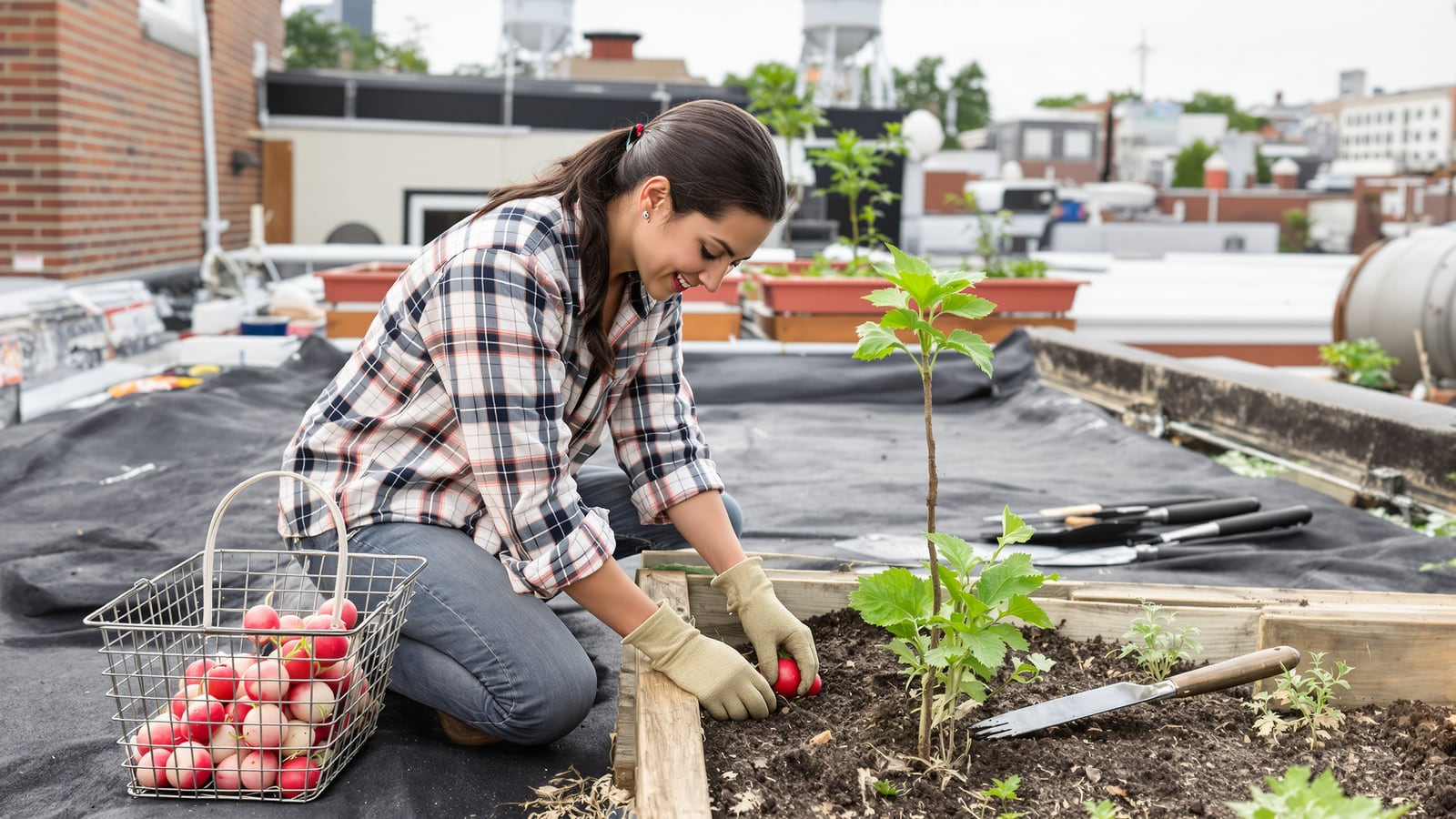
Quick answer: Sow radish seed in the empty ground around tomato, pepper, and squash transplants, and mixed into carrot and parsnip rows. Pull them at 22 to 30 days, before the bigger plants need the room. Do it as soon as the soil can be worked in spring, and again in early fall.
The empty ground is the opportunity
Set a tomato transplant in a 4x8 bed in mid-May and look at what you've got. One small plant, and about two feet of bare soil in every direction. That plant won't need the space for six weeks, maybe eight. The bare dirt will grow weeds or nothing.
Radishes fit that gap. A packet of Cherry Belle lists around 22 to 25 days to harvest. French Breakfast runs a few days longer. A packet costs a few dollars and holds hundreds of seeds, so you're not rationing.
Most people give radishes their own row and sow the whole packet at once. Three weeks later they've got sixty radishes ready on the same Saturday, and they eat eight. The rest go pithy and hot in the ground. That's the wrong way to use a fast crop.
Use it as a filler, in small pinches, spread across the garden.
Where it works best
Around tomatoes and peppers. Sow a ring of seed six to eight inches out from each transplant, a half inch deep and about an inch apart. Both crops want warm soil, so they go in late. Radishes want cool soil, so they go in early. Plant the radishes first, two or three weeks ahead of your last frost, and set the transplants in among them when the weather turns. If you started your own plants, starting seeds indoors puts you on the right schedule for exactly this.
Inside carrot and parsnip rows. Carrots can take two to three weeks to come up, and parsnips can take longer. You can't see the row, so you can't weed it, so the weeds win. Mix a small pinch of radish seed into the carrot seed, maybe one radish for every four or five carrots. The radishes sprout in under a week and mark the row. You can hoe beside it without guessing. Pulling them then opens up the soil right where the carrots are starting.
Beside squash and melons. These go in after frost danger has passed and then sprawl. Sow radishes on the spot where the vines will eventually run. You'll have harvested them before the vines get there.
The brassica problem
Radishes are in the cabbage family. Plant them beside broccoli, cabbage, or kale and you've put the same pests in one place. Flea beetles chew tiny shot-holes in the leaves. Root maggots like all of them.
It's not a disaster, and plenty of gardeners do it anyway. But if flea beetles hit you hard last year, keep radishes with the tomatoes and the carrots and give the brassicas their own bed. Rotation matters too. Don't plant radishes where broccoli grew last season if you can avoid it.
A lightweight row cover over a young radish row keeps beetles off. It costs a few dollars and lasts several seasons if you fold it dry.
Zone and season decide everything
Radishes are a cool-weather crop. They germinate in cold soil, often in three to seven days. They quit when it gets hot.
- Spring: Sow as soon as you can work the soil, usually four to six weeks before your last frost. In cooler zones that means April. In warmer zones it can mean February.
- Summer: Skip it. Once days run into the 80s, radishes bolt or turn woody and fiery. The seed packet will say so, and it's right.
- Fall: Sow again about four to six weeks before your first frost. The roots come out milder and crisper in cooling weather than they ever do in spring.
Don't know where you land? Your hardiness zone tells you the rough window, and your local extension office will give you your actual frost dates. Use those dates. A seed-packet calendar written for the whole country is a guess.
What goes wrong
All leaves, no root. Too much nitrogen, too little sun, or seed sown too thick. Radishes need about an inch of space once they're up. Thin them to two inches apart when the seedlings have their first true leaves. It feels wasteful. Do it anyway.
Hot, woody, or hollow. Heat is the usual cause, and leaving them in the ground too long is the second. Pull them the week they're ready. A radish held two extra weeks is not a bigger radish. It's a worse one.
Cracked roots. Uneven watering. Dry for a week, then a downpour, and the skin splits. Keep the soil evenly damp. Mulch lightly if your weather swings.
Poor germination. Seed sown deeper than about a half inch struggles. So does seed in crusted soil. Rake it fine, sow shallow, and water gently.
Crowding the main crop. Radishes are shallow and quick, so they usually don't hurt tomatoes or peppers. But if you forget them and the carrots are up, the leaves can shade the seedlings. Check the bed every few days. If you can't remember when you sowed, you probably should have pulled them already.
Sow a pinch every week
The way to avoid the sixty-radish Saturday is simple. Sow a short row, or a pinch beside one plant, every week or ten days while the weather holds. You get a steady handful instead of a glut. Radishes also finish quickly, so a pinch sown on a Sunday is about the right size by the time you've finished weeding the rest.
If you're building a bed from scratch, a 4x8 raised bed is about the right size for all of this. Tomatoes at the back, carrots in the middle, radishes sprinkled through every gap. Work in finished compost before planting and you won't need anything more. Compost that doesn't stink is easy to make if you haven't already.
Eat them
The classic is cold radishes, good butter, and flaky salt on fresh bread. It's hard to improve on. If you've got more than you can eat raw, halve them and roast on a sheet pan at 425 degrees for about twenty minutes. They turn mild and a little sweet. People who say they hate radishes haven't had them this way.
Whatever you do, wash the soil off and eat them the day you pull them.
That's the whole trick. While the big crops are still slowly getting started, you've already got something on the table, and the garden looks like you know what you're doing.
Wes Dunbar
Country & Skills
Grew up on an acreage and never quite left. Covers trucks, trades, land, and how to do the thing yourself.

Watch
Worth an hour of your evening
More from Garden & Yard.
From channels we rate. Plays on YouTube.
Read next