

Warm day, no cooler, deer down? Break it down at the truck
Heat spoils venison from the bone out, not the skin in. Here's how to cut it small, keep it clean and get it cold before the afternoon wins.
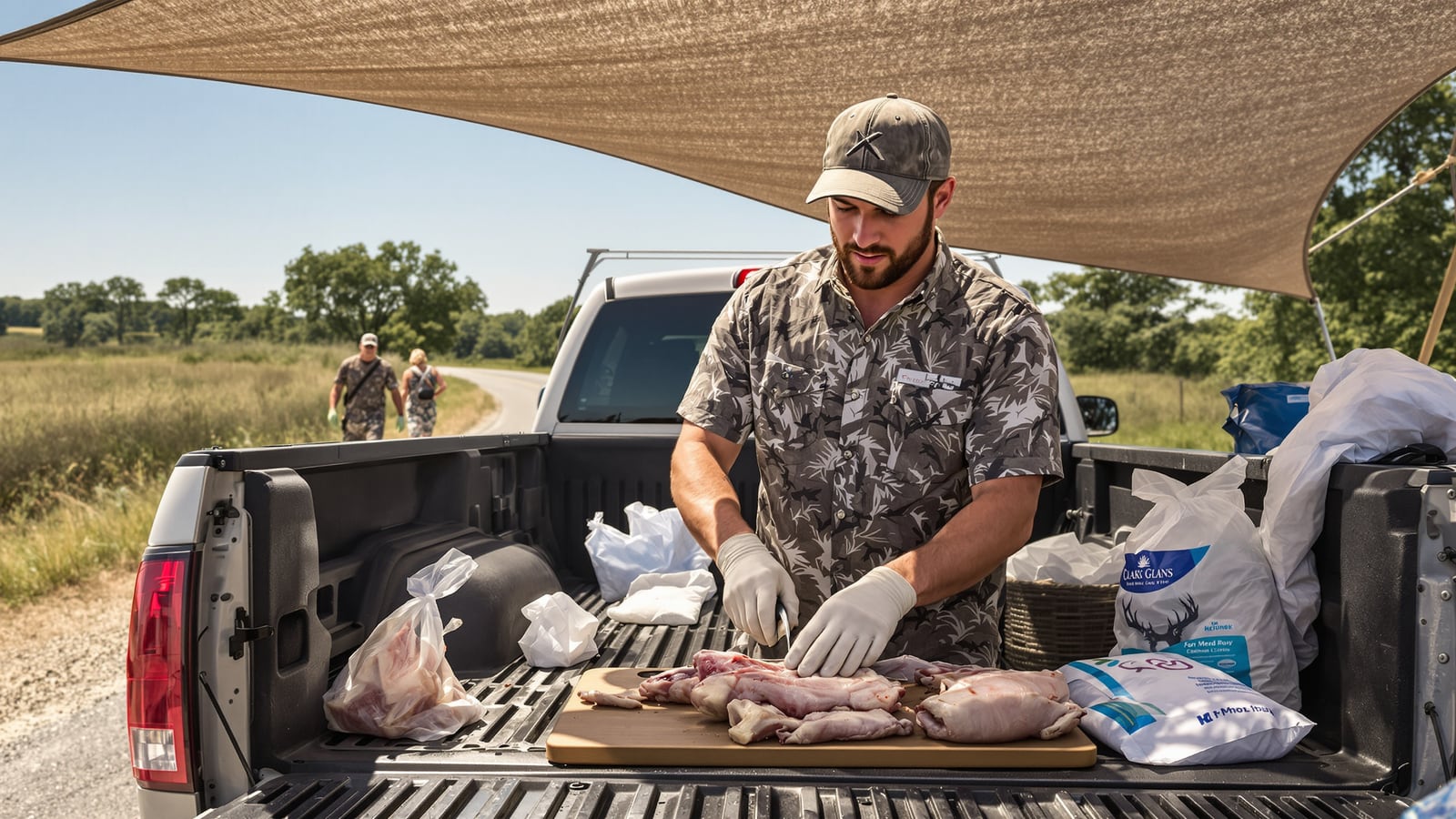
Quick answer: On a warm day, skin it, cut it into pieces small enough to cool, and keep the meat shaded, off the ground and covered in breathable bags. Then get ice. Your target is meat at 40°F or colder, as fast as you can manage it.
The problem is in the middle of the hindquarter
It's 68 degrees at ten in the morning. The deer is down, the tag is signed, and the cooler is sitting in your garage, forty minutes from the nearest bag of ice.
Don't hang the whole animal from a tree and go find ice. A deer is a big, insulated lump of meat, and the hide is the insulation. The thick part of the hindquarter, right around the bone, holds its heat for hours. The outside of the meat feels cool and dry. The inside is still warm, and that's where spoilage starts.
So the job at the truck isn't butchering for the freezer. It's making the pieces small enough to cool. Final trimming, grinding and steaks can wait until the meat is cold.
Meat in the 40°F to 140°F range is where bacteria multiply fastest. You want the animal through that range quickly and then held below it.
If you haven't done the first part yet, read field dressing alone and getting the meat out. Open the cavity, get the organs out and let the heat escape. Do that before anything else.
Check the rules before you cut
Regulations vary by state, province and even by management unit. Read your current regulations before the season, not on the tailgate. The things that trip people up:
- Proof of sex and species. Many jurisdictions require evidence to stay attached to the carcass or meat until it reaches your home or a processor. Boning everything out can be legal in one state and a violation in the next.
- Tagging. Some places want the tag on the carcass, others on the meat, others on the transport container.
- Chronic wasting disease zones. Some areas restrict moving the head, spinal column or other parts out of the zone. Some require you to dispose of those parts in a specific way.
- Wanton waste. Almost everywhere, you're required to retrieve the edible meat. Spoiling it because you were unprepared can cost you more than the tag.
- Carcass disposal. Dumping scraps at a trailhead or pullout may be illegal. It's also a good way to lose access to the spot.
When you're unsure, call the local game warden's office or check the agency's website. It takes five minutes, and it's their job to answer.
Set up in the shade, then work clean
Park so the truck throws shade over your work area, or find a tree. Lay a tarp or clean canvas down. Never set meat directly on dirt, leaves or the tailgate.
You'll need:
- A sharp knife, and a second one in case the first dulls (see your knife, your saw, and what else the pack has to carry)
- Breathable cloth game bags, one per quarter at least
- Nitrile gloves, and a cut-resistant glove for your off hand
- A jug of clean water and a roll of paper towels
- A few clean zip bags or a spare tote
Skin it right away. Pull the hide off and the meat starts shedding heat immediately. Keep hair off the meat, and wipe off the hair that does stick with a dry paper towel instead of washing the meat down. Moisture invites bacteria.
Quarter it. Take off the front shoulders, then the hindquarters. Take the backstraps and tenderloins last. They're the most tender and the easiest to ruin, so bag them clean and keep them out of the dirt.
Bone it out if the law allows. Bone holds heat. Cutting the big muscle groups off the bone, such as the round, the sirloin tip and the shoulder roast, lets the cold reach the center. A boned-out hindquarter cools in a fraction of the time of a whole one. It's slow work, and you'll go slower than you want to. Go slow anyway. Rushing is how people open their own hands.
Knife safety is the part nobody skips and everybody should
You're standing in a warm, bloody, slippery place with a sharp blade. Cut away from your body and away from your hands. Never hold meat against your thigh while you cut. Keep the knife sharp, because a dull knife slips.
If you cut yourself deeply, stop. Press hard on the wound with a clean cloth, keep the pressure on, and get medical help right away. A bad cut isn't worth finishing the job for.
Get it cold
Cut meat into game bags and keep it in the shade and out of the wind-blown dust. If you're in a spot where the air is cool enough, you may be fine for a short time. If it's warm and you've got ice within reach, go get it.
Buy more ice than feels right. Two or three 10-pound bags is a sensible start for one deer, and you'll want more if the drive is long or the day is hot. Buy a cheap foam cooler at the same store. It's about the best twenty minutes you can spend on a warm day.
Pack it so the meat doesn't sit in meltwater:
- Put the meat in clean, sealed bags, or keep the game bags above the ice on a rack or pan.
- Open the drain plug or tip the cooler so meltwater leaves.
- Don't put warm meat in a tight cooler and close the lid on the heat. Let the first layer of ice go down, then the meat, then more ice.
No cooler at all? A clean plastic tote or a new trash can works, as long as it holds ice and is clean. Never use a container that held chemicals.
When to throw it away
A sour smell, a slimy surface or a greenish tint means no. If a gut shot spilled the paunch, trim away everything it touched, and if you're not sure how much that is, discard it. Saving the meat isn't worth getting a family sick.
Meat that's been in the heat too long, with no way to cool it, is a loss. That's a hard thing to accept, but it's a choice you make before you start cutting. The better choice is to plan around it.
Plan the heat before the hunt
The best fix for a warm day is a cooler that's already in the truck. Put two bags of ice in the back before you leave, or know exactly which gas station on the road home sells it. If you're still working out your first hunt, the first hunt should be short, warm and a little boring covers how to keep the whole day simple.
Leave the place better than you found it. Pack out your trash, your bloody paper towels and your gloves. Bring home anything the rules say to bring home, and dispose of the rest where they say. A clean pullout is a hunting spot that stays open.
The animal gave you everything it had. Get it cold and get it home.
Wes Dunbar
Country & Skills
Grew up on an acreage and never quite left. Covers trucks, trades, land, and how to do the thing yourself.

Watch
Worth an hour of your evening
More from Hunting & Shooting.
From channels we rate. Plays on YouTube.
Read next