

Your thermometer is the clock when you age game birds
Pheasant, duck, grouse or dove: how many days in the cooler, at what temperature, and how to tell when the meat's ready.
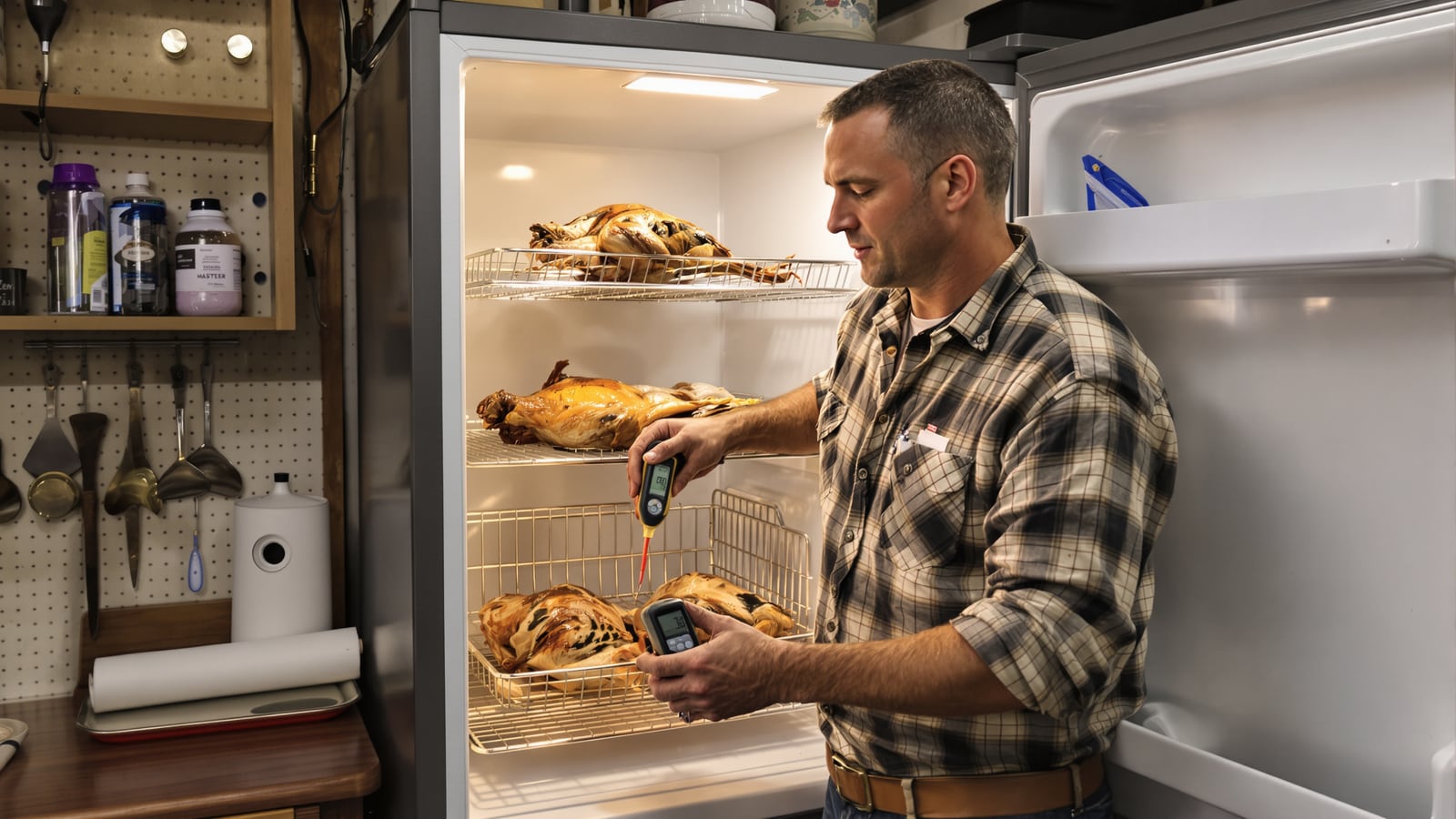
Quick answer: Hold birds at 34 to 38°F, never above 40°F and never frozen. Dove and quail need one night. Pheasant, grouse and ducks do well at two to four days. Check regulations in your state or province, because aging time can count against your possession limit.
Most advice on aging birds is a number of days. Three days for this, five for that. The number is close to meaningless without a second number, the one on a thermometer.
A pheasant hung three days at 36°F is tender and clean. The same bird hung three days in a garage that hit 55°F on a sunny afternoon is a gamble you'll eventually lose. Time only works when temperature is under control.
Why age a bird at all
Right after death, muscle locks up in rigor. Cook a bird in that state and it eats like a flip-flop. Rigor passes on its own, usually within a day for a small bird. Past that, a few more days of cold rest let the meat relax further and the flavor mellow and round out.
That's all aging is. It's not rot, it's not "gamey on purpose," and it's not a contest. The goal is meat that's relaxed, clean-smelling and ready to cook.
Get the bird cold before you start the clock
Aging doesn't begin in the cooler. It begins in the field, and warm weather is where birds get ruined. An early-season dove or grouse left in a game vest on a 75°F afternoon starts spoiling while you're still hunting.
- Pull the crop and entrails promptly, and more promptly the warmer it is. Our piece on field dressing alone and getting the meat out covers the cuts. Birds are quicker work than deer.
- Wipe out the cavity and let heat escape. Don't stack warm birds in a plastic bag.
- Get them into a cooler with ice or frozen water bottles as soon as you can. Keep them off the meltwater.
- Pluck or skin soon, or at least before the bird goes into long storage. Plucking is easier while the bird is still fresh. Skinning is faster, but you give up the skin on a roast bird.
Traditional European "hanging" leaves the bird in full feather and undrawn for days. That tradition comes from cold climates and cold larders. For most US and Canadian hunters, especially early in the season, drawing the bird first is the safer call.
The cooler setup
A dedicated refrigerator beats anything else, even a cheap one in the garage. You want a spot that holds steady and isn't opened every ten minutes for the milk.
Buy a refrigerator thermometer. They cost a few dollars. Put it where the birds will sit, and check it for a day before you trust it. Home refrigerators run warm more often than people think, and the door shelf is the warmest spot.
If you're using an ice chest:
- Drain the meltwater daily. Birds sitting in water get soggy and sour.
- Keep the birds in a bag or on a rack above the water line.
- Swap ice before it's gone, not after.
- Check the temperature at least twice a day. If you can't keep it at or below 40°F, stop aging and move to the freezer.
Freezing isn't the enemy. It just stops the clock. Birds frozen right away are always better than birds aged badly.
How many days, bird by bird
These are common practice among experienced hunters and cooks, not rules. Your bird's condition and your cooler matter more than the calendar.
- Dove, quail: One night to pass rigor. These are small and delicate, and longer aging mostly dries them out.
- Pheasant: Two to four days. Hens run a touch younger and tender. Old roosters with long spurs benefit from the upper end, though they'll still want a braise.
- Grouse, partridge: Two to four days. The meat is mild and doesn't need a long wait.
- Ducks: Two to four days, plucked or skinned. Fish-eaters and strongly flavored diving ducks don't improve with age, so cook them early.
- Geese: Three to five days, and the bigger, older birds really do reward the wait.
- Wild turkey: Two to three days, breast and legs separated if you've broken the bird down. Longer isn't better.
How you know it's ready
Use your hands and nose, not just the date.
Feel. Press the breast. A bird in rigor feels stiff as a board, and the legs won't move at the joint. When the leg flexes freely and the breast gives, rigor is gone. That's your minimum.
Smell. It should smell clean and faintly like raw poultry, maybe a little mineral or sweet. Sour, ammonia, or a sharp rotten edge means stop. Don't talk yourself into it.
Look. The skin or flesh should be moist and a normal color. Slime, a greenish tint, or a sticky film means it's gone.
If you're asking whether it's okay, it's a no. Throw it out and be annoyed for a day. Nobody has ever regretted losing a pheasant to caution.
Birds you shouldn't age
Eat these first, within a day or two, or freeze them:
- Gut-shot birds, or any bird with heavy damage to the body cavity.
- Birds that lay in the sun or warm water before you found them.
- Any bird that rode home warm, even for an hour or two.
- Birds with a lot of shot-torn skin. Open flesh spoils faster.
Cook it right, and handle waterfowl with care
Cook game birds to an internal temperature of 165°F, checked with a thermometer. Wash your hands and your board after raw birds. Wear gloves when cleaning waterfowl, and check your state or provincial wildlife agency for current guidance on avian disease, which can change by season and region.
The rules part
Regulations on game birds vary by state and province, so look yours up before you pack the cooler. Three things to check:
- Possession limits. In many places birds in your refrigerator or freezer still count toward your possession limit until they're eaten or given away under the proper rules.
- Transport and proof of species. Some jurisdictions require a fully feathered wing or head to stay attached on certain birds while you travel.
- Giving birds away. Many places require a label with the hunter's name, date and species.
Your wildlife agency's current hunting regulations are the final word, and so is the game warden's office if you call.
Last thing
Clean the cooler when you're done. Scrub it with soap and hot water, dry it, and leave the lid cracked so it doesn't sour in the garage. The next trip starts clean, and so does the next bird.
Wes Dunbar
Country & Skills
Grew up on an acreage and never quite left. Covers trucks, trades, land, and how to do the thing yourself.

Watch
Worth an hour of your evening
More from Hunting & Shooting.
From channels we rate. Plays on YouTube.
Read next