

Heat ruins more birds than the guts do
The best field-dressing method depends on the temperature and the species. Here's how to keep the meat clean, cool and legal.
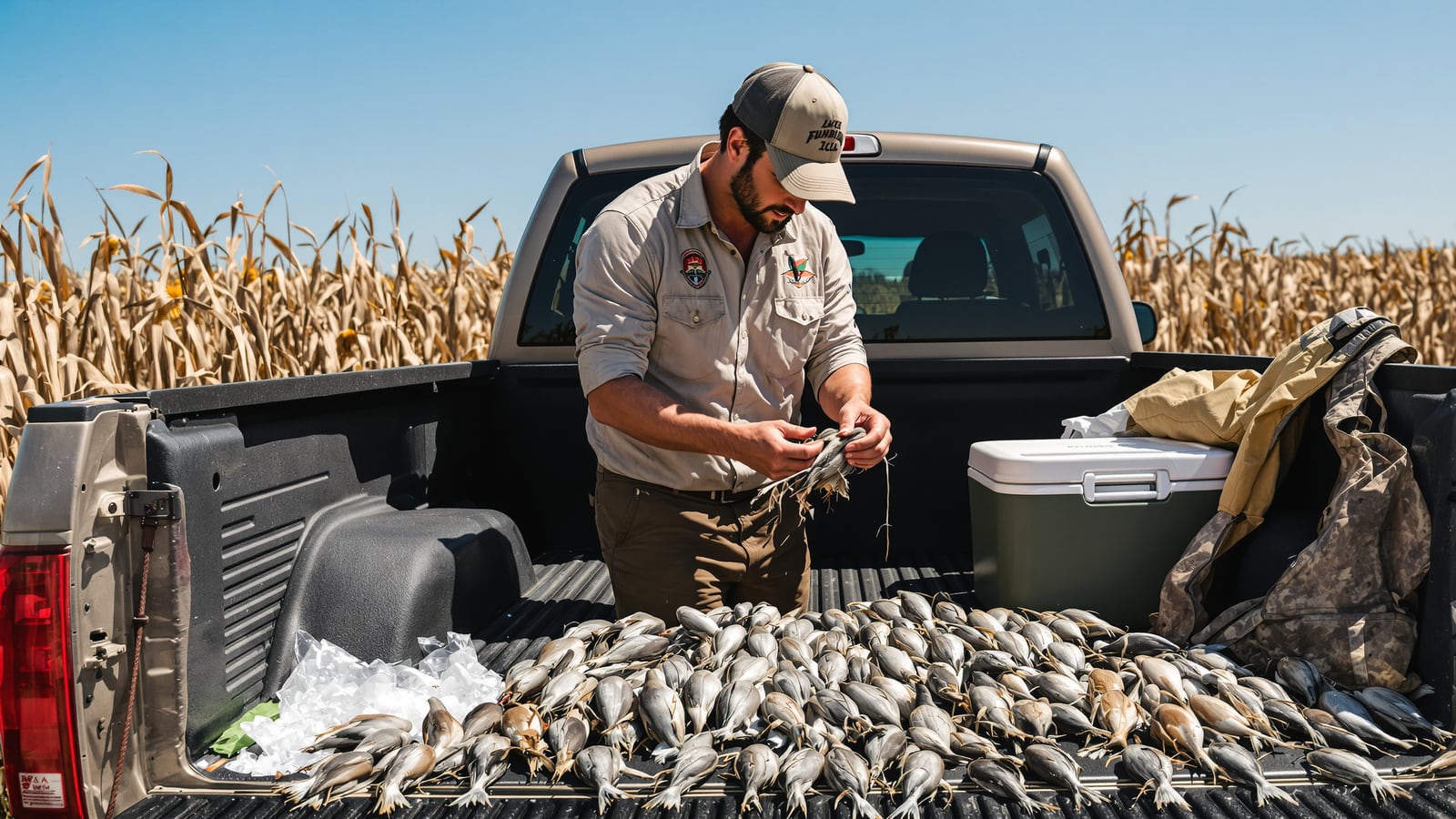
Quick answer: In warm weather, get the breast off or the guts out within the hour, then wipe it dry and get it cold. In cold weather, a whole bird can ride to the tailgate, and breasting it out is the cleanest way to skip the mess entirely.
A dove field in early September is 88 degrees by mid-afternoon. A bird dropped at two o'clock and stuffed into a hot game vest is already losing the argument by four. Most spoiled meat in bird season has little to do with a nicked intestine. It comes from body heat that never had anywhere to go, wrapped in feathers, in a pocket.
So the first decision isn't how to gut. It's whether to gut at all, and when.
Pick the method by the thermometer
Under about 40 degrees: Leave doves, quail and most upland birds whole until you're back at the truck. Feathers insulate, but in the cold you want that. Spread the birds out so they don't stack and cook each other, and keep them out of plastic.
Over about 60 degrees: Don't wait. Gut or breast the bird within the hour. If you can't, at least open the body cavity so heat leaves.
Anywhere in between: Use judgment. A pheasant at 50 degrees in the shade is fine for a couple of hours. The same bird on a dashboard is not.
For waterfowl in warm early seasons, the same rule holds. A teal in a hot blind is a clock running.
Breasting out: the method that skips the problem
If you only want the breast meat, and with doves and ducks plenty of sensible hunters do, you never open the body cavity. No guts, no crop contents, no gall.
- Lay the bird on its back. Pinch the skin over the breastbone and pull it apart with your thumbs until the breast is bare. On most birds the skin tears away like wet paper.
- Slide a knife along one side of the keel, the ridge down the middle of the breastbone, and cut down to the bone.
- Follow the ribcage with the blade and peel the fillet away. Repeat on the other side.
- Drop each fillet straight into a zip bag on ice, or a clean container.
It takes about a minute a bird once you've done a dozen. The trade-off is real, though. You're leaving the legs and thighs, and on a pheasant or grouse those are good eating, braised or ground. If you want them, gut the whole bird.
Gutting a whole bird without a mess
Wear disposable gloves. They keep your hands cleaner and your skin safer, and wildlife agencies advise them for handling wild birds anyway. Don't handle or eat any bird that looks sick or behaved oddly before you shot it. Report it to your state wildlife agency instead.
- Crop first. Find it at the base of the neck. Cut the skin, pull the crop free, and pull the windpipe and esophagus with it. A full crop of wet grain or acorns spoils quickly and smells like it.
- Open the vent. Make a shallow cut from the vent toward the breastbone. Lift the skin as you go and cut with the blade facing up, so you don't slice into the intestines.
- Hook and pull. Two fingers in, hook behind the entrails and pull everything out in one motion. Scrape the lungs off the ribs with your fingertips.
- Mind the liver. Keep it if you eat it, but the gallbladder is a small green sac attached to it. Cut it away whole. If it breaks on the meat, the bitterness stays. Wipe it off right away.
- Gizzard and heart. Cut the gizzard open, peel out the lining, and rinse. Heart goes in the bag with the liver.
If you shot the bird through the body, find the wound channel and cut away the bloodshot meat generously. Pellets and fragments travel farther than you'd think. Cut around the damage and don't chew on it.
Keep the feathers out of the meat
Feathers cling to anything damp, and nothing's damper than a bird you just opened. A few habits help.
- Pluck a small patch around the vent and breastbone before you cut. Ten seconds of plucking saves five minutes of picking later.
- Dry your gloves on a paper towel between birds.
- Keep a roll of paper towels in the pack. Wipe the cavity dry. Don't wash it unless you've got clean water, and if you do, dry it afterward.
- Never drop a cleaned bird on the ground, a tailgate or the dirt, even for a second. A clean cavity touching a dirty surface is where grit and hair get in.
If it does get dirty, a quick rinse with clean water from a jug, then a dry wipe, is better than leaving the dirt on. Don't rinse in a stream or a stock tank.
Check the rules before you cut
Regulations vary by state, province and species, and they change. Many jurisdictions require you to leave one fully feathered wing or the head attached to a bird while you transport it, so wardens can identify the species and sex. Federal rules cover migratory birds, and states add their own for upland species. If you breast a bird out in the field, you may be breaking the law in some places. In others, you must keep a wing with the breast.
Bag limits count birds, not fillets, so keep your count honest. Check your state wildlife agency's current hunting digest before the season, not in the field. If the wording is unclear, call the local game warden's office and ask. They'd rather answer a question than write a ticket.
Cool it, dry it, then handle it right
Meat should drop toward 40 degrees or below as fast as it can. Put cleaned birds in a cooler on ice, but off the water. A rack, or birds sealed in a zip bag, keeps them from soaking in meltwater, which turns the skin soft and slimy.
At home, pat everything dry, then refrigerate or freeze. Wild birds should be cooked to 165 degrees inside, same as chicken, and a thermometer is cheaper than being wrong.
Take the carcass with you, or bury it right
Don't leave offal in a parking lot, on a trail or in a creek. Some public land and wildlife areas have rules about it. Where it's allowed, scatter or bury it well away from water, trails and other people's property. Where it isn't, bag it and take it out.
A good routine is a game bag, a pair of poultry shears, paper towels and a jug of water in the pack. If you haven't sorted your blade yet, your knife, your saw and what else the pack has to carry covers the basics. And if you're working out the same job on bigger game, field dressing alone and getting the meat out walks through the deer version.
Leave the spot cleaner than you found it. The next hunter on that field will never know you were there, and that's the point.
Wes Dunbar
Country & Skills
Grew up on an acreage and never quite left. Covers trucks, trades, land, and how to do the thing yourself.

Watch
Worth an hour of your evening
More from Hunting & Shooting.
From channels we rate. Plays on YouTube.
Read next