

The first hour decides how fast you get home
When something goes wrong at home during a deployment, the message your family sends matters more than anything your command does. Know the process before you need it.
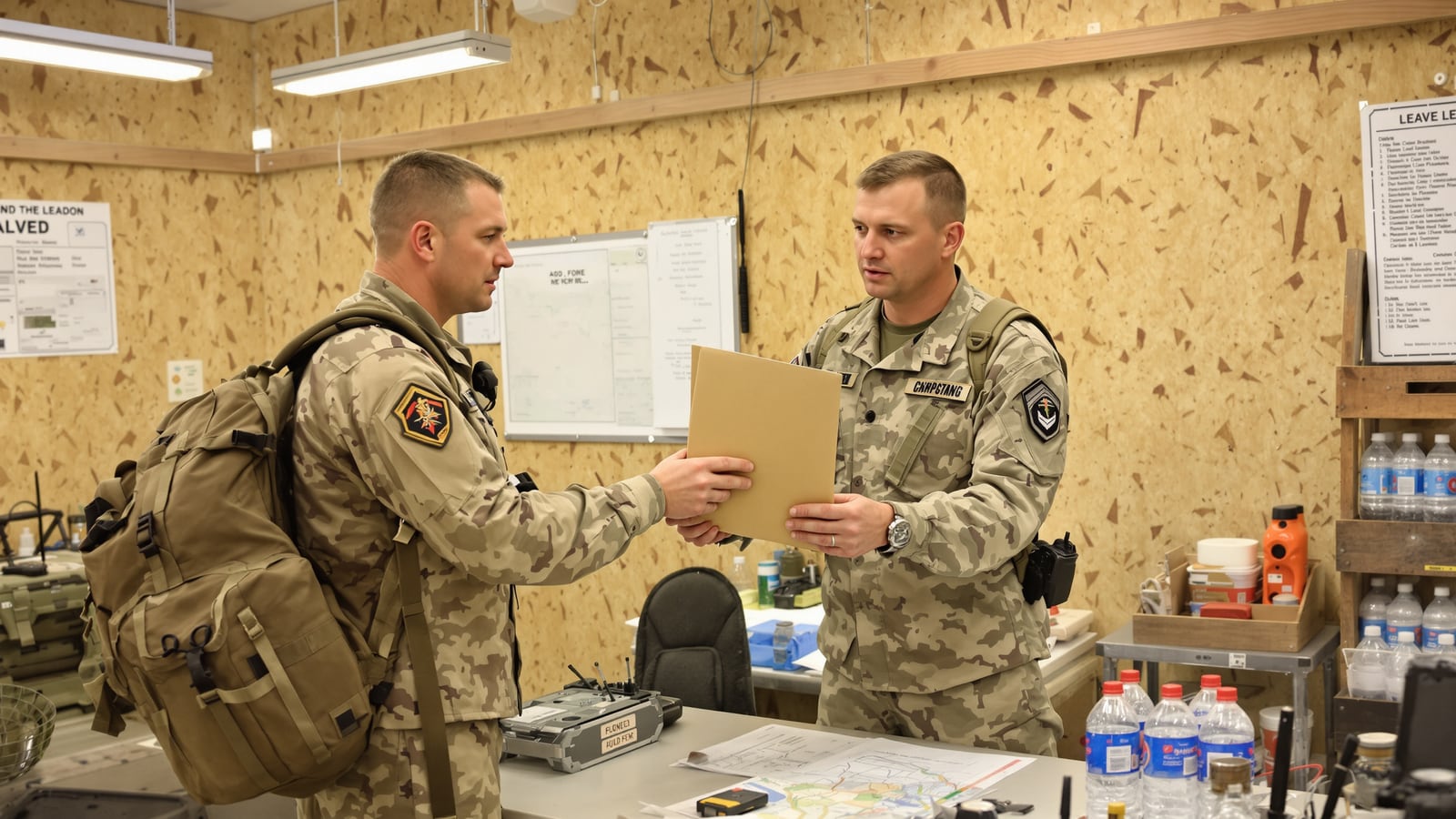
Quick answer: Your family starts the process through the American Red Cross, which verifies the emergency and notifies your command. Your commander then decides on leave, and the mission gets a vote. Expect to pay for most of your own travel, and have your paperwork squared away before you leave.
The message that gets you moving
Picture a mother in Ohio at two in the morning with a hospital on the line about her husband. Her soldier is eight time zones away. She does what most people do: she texts him, posts in the unit's family group, and messages three other wives.
None of that starts the clock.
What starts it is a verified message. The Red Cross runs the emergency communication service for the armed forces. Your family contacts them through the military families section at redcross.org, they confirm the emergency with the hospital or doctor, and they send the verified message to your command. Your commander gets something official instead of a rumor passed along by a cousin.
Your family should have this ready before they reach out:
- Your full name, rank, branch and service number or Social Security number
- Your unit and deployed location, if they know it
- The name of the family member in trouble and what's happening
- The hospital's name and a number where a staff member can confirm it
- The treating physician's name
Missing details slow it down. The Red Cross can work with partial information, but it can't verify what it can't reach.
What your command actually does
Here's the part nobody explains. The Red Cross verifies. It doesn't approve anything. Your command decides.
Once the message arrives, your chain of command pulls you aside. Usually that's your first-line leader, then the first sergeant, chief or equivalent. They'll confirm the facts with you. Then your commander decides whether to grant emergency leave and how soon you can move.
Several things shape that decision:
- The relationship. Spouse, child and parent are the standard cases. Siblings and grandparents vary by service and by commander. Ask before you deploy who counts.
- The situation. Death, serious illness or injury, and childbirth complications are the usual qualifiers. A hard week at home isn't one.
- The mission and your role. A commander can say yes on paper and still need a few days to get a replacement or a seat out of theater.
- Transportation. Where you are decides how fast you can physically leave. Sometimes that's a hop to a hub and a commercial flight. Sometimes it's a convoy and a wait.
Most commanders want to get you home when it's real. Nobody enjoys being the reason a man missed his father's last days. But the process has steps, and the steps take time.
Who pays, and what comes out of your leave
Emergency leave generally counts against your leave balance. It's usually not extra time. Check your service's leave policy so the number doesn't surprise you at the end.
Travel is the other shock. In most cases you buy your own ticket home, often on short notice and at short-notice prices. That can run to a few thousand dollars from a remote location. If cash is tight, the relief societies exist for exactly this:
- Army Emergency Relief
- Navy-Marine Corps Relief Society
- Air Force Aid Society
- Coast Guard Mutual Assistance
They've helped service members with emergency travel for decades, often through interest-free loans or grants. Their websites explain how to apply, and your command or family readiness staff can point you to the right office. Don't wait until you're standing in an airport to learn how it works.
What to settle before you ever deploy
The best emergency plan is boring paperwork done in a calm month.
Check your emergency data. Your Record of Emergency Data, the DD Form 93, names who gets notified and who gets what. If you've married, divorced, had a child or lost a parent since you filled it out, update it. Old forms cause ugly surprises.
Put a folder in the house. A spouse or parent should know where to find your service numbers, your unit contact information, your command's family readiness contact, powers of attorney, insurance papers and a list of every account with a login. Write down your unit's family readiness officer or key spouse contact. The title varies by service, but every branch has one.
Make the single-parent and dual-military plan real. If you have dependents and no other parent at home, your service already requires a family care plan. Don't treat it as a form to get through. Talk to the person named in it. Make sure they've said yes, have the paperwork they need, and can actually pick up your kids at two in the morning.
Agree on the rules for bad news. Some families want to hear everything immediately. Some want a verified message through the proper channel first, so the member isn't spiraling over half a story from a thousand miles away. Decide now. A marriage can handle a lot of hardship, but surprises about how bad news gets delivered aren't one of the easy ones. This piece on what holds a marriage together through a deployment goes further on that.
When the answer is no, or not yet
Sometimes the command can't send you home. The mission won't allow it, the situation doesn't meet the standard, or the transportation isn't there. That's one of the hardest parts of this life, and nobody should pretend otherwise.
Ask your leader plainly what the reasons are and what the timeline looks like. Ask whether the decision can be revisited if things change. A condition that doesn't qualify on Monday can qualify on Thursday.
Use the support that's already there. Your chaplain, whatever your background, is trained for this kind of news and will keep it confidential. Military OneSource, the Defense Department's support service, offers free confidential counseling to service members and families, and its website explains how to reach a consultant. Your family can use it too.
And if you're the one who stays, keep your head in your job. Your people are depending on you, and distracted people get hurt downrange. It's a hard thing to do. It's still the thing to do.
What the family at home owes you
If you're the spouse or parent holding the phone, you have a job too. Gather the details. Contact the Red Cross promptly. Keep the message factual and short. Don't dramatize it, and don't downplay it to protect him or her. A soldier who's told the truth can make good decisions. A soldier who's told half of it makes bad ones.
Then stay reachable. Charge the phone. Keep the folder where you can find it.
You can't control when the worst news arrives. You can control whether the people you love are ready for it when it does.
Ade Fisher
Young Men
Teaches the trades intake at a community college. Writes the manual he wishes his students arrived with.

Watch
Worth an hour of your evening
More from Military & Vets.
From channels we rate. Plays on YouTube.
Read next