

Your dog eats poop, and the fix is mostly housekeeping
It's disgusting, it's common, and it's rarely a sign something is deeply wrong. Here's how to rule out a medical cause and then actually break the habit.
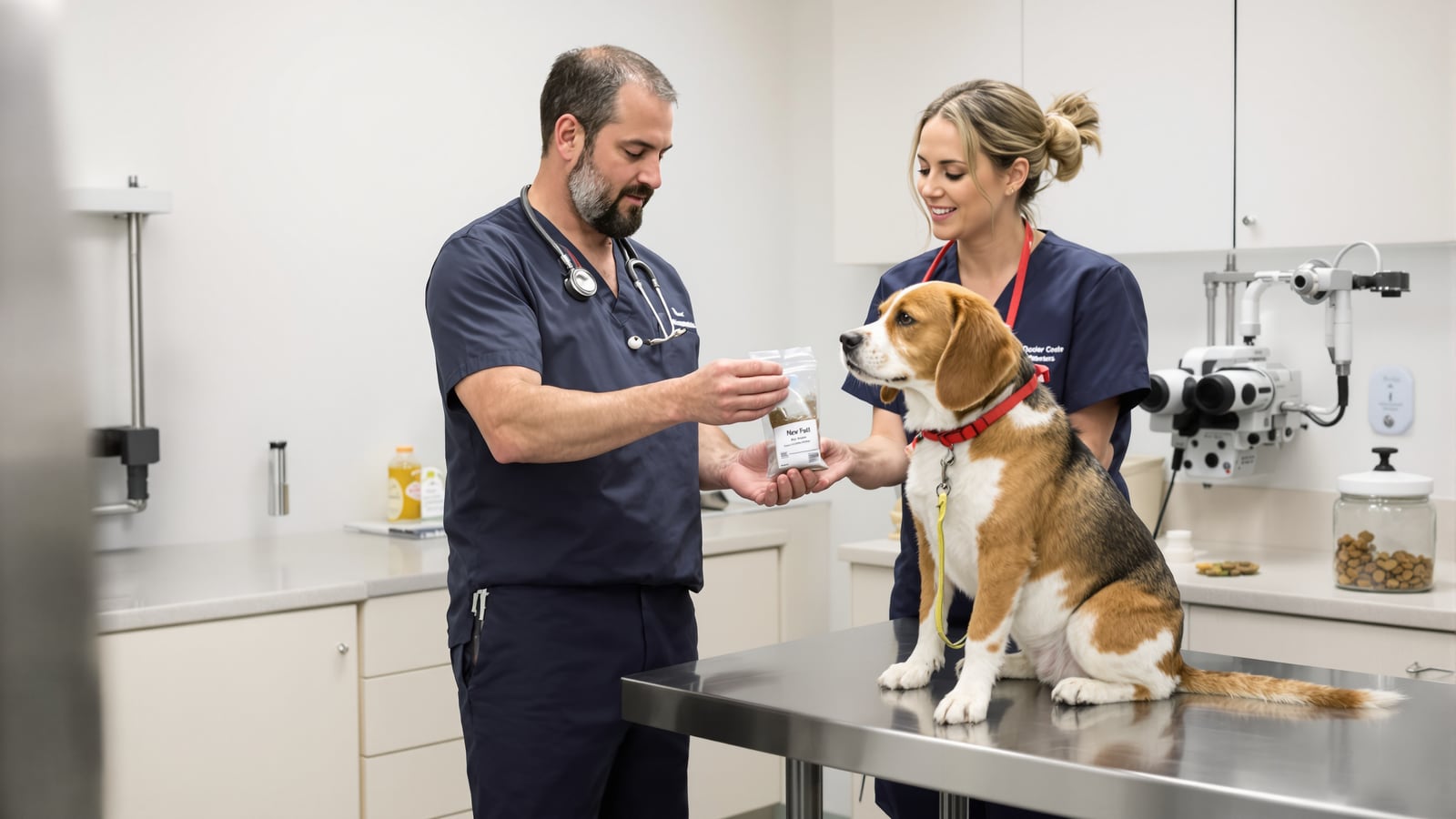
Quick answer: Have your vet rule out a medical cause first. Then take away the opportunity by picking up before the dog can reach it, teach a solid "leave it" with a trade, and keep the dog on a leash in the yard until the habit fades. Most dogs quit when the buffet closes.
Start with the vet
Book the visit before you try anything else. Bring a fresh stool sample in a sealed bag, because the first thing a vet will likely want is a fecal test. Eating stool is one of the easiest ways for a dog to pick up intestinal parasites, and parasites can also be part of why a dog does it.
A vet can also check for problems that leave a dog hungry or poorly absorbing food. Some medications raise appetite, too. You can't sort that out from the backyard, and no training plan fixes a dog that's starving on a full bowl.
If the vet gives the all-clear, you're dealing with behavior. That's the good news. Behavior can be managed.
Why dogs do it
Nobody has a single clean answer, and anyone who claims one is selling something. What we do know is less mysterious than people fear.
Mother dogs clean up after newborn puppies, and puppies explore the world with their mouths. A puppy that samples a pile is mostly doing what puppies do. Many grow out of it if the habit isn't allowed to set.
Adult dogs pick it up for duller reasons. Boredom. A small pen or a long day alone. A stressful house. A dog that learned, once, that being caught pooping gets you yelled at, and decided the evidence should disappear.
And sometimes it's just that a dog finds it interesting. Cat food runs high in protein and fat, so a litter box can smell like a snack bar to a dog. Horse manure carries bits of undigested grain. You and I find this appalling. The dog is not consulting our opinion.
What doesn't work
Punishing after the fact. If you find the mess five minutes later and scold, your dog connects the scolding to you being angry near poop. Some dogs respond by hiding the evidence faster. Rubbing a nose in anything is cruel and teaches nothing.
Additives and "deterrent" pills. Plenty are sold. The idea is that stool will taste terrible on the way out. The evidence that they reliably work is thin, and they do nothing about the neighbor's dog's leavings or the cat's box. If you want to try one, run it by your vet first and don't count on it.
Hot sauce on the pile. Some dogs don't care. Some dogs now think your yard comes with seasoning. And you've left a mess in the grass.
What actually works
It's a routine, and it's boring. That's why it works.
- Go out with the dog. Every time. Leash on, even in your own fenced yard. Standing in a robe at 6 a.m. isn't glamorous. Do it anyway for a few weeks.
- Let the dog finish, then call it away. The moment the business is done, say the dog's name or a recall word and walk away from the spot. Don't wait until the dog turns around and heads back to sniff.
- Pay at once. Give a small, high-value treat the instant the dog reaches you. Keep treats in a jacket pocket by the back door. You're teaching that finishing, then coming to me beats finishing, then turning around.
- Pick it up immediately. Not tonight. Not on Saturday. Immediately. A dog can't eat what isn't there, and the habit weakens every day the opportunity stays shut.
- Teach "leave it" separately, away from poop. Start with a boring treat under your hand, reward the dog for backing off, then move up to better bait. Our piece on sit, stay and come in fifteen minutes a day covers the basic structure of short daily sessions. Do "leave it" the same way, then bring it to the yard.
- Trade up, don't grab. If the dog's already got a mouthful, don't wrestle for it. Say the trade word and toss a treat a few feet away. When the dog goes for the treat, you go for the pile.
On a walk the same rules apply, and a leash helps. If you've fought pulling before, the boring fix for a dog that pulls on the leash will make this much easier. A dog that stays near your knee isn't hoovering the shoulder of the road.
Expect it to take a few weeks of consistency, and expect one slip along the way. That's normal. Don't give up on week two.
The litter box and the horse pasture
If your dog raids the cat's box, don't try to train around it. Move the box. Put it in a room the cat can reach through a baby-gated doorway, or set it on a shelf or counter the dog can't climb to. A covered box with a small opening works for some households, but a persistent dog may tip it. Don't let the dog get a taste, and the pattern doesn't form.
On a horse property, the fix is the same one: pick up. Don't let the dog roam the paddock unsupervised, and clean up manure on a schedule. One real caution. If you've recently dewormed a horse, some paste dewormers contain ivermectin, and herding breeds like collies and Australian shepherds can be unusually sensitive to it. Ask your vet whether it matters for your dog and your product. Don't guess.
Your own part
This habit puts a lot of pressure on the owner, because it's hard to be consistent about something so unpleasant. That's the job. A dog can't clean up after itself, and the neighbor shouldn't have to deal with what yours leaves behind.
Pay attention to the rest of the dog's day while you're at it. A dog that gets a real walk, a few minutes of training, and a crate or pen that isn't a prison cell has less reason to invent hobbies. If you suspect the food is part of it, check what's actually in the bag. What the dog food bag is actually telling you can help, but changes in diet are a conversation for your vet.
When it won't stop
Give it a month of strict routine. If the habit hasn't eased, go back to your vet and ask about a referral to a certified trainer or a veterinary behaviorist. Some dogs are compulsive about it, and an hour with a professional is cheaper than a year of frustration.
A dog that eats poop isn't broken, and you're not a bad owner. You've got a dog and a yard and a short list of jobs. Start with the first one: go outside with the leash on.
Wes Dunbar
Country & Skills
Grew up on an acreage and never quite left. Covers trucks, trades, land, and how to do the thing yourself.

Watch
Worth an hour of your evening
More from Dogs & Pets.
From channels we rate. Plays on YouTube.
Read next