

Your dog's 2 a.m. bark is telling you something specific
Barking at night has a handful of real causes, and each has a different fix. Find yours in three nights, no sedatives required.
Quick answer: Don't guess. For three nights, write down the time, the type of bark and what happened in the ten minutes before. Most night barking is one of five things: something outside, loneliness, leftover energy, a habit you've accidentally rewarded, or a health problem. Only the last one is a vet's job. The other four you can fix yourself.
Keep the log first
Put a notepad on the nightstand. When the barking starts, write the time. Next, how it sounds. Then where the dog is: yard, crate, kitchen, bedroom floor. In the morning, add what he ate, when he last went out and how much exercise he got.
It takes about a minute a night. By the third night a pattern usually shows. Barking at 11:40 every night points to the neighbor's late shift. Barking at 4:30 points to a bladder, a raccoon or a dog who's figured out that 4:30 is when someone gets up.
The five usual suspects
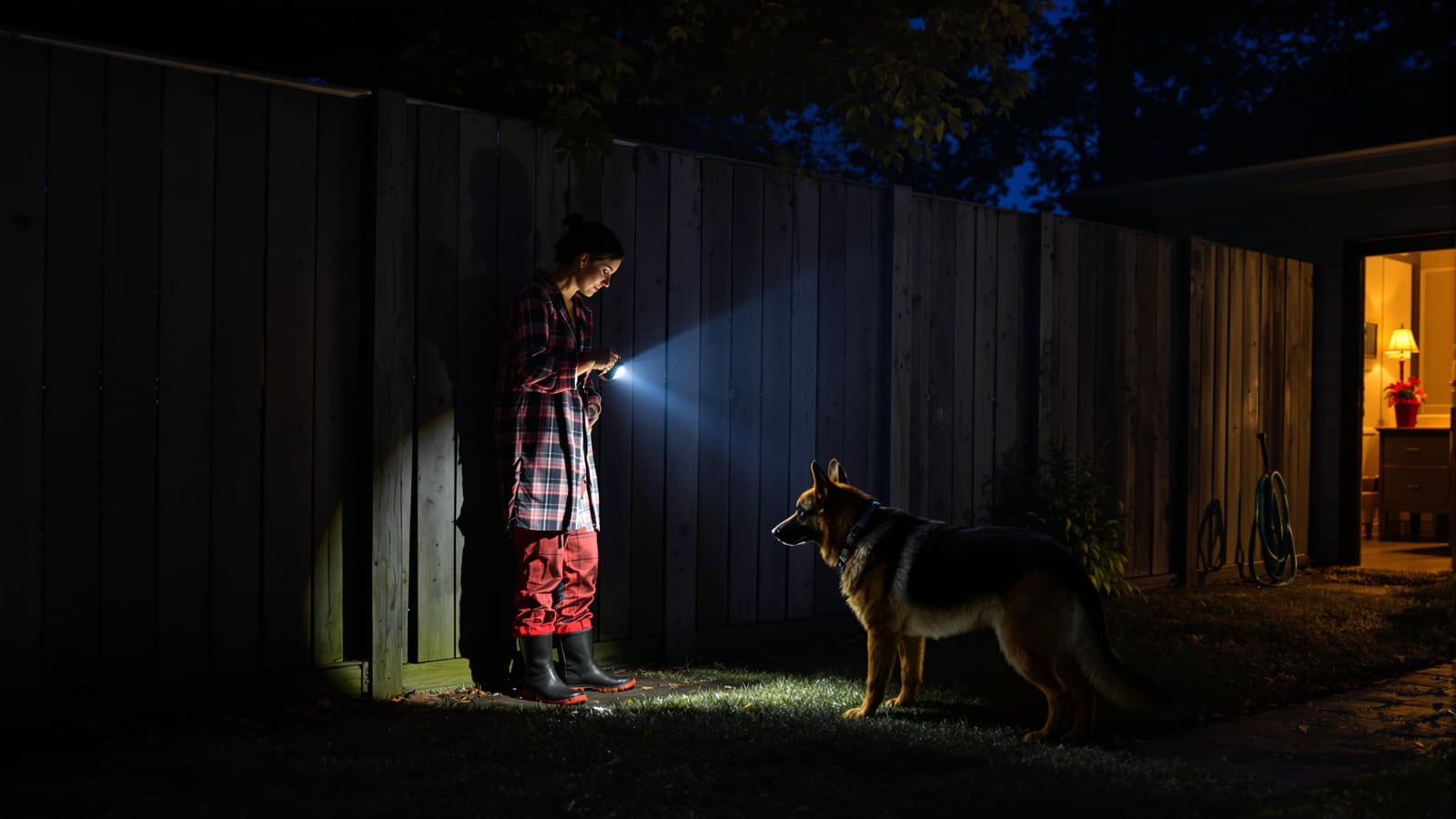
He hears or smells something real. Deep, sharp, fast barks, often at a window or fence, with a stiff body. Dogs hear far better than you do, so the thing he's barking at may be a possum you'll never see. Walk the yard with a flashlight once, because sometimes the dog is right. Then take away his job. Close the blinds in the room he sleeps in. Run a fan or a white-noise machine. If he sleeps outside, bring him in.
That last one fixes more cases than anything else on this list. A dog left alone in the dark yard hears every critter, and he's standing guard on a perimeter nobody asked him to hold.
He's lonely. Spaced-out barks, a whine mixed in, a pause as if he's waiting for an answer. Social animals don't love solitary confinement. Move his bed or crate into your bedroom for a couple of weeks. Once he's sleeping through the night, move it a few feet farther out every few nights until it's where you want it. If you're bringing home a new puppy, the first seven days are where this habit gets built, and a crate near your bed is the easiest start.
He's got energy left. A dog who got a ten-minute potty walk and a bowl of kibble has been parked all day. Give him a real walk or a game of fetch in the late afternoon, then a calm twenty minutes before bed. Don't wrestle him right before lights out. Wound-up dogs don't flip a switch. A sniff-heavy leash walk, a chew or a food puzzle also tires the brain, which matters as much as the legs. If he pulls the whole way, fix that first, because a walk you dread is a walk that gets skipped.
You taught him to do it. This is the uncomfortable one. He barks. You yell "quiet," come downstairs, let him in, give him a treat or sit with him. From his side, barking works. Every response, even an annoyed one, is attention.
The fix is dull and it takes spine. Don't talk to him, don't scold, don't open the door. Reward the quiet instead. When he's been silent for a stretch, even thirty seconds at first, calmly give a treat or let him out of the crate for a trip outside if that's the plan. The bark has to stop paying.
Fair warning: it gets worse before it gets better. A dog who's been paid for barking will try harder when it stops working. Several nights of that is normal, sometimes more. If you cave on night four, you've just taught him to bark four times as long. Decide in the daytime whether you're willing to hold the line, because at 2 a.m. you won't be.
Something's wrong physically. Pacing, panting, whining, restlessness, accidents in the house, or a dog who was quiet for years and suddenly isn't. That's not a training problem. Pain, an upset stomach, urinary trouble, failing hearing or sight, and in older dogs a kind of confusion at night can all show up as barking. An old dog who wakes up and seems lost is telling you something, and the senior dog piece covers what that stage asks of you. Call your veterinarian and describe the pattern from your log. A vet can examine him and rule things in or out, and that's their call, not yours.
About the sleeping pills
Don't give your dog a human sleep aid, an over-the-counter sedative or a supplement you found online. Some products that are harmless for you are dangerous for a dog, and dosing by guesswork is how emergency visits happen. If sedation or anxiety medication is ever on the table, it's the veterinarian's decision after an exam, and it's usually the last step, not the first.
Medication also doesn't fix the cause. A sedated dog who's barking because he's outside alone is still a dog who's outside alone.
What a good night routine looks like
It doesn't need to be fancy. It needs to be the same every night.
- Dinner a few hours before bed, not right at it.
- A real walk or play session in the late afternoon.
- A last bathroom trip right before you turn in, on a leash if he's a wanderer.
- Water available, but pick up the bowl an hour or so before bed if he's got a bladder issue. Ask your vet if you're unsure.
- Bed in the same spot, same crate, same dim room.
- No big goodbye. Hype at bedtime teaches him that bedtime is an event.
Young puppies are a separate case. An eight-week-old can't hold it all night, and a 2 a.m. whimper may be a genuine request. Take him out quietly, no play, straight back to bed. Ask your vet how long your puppy can reasonably go. Adult dogs who've learned the routine shouldn't need that trip.
Teaching a solid "settle on your bed" helps too. It's the same short daily practice as sit, stay and come, and a dog who knows how to lie down and stay put has something to do other than patrol.
The neighbors
While you're fixing it, somebody next door is losing sleep. Knock, tell them you know about it and you're working on it. Bring something: a dozen eggs, a plate of cookies. It costs you ten dollars and it buys you months of patience. Wait until the problem is solved and you'll get a lot less of it.
A word on cats and horses
Cats yowling at night, especially older ones, deserve a vet visit before any theory. Horses that call out or fuss after dark are usually telling you about a herd-mate, feed or discomfort, and a barn full of animals is worth walking through before bed anyway. Same rule for both: if it's new, get it checked.
A dog barking at night is doing the job he was born to do. Your job is to tell him the shift is over, and to make that believable.
Wes Dunbar
Country & Skills
Grew up on an acreage and never quite left. Covers trucks, trades, land, and how to do the thing yourself.

Watch
Worth an hour of your evening
More from Dogs & Pets.
From channels we rate. Plays on YouTube.
Read next