

Prove what you own before you have to
A one-hour walk-through with your phone now can decide how smoothly an insurance claim goes later. Here's how to do it, store it and use it.
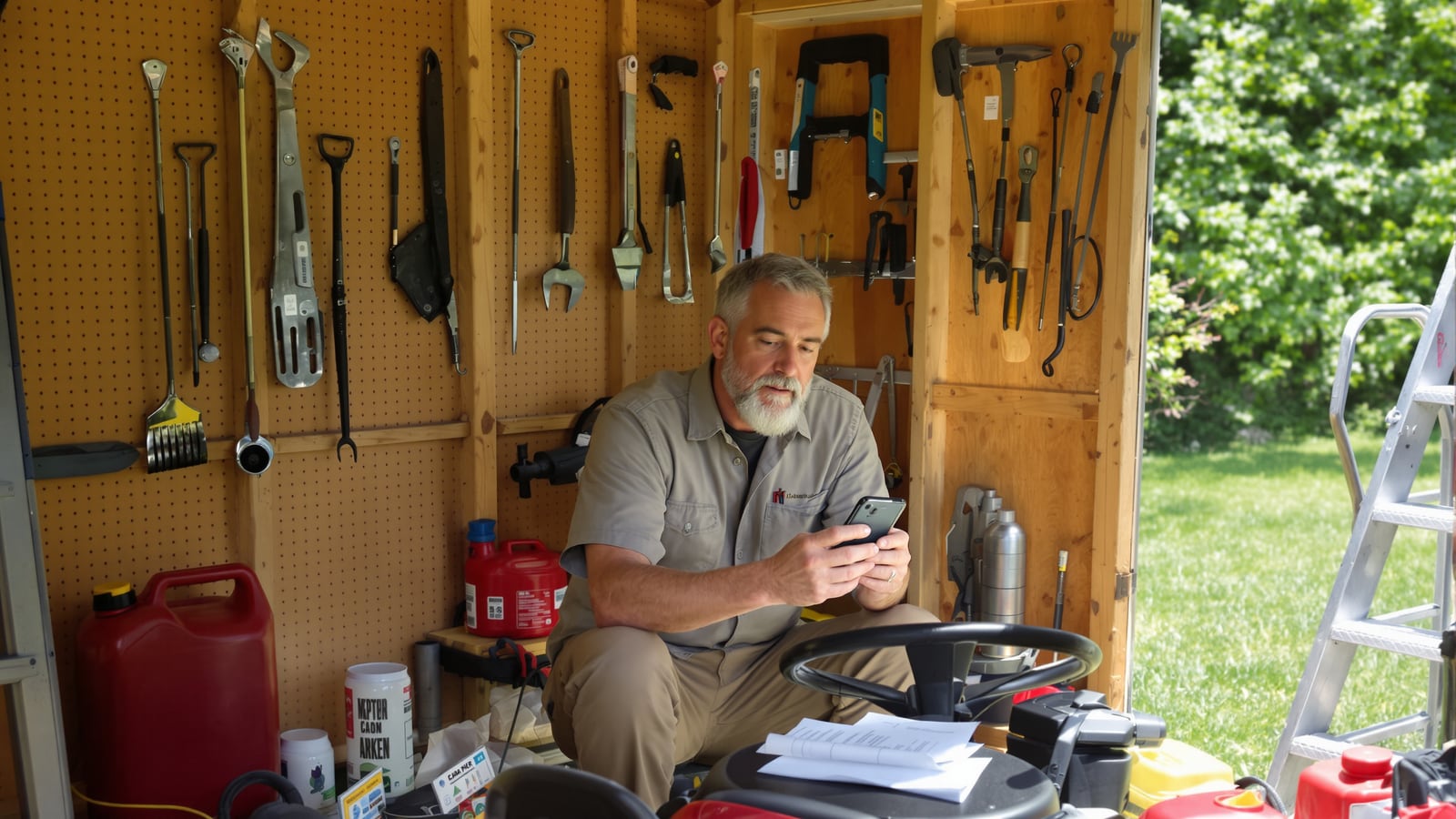
Quick answer: Shoot a slow video of every room, then photograph serial numbers and receipts for anything expensive. Save copies somewhere that isn't your house or your phone. It takes about an hour and you do it once a year.
The question you can't answer
Stand in your garage and try to list everything on the shelves. Tools, camping gear, the extra freezer, the box of cords. You'll get maybe a third of it.
Now imagine saying that list out loud to an adjuster, with the garage gone, and having to prove it.
That's the problem. After a fire, a tornado or a flood, your insurer doesn't pay for what you remember owning. It pays for what you can show you owned. Official guidance from state insurance regulators, the insurance industry's trade groups and FEMA all say the same thing: make a home inventory before you need one. It's dull advice, and it's right.
Start with the video
Do this on a weekday afternoon with the lights on. Phone sideways, steady hands.
Walk room by room and talk as you go. Don't be shy about it. "Living room. Sofa, about four years old. Sixty-five-inch Samsung on the wall. Bookcase with roughly a hundred and fifty books." Your voice on the video does the work of a spreadsheet.
Then open things. Every closet, every drawer, the kitchen cabinets, the pantry, the medicine cabinet. Pan across the shelves slowly. Clothing is the one that surprises people: a full closet for a family of four adds up to a staggering replacement bill, and nobody remembers it.
Don't forget the places you walk past:
- Garage, shed and any outbuilding
- Attic, basement and crawlspace
- The outside of the house from all four sides, including the roof line, fence, deck and mature trees
- Vehicles, trailers, boats and mowers parked on the property
Keep each clip under a few minutes. A forty-minute single take is a pain to scrub through when the adjuster wants to see the master bedroom.
Then photograph the details video misses
Video shows that you owned a table saw. It doesn't show the model number. For the things that cost real money, take a still photo of the data plate or label: TVs, computers, appliances, power tools, generators, electronics, musical instruments.
Firearms deserve their own page. Photograph each one, and write down make, model, caliber and serial number. This is for the insurance claim, and it's also what police will want if one is ever stolen. Check your policy for sub-limits on firearms. Many homeowners policies cap certain categories, and a collection can blow past the cap. Your agent can tell you whether a separate rider makes sense.
Do the same for jewelry, watches, collectibles and anything inherited. Get appraisals on the high-value pieces and keep the paperwork with the photos.
Last, gather receipts for big purchases and for improvements. A new roof, a remodeled kitchen, new flooring. Photograph the paper and file it with the rest. Improvements raise what it costs to rebuild, and you'll want proof they happened.
Where the copies go
The video on your phone does you no good if the phone is in the house when the house burns.
Keep two copies and make sure one lives elsewhere:
- Cloud storage. Upload the videos and photos to any reputable service. Make sure you can log in from a different device, and write the password somewhere your spouse can find it.
- A thumb drive off-site. A cheap one in a relative's home or a safe deposit box works fine. It doesn't need to be clever. It needs to be somewhere else.
A fireproof box at home is fine for original receipts and policy papers. Don't treat it as your only copy. Heat can ruin a drive even when the box holds up.
Put a calendar reminder on the day you change your smoke detector batteries. Update the video once a year and after any large purchase. You don't need to reshoot the whole house. Add a clip for the new truck, the new washer, the finished basement.
Read your policy while you're at it
While you've got the paperwork out, find two things. First, check whether you're covered at replacement cost or actual cash value. Replacement cost pays to buy a new equivalent. Actual cash value subtracts depreciation, and your five-year-old couch gets paid like a five-year-old couch. Second, your deductible, because that's cash you'll need on hand. Our piece on the emergency fund and the cash you can actually reach covers that side of it.
One more fact from the official guidance that catches people: a standard homeowners policy generally doesn't cover flood damage. Flood coverage is separate, usually through the National Flood Insurance Program or a private insurer, and new NFIP policies typically carry a waiting period before they take effect. Don't discover that the week the river rises. Ask your agent what you've got and what you don't. Your policy and your agent are the authorities here, not a magazine.
When the worst happens
Once everyone is safe and the authorities say you can return, the documentation work flips from preparation to proof.
- Contact your insurer promptly and ask what they need and how they want it submitted.
- Photograph and video the damage before you touch anything. Every room, every ruined item, the exterior, standing water, the line on the wall.
- Protect what's left. Tarp the roof, board the window, shut off water if you can do it safely. Insurers generally expect reasonable steps to prevent further damage, and temporary repairs are usually reimbursable under the policy. Keep every receipt.
- Don't haul damaged belongings to the curb until you've documented them and the insurer has said it's okay. Take a photo first. Keep samples if the adjuster asks.
- Track extra living costs such as hotel stays, restaurant meals and laundry. Many policies cover additional living expenses while your home is unlivable. Save the receipts.
- Keep a running log. Date, time, name of everyone you speak with, what they said. A plain notebook works.
Then pull up your pre-disaster video and spreadsheet, and the claim goes from "I think we had about" to "here's the serial number."
Do it for someone else too
If your parents are getting older, they probably have forty years of belongings and no record of any of it. Sit with them one afternoon and shoot the video together. It's a good day anyway, and our piece on what your parents need before the next three-day outage has more to go with it.
Think about where your family would go if a storm ever came. Know where you'd shelter from a tornado first. Things can be replaced. The video is for the day after you've made sure nobody needs replacing.
You'll spend an hour walking around your own house talking to a phone like a real estate agent. It'll feel silly. The day you need it, you'll be the calmest person in the room.
Wes Dunbar
Country & Skills
Grew up on an acreage and never quite left. Covers trucks, trades, land, and how to do the thing yourself.

Watch
Worth an hour of your evening
More from Preparedness.
From channels we rate. Plays on YouTube.
Read next