

Find your water heater's gas valve before you need it
Two minutes on a Saturday means you'll know which valve to turn, which way, and when to leave it alone.
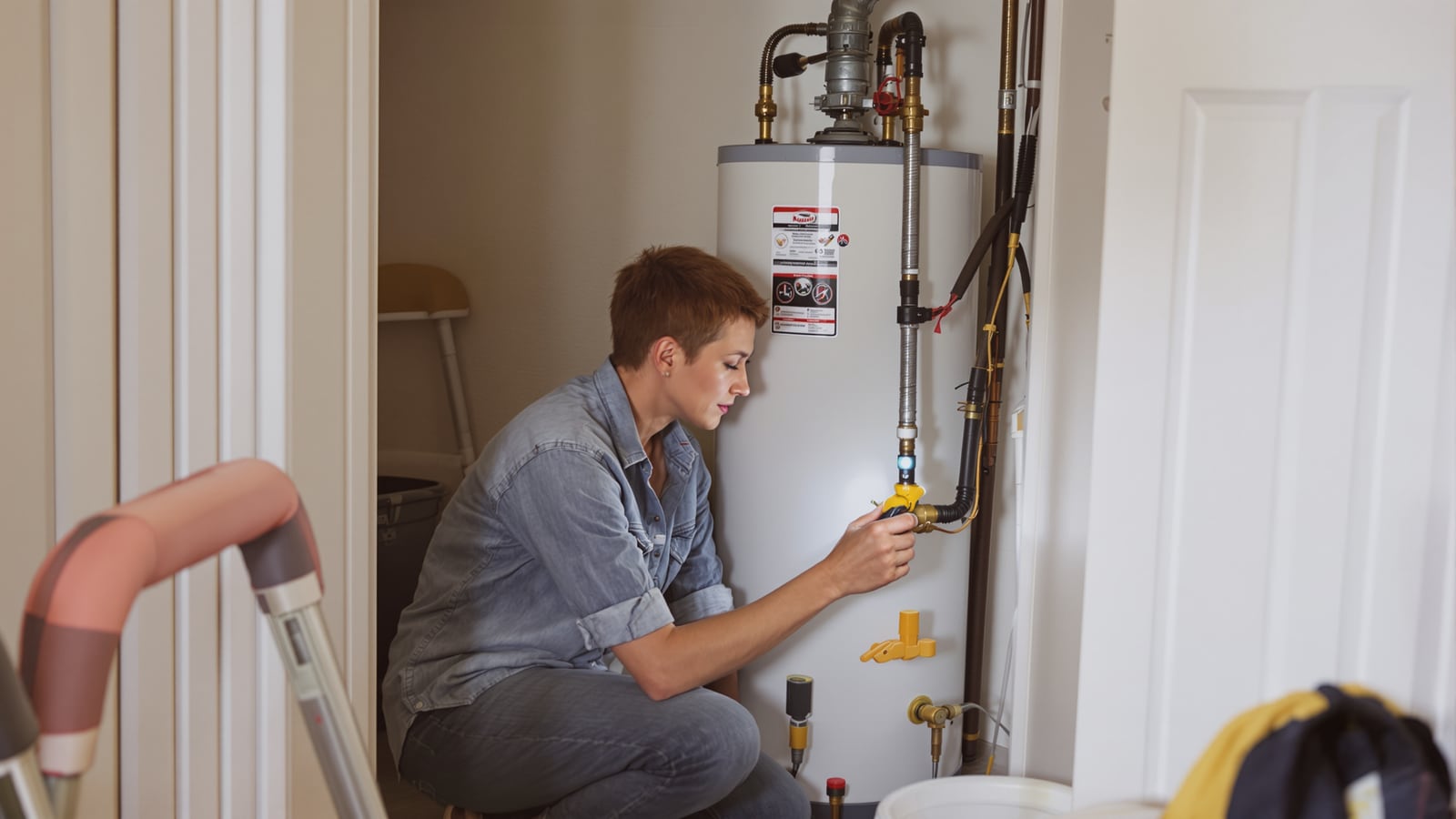
Quick answer: Your gas water heater has a shut-off valve on the gas line, a quarter-turn handle a few inches from the tank. When the handle runs across the pipe, the gas is off. Find it now, learn the direction, and know that a gas smell means you leave first and handle valves later.
The scene nobody rehearses
A water heater that quits at 6 a.m. is an annoyance. The same water heater after a hard freeze, a flood in the basement, or a smell in the utility closet is a different problem.
The strange part is how many homeowners have never looked at the thing. They know it's in the garage or the closet. They don't know where the gas comes in, which handle does what, or whether the pilot is standing or electronic. The first time they learn is the one time they can't afford a lesson.
So go look. It takes about the time of a commercial break.
Three things to find
Stand in front of the heater with a flashlight. You're looking for three things.
1. The gas shut-off valve. A black or yellow steel pipe runs from the wall or floor to the heater. Somewhere along it, usually within a couple of feet of the tank, is a valve with a flat lever handle. That's the one. When the handle sits parallel to the pipe, gas flows. When it sits crosswise, perpendicular to the pipe, it's closed.
2. The gas control knob on the tank. Near the bottom there's a thermostat and control. It's usually marked something like Pilot, On, Off, and a temperature range. It's a different control from the wall valve. Turning it to Off doesn't replace closing the valve, and closing the valve doesn't make the control safe to ignore.
3. The cold water inlet valve. On the top of the tank are two pipes. The cold one, often with a blue mark or a cooler look, has its own shut-off. You need it when you drain the tank or when the heater starts leaking.
Take a photo of the setup. Tape a small tag on the gas valve if you like. Then show your wife and any teenager old enough to use a flashlight. A valve only one person in the house can find is half a valve.
Practice the turn once
Here's the unglamorous part. Many gas valves are stiff, and a valve that hasn't moved in ten years can fight you. Better to learn that on a calm afternoon than in a hurry.
With the heater idle or the house not in a rush, move the handle to the closed position, then back to open. It should travel a quarter turn and stop. If it won't move, don't force it with a pipe wrench and a prayer. A stuck gas valve is a job for a licensed plumber or your gas utility, and now is the time to find out, not later.
Know this about relighting: a heater with a standing pilot or electronic ignition has relight steps printed on the label near the control. Follow that label. If you ever smell gas while you're trying, stop. Leave it.
When to shut it off
Use your head, and lean on the official guidance. Ready.gov and gas utilities say the same basic thing: know how to shut off your utilities, but only do it when the situation calls for it.
Shut the appliance valve when:
- The heater is leaking and you need to deal with it. Close the gas and the cold inlet.
- A flood or storm is coming and water may reach the unit. Shut it off ahead of time if you can do so safely.
- You're draining the tank for emergency water, covered below.
- A repair or replacement is underway.
And if you smell gas, that's a different drill.
The rotten-egg smell
Natural gas has no odor on its own. Utilities add a sulfur compound so you'll notice a leak. It smells like rotten eggs.
If you smell it strongly, or hear a hiss near a gas line, official guidance is consistent. Don't hunt for the source. Don't flip light switches, run a lighter, or start a engine inside. Get everyone out, including pets, as quickly as you can. Once you're outside and away from the house, contact your gas utility and the fire department. Stay out until they say the house is clear.
A valve is only worth closing if closing it's safe and takes seconds. Your family getting out is the priority. A gas utility will tell you the same.
One more rule worth knowing. Shutting off the main gas at the meter is the utility's territory. If you close it for any reason, the utility typically has to restore service and check the system. That's the main. The appliance valve on your heater is a smaller job, but the same caution about restarting applies.
After a flood or a freeze
Floodwater changes the rules. A gas water heater that has been under water should be inspected by a qualified professional before it runs again. The controls are the sensitive part, and manufacturers and utilities generally say flooded gas controls need replacing. Don't trust a heater because the pilot lit.
Freezing is milder, but it still bites. Pipes near the heater, especially in an unheated garage, can split. When a cold snap is coming, wrap exposed pipes and know where your main water shut-off is, too. A burst line next to a gas appliance is a mess you'll want to sort out with the water off and the gas off, in that order of speed.
The water in the tank is a pantry
A 40 or 50 gallon tank is a common size, and that's a lot of water already sitting in your house. Official preparedness guidance lists the water heater as an emergency source of drinking water.
To use it:
- Shut off the gas at the valve. If it's electric-assisted, cut the power as well.
- Close the cold inlet valve.
- Let the water cool. Hot water scalds, and a tank stays hot for hours.
- Open a hot tap somewhere in the house to let air in.
- Attach a hose to the drain valve at the bottom and fill clean containers.
Sediment settles at the bottom, so the last gallons may run cloudy. Treat it the way your local officials tell you, which often means filtering or boiling. When the emergency ends, refill the tank fully before you relight or restore the heater, then follow the label.
Plan around the kind of heater you own. A standing pilot unit keeps working without electricity. A power-vent or electronic ignition model doesn't. If the lights are out for a week, it matters which one you have. Our look at what a week without power actually takes walks through the rest of that picture, and the seventy-two hour kit your family will actually use covers the water you should already have stored. If a generator enters the plan, read twenty feet from the house and other generator rules first.
The two-minute Saturday
Go to the heater. Find the valve. Take the photo. Turn it a quarter turn each way. Write the direction on a piece of tape. Walk your family through it, once.
You'll probably never need it. That's the point. The man who knows where the valve is sleeps better, and the man who knows when to leave it alone sleeps through the night.
Wes Dunbar
Country & Skills
Grew up on an acreage and never quite left. Covers trucks, trades, land, and how to do the thing yourself.

Watch
Worth an hour of your evening
More from Preparedness.
From channels we rate. Plays on YouTube.
Read next