

Your Furnace Can't Run on Batteries, But It Can Borrow Some
No furnace heats a house off a pile of batteries. A gas furnace will run on a power station, though, if you do the math and the wiring right.
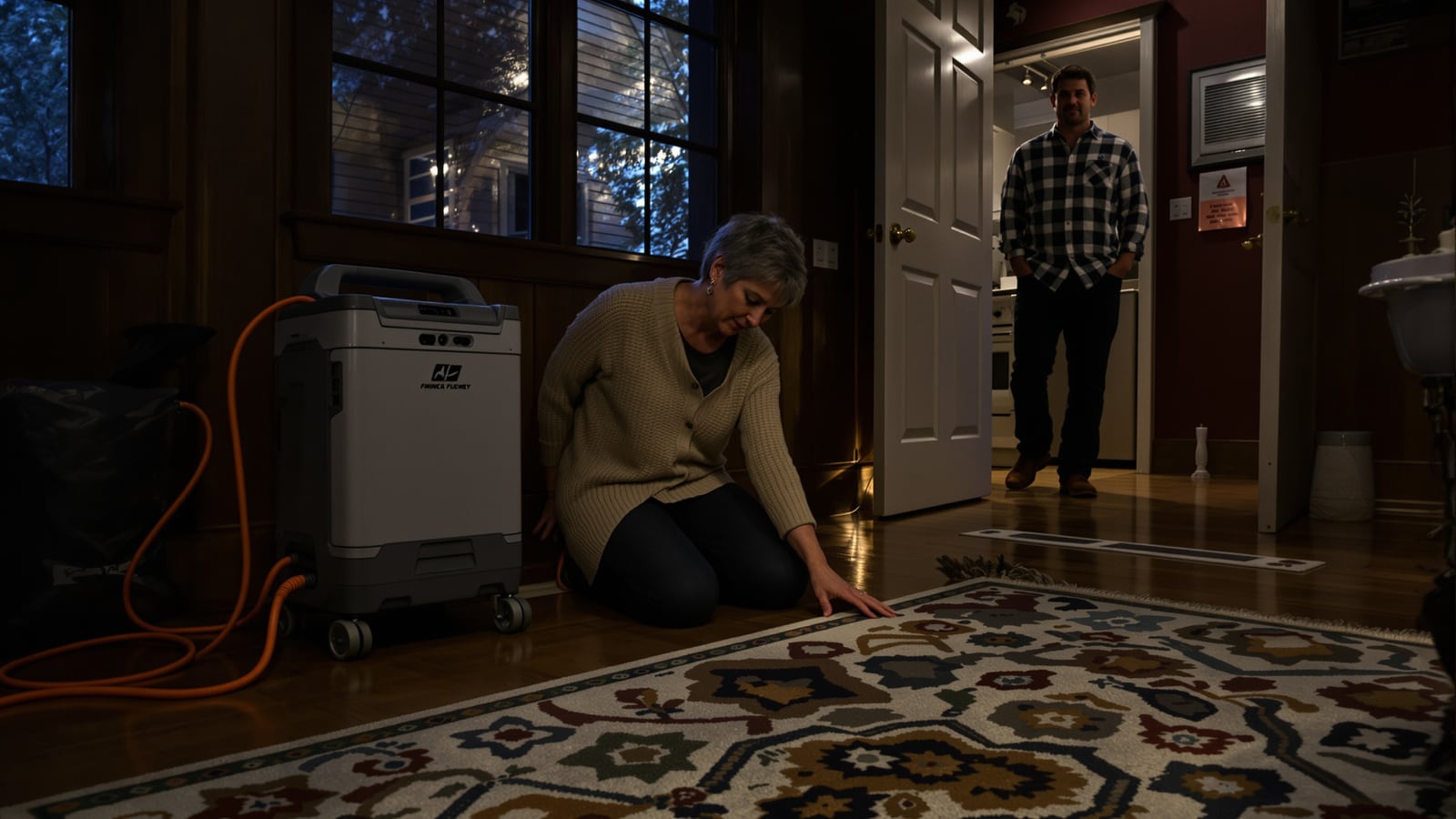
Quick answer: A furnace that heats a house purely on batteries doesn't exist. What you can do is keep a gas, propane or oil furnace running on a power station or generator, because the fuel makes the heat and the electricity only runs the fan, igniter and controls. Read the nameplate, do the math, and have an electrician handle any wiring.
The cruel joke of a dead furnace
It's the second night of an ice storm. Fourteen degrees outside, sixty-one and falling inside. The gas line is live. The furnace is full of fuel and doing absolutely nothing.
That's how most forced-air furnaces work. The burner needs gas, but the igniter, the control board, the safety sensors and the blower all need household current. No power, no ignition. The fuel sits there like a man with a full wallet and a broken card reader.
The upside is that the electrical appetite is small. The thing that heats your house is the gas. You only have to feed the fan.
Electric furnaces and electric heat strips are a different story. They pull thousands of watts, and a portable battery won't carry them. If that's your system, your backup is a different heat source, which we'll get to.
Find your number first
Open the furnace's blower compartment door and look for the nameplate. You want the amperage, usually listed as maximum or full-load amps, and the voltage, which will be 120.
Multiply the two. A furnace rated at 5 amps on 120 volts draws about 600 watts at its peak. That's a number you can shop with.
Two notes before you buy anything:
- The igniter pulls a short burst on startup, so the power source needs some headroom above the running number.
- Newer furnaces with electronically commutated motors sip power but can be fussy about the quality of the electricity. Check the manual or ask the installer whether yours wants a pure sine wave inverter. Most good power stations and inverter generators put out one. Cheap inverters often don't.
Do the runtime math before the storm
Say your furnace averages 300 watts over time, since it cycles on and off. A power station rated at 1,000 watt-hours doesn't deliver all of that, because the inverter wastes some. Call it 850 usable. Divide by 300 and you've got under three hours.
That's the annoying part nobody puts on the box. A modest battery carries a furnace through a cold evening, not a whole night. If you want a full night, you need a much larger battery or a generator.
Run the same math for whatever else you'd plug in. The furnace comes first, then a lamp, a phone charger and the little pellet of comfort known as the internet router. Everything past that is optional.
Getting power to a furnace that's hardwired
Some furnaces plug into a wall outlet. Most are wired straight into the house. That matters.
If yours plugs in, a heavy-duty extension cord rated for the load can carry power from a station or generator. Keep it short, keep it out of water, and don't run it under a rug.
If it's hardwired, the safe way is to call a licensed electrician now, in good weather, and ask for one of two things: a dedicated inlet for the furnace circuit, or a transfer switch or interlock that isolates the house from the grid. Both stop your backup power from flowing out into utility lines, where it can seriously hurt a lineworker trying to restore your neighborhood.
The shortcut you'll see online is a homemade cord with a plug on both ends, pushed backward into a wall outlet. Don't. It's a fire hazard and a danger to the people working to get your lights back on. Pay the electrician.
If you're using a generator, the rules on placement are not flexible. Twenty Feet From the House and Other Generator Rules covers them.
What not to do when the furnace stays dead
Every winter, people die from carbon monoxide during power outages, almost always from running a fuel-burning device somewhere it doesn't belong. Official guidance from the CDC and the Consumer Product Safety Commission is blunt, and so is this:
- Never run a generator in a garage, basement, shed or near a window or vent, even with the door open.
- Never heat the house with a gas oven, a charcoal grill or a camp stove.
- Only use a space heater built for indoor use, follow its instructions, and keep it clear of anything that burns.
- Keep a battery-powered or battery-backup carbon monoxide detector working in the house, and test it before the season.
Headache, dizziness, nausea or sudden confusion in anyone in the house means get outside into fresh air immediately and get medical help right away. Don't wait to see if it passes.
Shrink the house
If you can't run the furnace, make the heated space smaller. One room, ideally one with few windows, becomes the whole house. Close the doors. Hang blankets over windows and doorways that leak. Everyone sleeps there, in layers and hats, with insulation under them as well as over them, since the floor steals more heat than you'd expect.
Eat and drink. A body with food and water makes its own heat better than a hungry one.
Check on the old and the very young first, because they lose heat faster and don't always say so. If your parents live alone, What Your Parents Need Before The Next Three-Day Outage is worth an hour this month. And if the cold drags past a day or two, What a Week Without Power Actually Takes lays out the longer game.
Knock on a neighbor's door while you're at it. If you've got heat and he doesn't, a warm room and a pot of coffee cost you almost nothing. Leave things better than you found them.
Protect the pipes
A house that goes cold can burst a pipe, and that's a bigger bill than the outage. Standard guidance from FEMA and the Red Cross: know where your main water shutoff is, open cabinet doors under sinks on exterior walls, and let faucets drip slightly when freezing is a real risk. If the house is going to sit unheated for a long stretch, shut off the water and drain the lines.
Test it on a mild day
Plan this for October, not January. Pick a cool afternoon, flip the furnace's breaker off to simulate the outage, connect your backup, and watch it start. See how long the battery lasts under real load. Time it. Write the number on a piece of tape and stick it to the power station.
That's how you find out your cord is too short, your inverter trips on startup, or your furnace wants something different than you assumed. Better to learn that on a cool afternoon than on a dark one.
Wes Dunbar
Country & Skills
Grew up on an acreage and never quite left. Covers trucks, trades, land, and how to do the thing yourself.

Watch
Worth an hour of your evening
More from Preparedness.
From channels we rate. Plays on YouTube.
Read next