

Find Your Water Shutoff Valve Before the Pipe Bursts
When a line splits, you get seconds, not minutes. Learn where the main valve is, test it once a year, and tag it so anyone can find it.
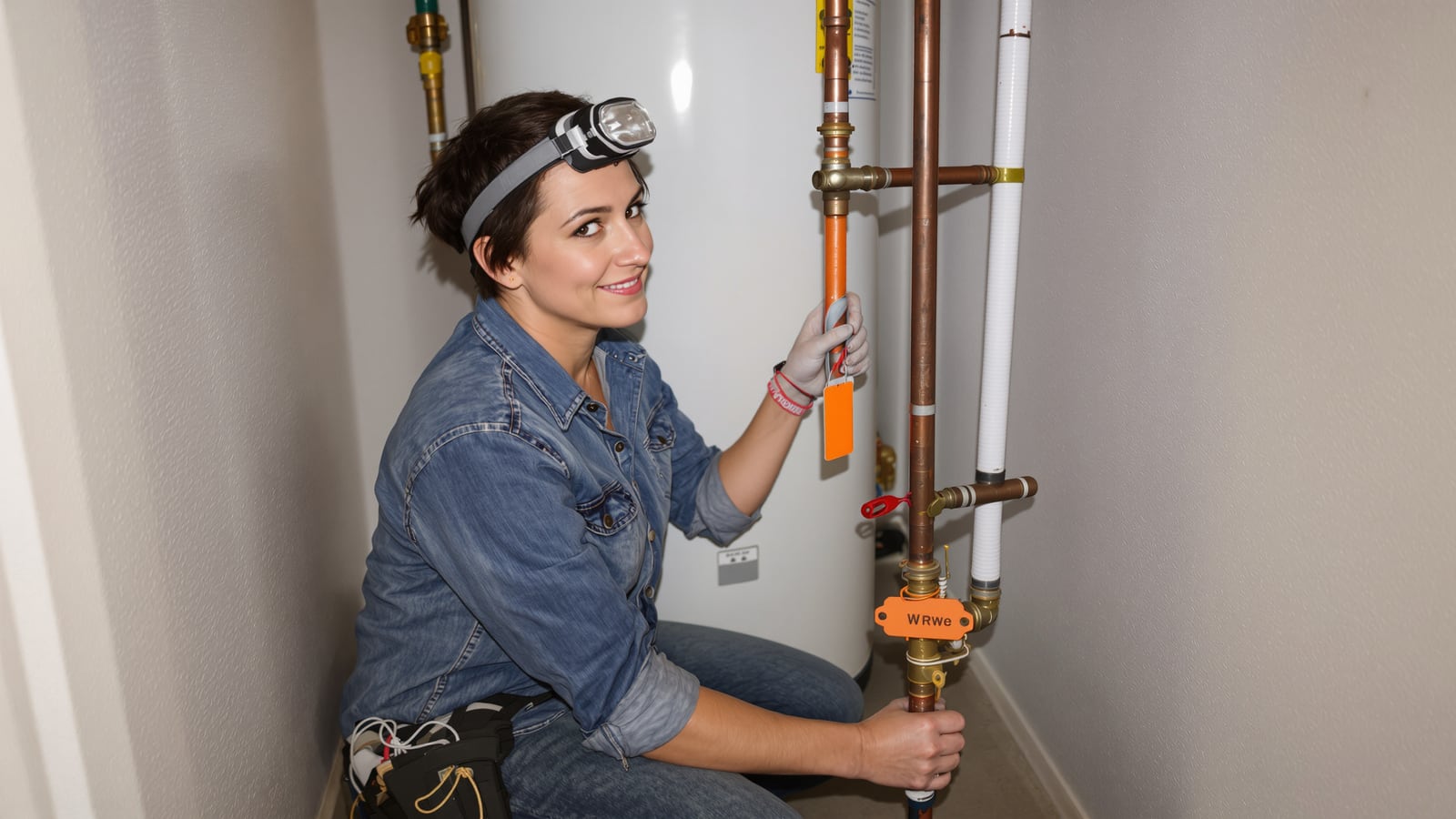
Quick answer: Your house has a main shutoff where the water line enters the building. Find it today, turn it fully off and on once to prove it works, and hang a tag on it.
A valve you've never touched is a valve you can't count on. Do this on a calm Saturday, not during a flood.
Two valves, and only one is yours
Most homes have two main shutoffs, and people mix them up.
The first sits at the meter, usually in a lidded box near the curb or in a basement. That's the utility's equipment. Opening it often takes a special key, and in many places you're not supposed to operate it. If your own valve fails, call your water utility and ask what they allow and how fast they can respond.
The second is the one this piece is about. It's inside or just outside your house, where the main line comes in. This is your valve, and it's the one you'll use.
Where it hides
Start where the line enters the house. Walk to the side facing the street and look for a pipe coming through the wall or floor.
- Cold climates: Look in the basement, crawlspace or utility room, often near the water heater or the front foundation wall. Builders keep pipes inside the heated space.
- Warm climates: The valve is often outside. Check a wall near the hose spigot, or a ground box with a lid.
- Slab homes: Try the garage, a utility closet, or beside the water heater.
- Well water: Your system has a shutoff near the pressure tank. The pump also has its own breaker, and you'll want to know which one it is.
Can't find it? Follow the pipe from the meter toward the house. Or find the water heater and trace the cold inlet backward. Your home inspection report or closing paperwork may also note the location.
Renting? Ask the landlord or property manager where it is and which units it covers. Ask before the leak, not during it.
Know which kind you've got
The handle tells you.
A ball valve has a short lever. Parallel to the pipe means open. Perpendicular means closed. One quarter turn and you're done.
A gate valve has a round wheel, like an outdoor spigot. It takes several full turns clockwise to close. It's also the kind most likely to seize with age, because the mineral deposits inside never get disturbed.
That's the whole case for testing it. A gate valve that hasn't moved in fifteen years can stick halfway, leak around the stem, or snap in your hand. Better to find that out on a Saturday.
The test
Give it ten minutes.
- Tell the household you're shutting the water off briefly.
- Turn the valve closed. Go gently with a gate valve. If it fights you, stop. Forcing it is how the stem breaks.
- Open a faucet at the lowest point in the house. A utility sink or a basement tap works well. Flow should slow to a trickle and stop.
- Open the valve again, slowly. Slow matters, because a sudden rush of water can rattle old pipes.
- Look around the valve for drips or weeping at the stem.
If it won't close all the way, drips at the stem, or feels crunchy, call a licensed plumber. Many plumbers will swap an old gate valve for a ball valve. Get a quote and ask what else they'd recommend while they're there. Ask your plumber, not a forum, about your particular setup.
Do the test once a year. Put it on the same weekend you change the smoke detector batteries.
Make it findable by anyone
You may not be home when it matters. Your wife might be the one standing in the kitchen. Your teenager might be home alone. The babysitter might be the only adult in the house.
Tag it. A bright plastic tag or a strip of tape on the valve, labeled MAIN WATER, works. Clear the junk from around it too. A valve behind a shelf of paint cans is a valve you won't reach in time.
Then run the drill. Ask each family member old enough to turn it to go find it and close it, with you watching. If anybody takes longer than a minute, your tag or your clutter is the problem.
Keep a flashlight nearby, and an adjustable wrench or a valve key if your setup calls for one. Don't leave it in the garage. Leave it where you'll need it.
What the valve is for
Three situations come up most often.
A burst or failing pipe. Freezing is the classic cause. Ready.gov's winter storm guidance tells households to know where the main shutoff is for exactly that reason. Washing machine hoses, water heater connections and supply lines under sinks fail too, usually when nobody's looking.
A long absence. Closing the main before a trip means a failure at home can't run all week. Many insurers recommend it for extended travel. Check your own policy for any conditions.
A contamination warning. If your utility tells customers to stop using the water, the valve gives you a clean way to isolate the house. Follow whatever your utility and local officials say.
After you shut it off
Closing the valve is the first move, not the last.
- Open a faucet or two to drain the lines and relieve pressure.
- Turn off power to an electric water heater at the breaker, and set a gas one to its pilot or vacation setting. A heater that heats an empty tank can be damaged.
- Take photos of the damage before you clean anything. Then call your insurance company.
- Don't turn the water back on until the break is fixed and you've checked the repair.
If your house has been cut off from supply, the water heater tank holds a real reserve. FEMA and Ready.gov both list it as an emergency water source. Shut off its power, close the cold inlet, then open a hot tap somewhere in the house and draw from the drain valve at the bottom. Treat it as you would any stored water. The seventy-two hour kit piece covers how much you need per person, and the week without power piece covers what happens when it lasts longer.
The deductible question
Most water damage claims come with a deductible, and some damage falls outside coverage. Read your policy now, while you're not in a hurry. And keep cash set aside for the deductible and for the plumber who shows up at an inconvenient hour. The emergency fund piece lays out how to keep that money reachable.
The leave-it-better part
Once you've tested your valve, tell somebody. Walk your parents through theirs. Show the neighbor who's about to leave for a month. If you're the guy on the block who knows where the shutoff is, you'll get called the day a pipe lets go next door.
Knowing where it is costs you ten minutes. Not knowing can cost a floor.
Wes Dunbar
Country & Skills
Grew up on an acreage and never quite left. Covers trucks, trades, land, and how to do the thing yourself.

Watch
Worth an hour of your evening
More from Preparedness.
From channels we rate. Plays on YouTube.
Read next