

Find out if your septic system needs power before it matters
Some septic systems don't notice a blackout. Others fill up in a day or two. Learn which one you own before the next storm.
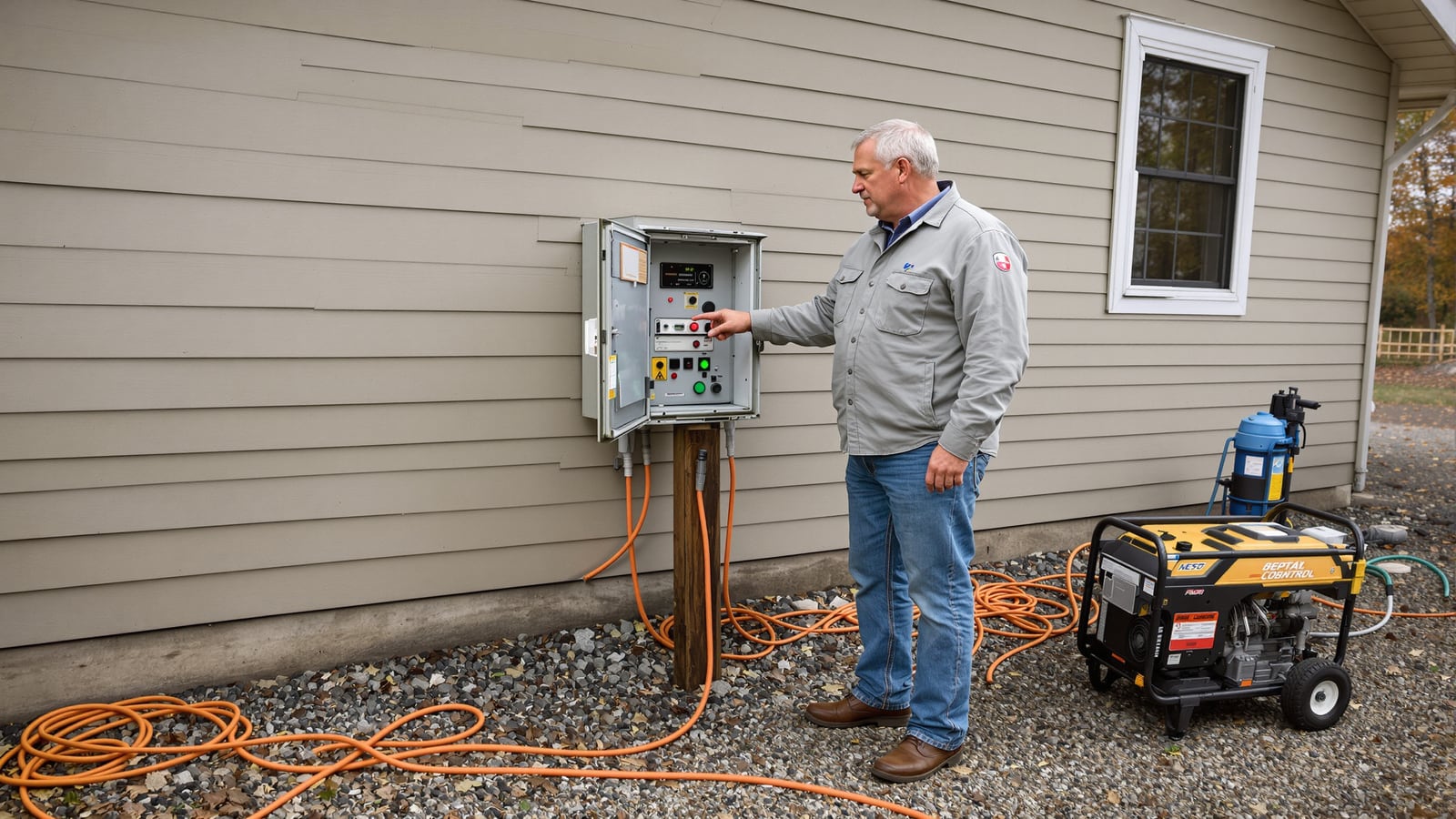
Quick answer: A septic system that's just a tank and a gravity-fed drainfield keeps working with the power off. If your system has a pump, an aerator or an alarm panel, an outage matters. Find out which you have now, and write it down.
A gravity system is the best-behaved thing on your property. Wastewater leaves the house, settles in the tank, and drains downhill into the field. No motor, no switch, nothing to fail when the lights go out.
Plenty of systems aren't built that way. And from the yard, you can't tell them apart.
Which kind do you have?
Start with the paperwork. Your county or local health department usually keeps the permit and a drawing of the system, and the installer who built it or the company that pumps it will know. Ask them one question: does anything in this system need electricity?
You can also look for clues:
- A control panel on a post, in the garage or on an outside wall, often with a red light or an alarm button.
- A second lid near the tank. That's often a pump chamber.
- A raised mound of sand or fill in the yard. Mound systems typically rely on a pump.
- A bathroom in the basement below the level of the main sewer line. That one usually has its own ejector pump.
- A humming or bubbling box near the tank. That's likely an aerator on an aerobic treatment unit.
Any of those means you have a system that depends on power. Not a disaster. Just a system with a schedule.
If you have a pump, you have a water budget
Here's how a pumped system fails in an outage. Water keeps going down the drain, the pump can't send it anywhere, and the pump chamber slowly fills. The chamber has some reserve above the alarm level, but how much varies by system, so ask your installer for a number in gallons.
Until you have it, treat the first day as a budget:
- No dishwasher. Wash by hand in one basin.
- Laundry waits. A single load sends a lot of water down the line at once.
- Short showers, or sponge baths.
- Flush only when you need to. If your water supply is out too, pour a gallon from a bucket into the bowl and it'll flush.
If you're on a well, the outage may limit your water use for you. The pump that feeds your faucets is dead too. That's the one time a well owner has an easy day.
A basement ejector pump is the sneaky one. Its basin is small. Stay out of the basement bathroom and use an upstairs toilet that drains by gravity.
Aerobic systems need air
An aerobic treatment unit uses an air pump to feed the bacteria that clean the water. Lose power for a day or two and most homeowners won't notice. Go longer and treatment suffers, and you may smell it. Call your service provider before the storm season and ask what they want you to do in a multi-day outage. They'll have an answer, and it beats guessing.
Running the pump on a generator
If you own a generator, your septic pump belongs on the short list with the refrigerator and the furnace fan. Two cautions.
First, check the pump's voltage and amperage against the generator's output. Many well and septic pumps run on 240 volts. Second, wire it properly. A transfer switch or a dedicated inlet installed by a licensed electrician is the right way. Never back-feed the house through a dryer outlet with a homemade cord. That's how linemen get hurt. Read Twenty Feet From the House and Other Generator Rules before you set the machine down anywhere.
You also don't need to run it around the clock. A pump chamber only needs power long enough to cycle. Ask your installer how long a full pump-down takes, then run the generator in short blocks and save the fuel.
Floods are a different problem
Wet ground is harder on a septic system than a dead pump. EPA guidance for flooded systems is consistent:
- A saturated drainfield can't take more water. Use as little as you can until the ground drains.
- Don't pump the tank while the ground is flooded. An emptied tank can shift or float in saturated soil.
- Keep people, pets and vehicles off the drainfield.
- Have the system inspected by a professional before you go back to normal use.
- If you're on a well, assume flooding contaminated it until it's been tested.
If sewage backs up into the house, stop using water, keep children and pets out of the area, and call a septic pro. Wear rubber gloves and boots for cleanup. Disinfect every surface the water touched.
And never open the tank lid to take a look. Gases in a septic tank can overcome a person in seconds. Whatever's wrong, it's a job for someone who does it for a living.
The bucket in the garage
When the budget runs out, or the pump won't run, you need a toilet that doesn't use the system at all. It costs less than a tank of gas.
- A 5-gallon bucket with a snap-on toilet seat
- Heavy-duty trash bags to line it
- Cat litter or sawdust to cover each use
- A lid, and a place to store it where nobody has to look at it
Bag it, tie it, and hold it in a sealed container until you can dispose of it. Local rules on disposal vary, so check with your county. Nobody wants this on the checklist. It's still the difference between a bad weekend and a ruined drainfield. This item also belongs in the seventy-two hour kit your family will actually use, and it matters even more if you're planning for a week without power.
One card, taped inside a cabinet door
Spend thirty minutes on a clear Saturday and write this on an index card:
- System type: gravity, pumped, mound or aerobic
- Where the tank, pump chamber and control panel are
- Which breaker feeds the pump, and the pump's voltage
- The alarm panel: what it sounds like, and whether it has a battery
- Your installer's and pumping company's phone numbers
- The date of the last pump-out. EPA suggests most households pump every three to five years, depending on tank size and household size.
Then tape it where your spouse can find it, because you won't always be the one home when the lights go out.
The best septic system is the one nobody thinks about. That's the reason to spend one afternoon thinking about yours. It beats doing it at 2 a.m. with a flashlight in your teeth.
Wes Dunbar
Country & Skills
Grew up on an acreage and never quite left. Covers trucks, trades, land, and how to do the thing yourself.

Watch
Worth an hour of your evening
More from Preparedness.
From channels we rate. Plays on YouTube.
Read next