

Run your water filter in the kitchen before you need it
A filter you've never used is a hope, not a tool. Here's a Saturday-morning test for the pump, the straw and the gravity bag.
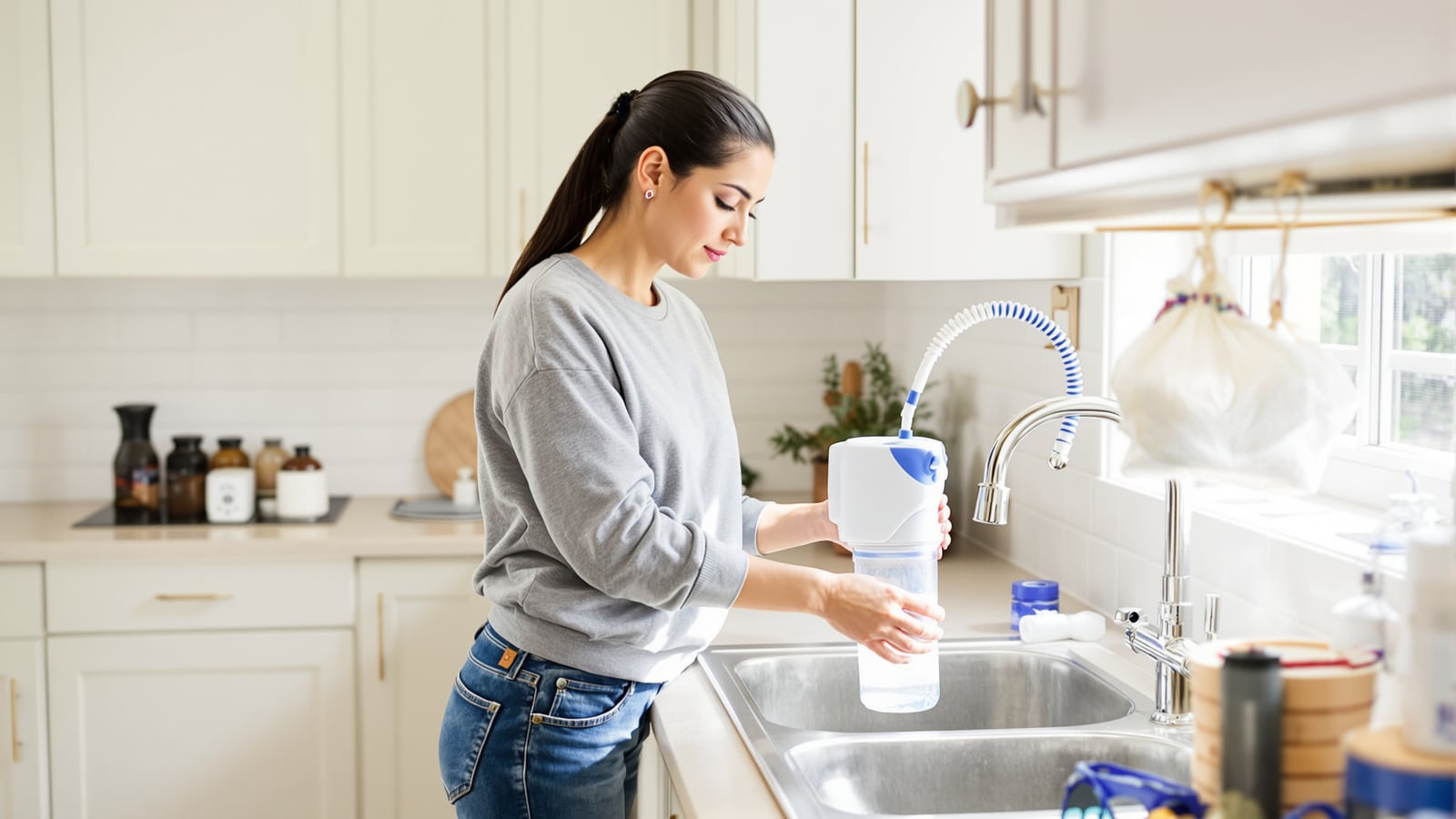
Quick answer: Stored water and boiling come first. A filter is your backup, and it only works if you've run it. Spend one hour with a bucket, a timer and a roll of tape, and write the flow time on the filter.
A filter in a drawer is a rumor. You think it works. You bought it on a good day. Nobody has checked whether it still pushes water, whether the hose still fits your bottle, or whether your hands know the steps when the lights are out and the kids are asking questions.
Do that checking now, in the kitchen, in daylight.
What the official guidance puts first
Ready.gov and the CDC start with storage: one gallon per person per day, for at least three days, and two weeks if you have the room. Pets drink too. Count them.
Past that, the CDC's first answer for questionable water is boiling. Bring it to a rolling boil for one minute. Above 6,500 feet, make it three. Let it cool and cover it. If you can't boil, unscented household bleach works on clear water. Follow the label and the CDC's chart for your bleach strength, and wait the full 30 minutes. Cloudy water gets strained through clean cloth first.
Your water heater is also a tank of drinkable water. Thirty to fifty gallons, depending on the unit. Learn where the drain valve is before you need it, and follow the manufacturer's steps.
So why own a filter? Because boiling takes fuel and attention, bleach takes time, and a good filter turns a creek or a rain barrel into drinking water without either. It's a good backup. It's a poor first plan.
What a filter won't do
Say this part out loud to everyone in the house.
Most pumps, straws and gravity bags use a hollow-fiber or ceramic element. They catch bacteria and protozoa like giardia. Many do not catch viruses. Read your box. If the maker claims only bacteria and protozoa, believe the maker.
Filters also don't remove chemicals, fuel or heavy metals. Floodwater is the worst case. It can carry sewage, farm runoff and whatever else was in the garage. If officials issue a boil-water advisory or say not to use the water, follow them. When a filter is all you have, the safest routine is to filter first, then boil or disinfect.
Test one: the flow clock
You need a clean bucket, a one-liter bottle, a timer and masking tape.
Fill the bucket with tap water. Run a liter through each filter the way you'd use it, and time it. Write the number on the tape and stick it on the filter. Then you know what normal looks like.
Next, make the water ugly. Stir a spoonful of garden dirt into a fresh bucket and run a liter through. Don't drink it. You're not proving it's safe. You're watching what silt does to your flow rate. If the filter slows to a crawl, you've learned two things: you need a cloth or coffee filter as a pre-strainer, and you need to know how to clean the element before you're thirsty.
Most hollow-fiber filters clean by backflushing. Your model ships with a syringe or a method. Run through it once. Reading the instructions in the dark is how people damage elements.
You can't verify at home that it removes germs. Nobody can. What you can verify is flow, leaks and fit.
The pump
A pump is the sturdy, old-school choice. It takes dirty water from a shallow source and gives back drinking water, one stroke at a time.
It's also work. Count how many minutes a liter takes you, and then ask your twelve-year-old to try it. That's your family number.
Check the hose ends and the float or intake screen. Look at the O-rings and the seals. Handle the spare parts kit, if one came with it. If it didn't, ask the maker whether one exists. A pump with a cracked seal is a heavy paperweight.
The straw
A straw is the lightest and cheapest of the three. It's also the most limited. One person drinks directly from the source, usually lying on their stomach beside a creek.
That's fine for a hike. It's poor for a household, because the straw can't fill your pots, your kids' bottles or the bathtub. Some models thread onto a bottle or a bag, which helps. Check whether yours does.
Test it by drinking tap water through it. Seriously. See how hard you have to pull. Then follow the maker's steps for clearing and drying it after use. Straws that sit wet can grow things you don't want.
The gravity bag
The gravity bag is the best fit for a family at home. Fill the dirty bag, hang it, and clean water drips into a clean container while you do something else.
Hang it now. Pick the spot: a hook in the garage, a closet rod, a tree limb, a deck rail. Height matters, because gravity needs a few feet to push. Time a liter. Look at the seams and the cap for weeping. Tighten the clamp and check the hose.
Keep a dirty bag and a clean container clearly labeled. A strip of colored tape works. Mixing them up is the common mistake, and it happens at 2 a.m.
Storage, and the freezing problem
Manufacturers of hollow-fiber filters warn that freezing can crack the fibers, and you can't see the damage. If one froze in a truck in January, replace it. Don't gamble.
Store the filters indoors in a dry spot, in a sealed bag with the tape note on the outside. Put the date on it. Once a year, repeat the flow test. If the number has doubled, backflush. If backflushing doesn't help, replace the element.
Like every other piece of gear, a filter should come back to the shelf cleaner than it left. Rinse it, dry it, put the cap on, and write the new flow time. Whoever reaches for it next, maybe you in a bad week, will be glad.
What to buy and what to skip
If you're buying one, match the tool to the job.
- One adult, a pack, a hike: a straw or a small squeeze filter.
- A family at home during a long outage: a gravity bag setup plus stored water.
- Dirty, shallow sources and a lot of volume: a pump, and strong arms.
Skip anything that doesn't state in plain words what it removes. Skip tablets or filters with no instructions you can read. And skip the idea that one gadget solves water. Water is a system: a gallon a day in jugs, a way to boil, a way to disinfect, and a filter for the day the first three run short.
For the rest of the list, the seventy-two hour kit is where this belongs. If the outage runs long, what a week without power actually takes will show you where water fits. And if your parents live alone, their three-day outage list needs a filter they've run at least once.
Do the test this weekend. Then put the tape on it and forget about it, which is the point.
Wes Dunbar
Country & Skills
Grew up on an acreage and never quite left. Covers trucks, trades, land, and how to do the thing yourself.

Watch
Worth an hour of your evening
More from Preparedness.
From channels we rate. Plays on YouTube.
Read next