

A gallon from waist height flushes a dead toilet
When the taps go dry, the toilet is the first thing in the house to become a problem. A bucket and about ten seconds of technique solve it.
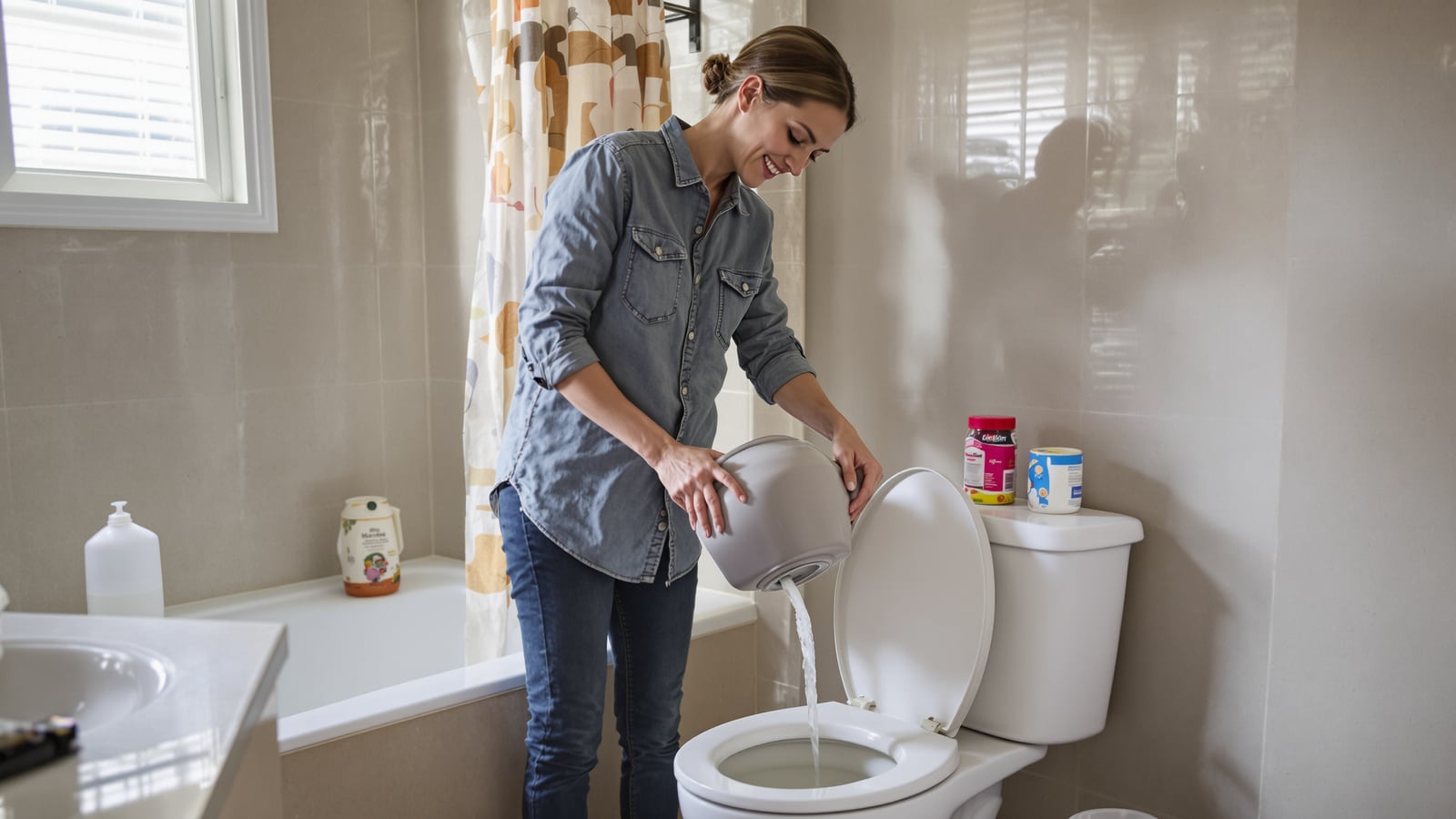
Quick answer: Pour about a gallon of water into the bowl, fast and from waist height. The toilet will flush as if you'd pressed the handle. Slow pouring won't do it, and neither will a cup at a time.
Most households that plan for a water outage plan for drinking. They stack cases of bottled water in the garage and feel done. Then day two arrives, nobody can flush, and a family of four is staring at a bathroom problem the water jugs were never meant to solve.
Ready.gov and the Red Cross both put the planning number at a gallon of water per person per day, for drinking and basic sanitation, for at least three days. That gallon doesn't stretch to cover a toilet. Plan the flushing water separately.
Why a bucket works
Your toilet isn't pushed by water pressure. The tank is just a quick-release reservoir. When you press the handle, it dumps a couple of gallons into the bowl all at once, and that sudden rise in level starts a siphon that pulls everything through the trap.
So you don't need the tank at all. You need to raise the bowl level quickly. A gallon poured with some commitment does it.
- Fill a bucket or large pitcher with about a gallon of water.
- Stand over the bowl and pour from roughly waist height, in one steady, fast stream, aimed at the bottom of the bowl.
- Listen for the swallow. If it flushes, you're done.
- If it doesn't, wait for the bowl to settle and pour again, faster. Don't dump a second gallon on top of a full bowl.
If the water level climbs toward the rim and stays there, stop. You've got a clog or a slow drain, and more water just means a mess on the floor.
The tank method
If you'd rather use the handle, lift the lid and pour water straight into the tank until it reaches the fill line marked on the inside. Then flush normally.
It works, but it costs more water. A toilet made since the mid-1990s uses 1.6 gallons per flush. An older one can use 3.5 gallons or more. In an outage, that's a lot of water you've hauled for no reason. If your toilet is old, use the bowl method and let the tank sit empty.
Where the water comes from
Don't spend drinking water on this. Anything that isn't drinkable but isn't filthy will do.
- The bathtub. If a storm is coming and the forecast says outage, scrub the tub, plug it and fill it. A full tub holds well over 30 gallons. Stoppers leak slowly, so fill it late, and keep a bucket by it for scooping.
- Pool water. Fine for flushing. Skip it for anything else.
- Rain barrels, melted snow, a dehumidifier's tank. Free, and it all works.
- A creek, pond or floodwater. It will flush, but it's dirty. Wear gloves, keep it away from the kids and wash your hands after you handle it.
- Your water heater. A tank holds 30 to 50 gallons. It's better kept for drinking in a real emergency, so treat it as a reserve, not a flushing supply. If you do tap it, shut off the power or gas to the heater first. Your owner's manual walks through the draining.
Count on roughly five flushes per person per day. A family of four is looking at about twenty gallons a day if everybody flushes every time. Cut that down by keeping flushing for solid waste and letting liquid-only visits wait for a few uses. It isn't pretty, but it halves the burden, and every adult in the house can live with it for three days.
Set it up before you need it
Two or three five-gallon buckets with lids cost about what a nice dinner does. Mark them with tape, "FLUSH ONLY," so nobody pours one into a coffee pot at 6 a.m. Put one in each bathroom, filled, before the storm hits. Keep a pitcher or a gallon jug beside the toilet so the pour is easy. Teach the kids and put a short note on the wall: pour fast, one gallon.
That fits into the bigger picture in The Seventy-Two Hour Kit Your Family Will Actually Use. If the outage involves the power too, What a Week Without Power Actually Takes covers the rest of the house.
When you shouldn't flush at all
Some outages are more than a pressure drop. After a flood, a sewer break or a major storm, local officials may tell residents to limit flushing or stop. Take that seriously. An overwhelmed sewer line pushes waste backward into homes, usually through the lowest drain. If the toilet gurgles, the tub drain bubbles or the bowl drains slowly, don't add more water.
In that case, the CDC and Ready.gov both describe the same fallback: a bucket lined with a heavy-duty trash bag, a tight lid, and a cover material such as kitty litter or sawdust. Your local health department can tell you what disinfectant to use and how to dispose of the bags. Keep the bucket outside the living space, in a garage or on a porch, and wash up after every use.
If you're on a septic system, a power outage can matter. Many gravity-fed systems keep working. Systems with a pump don't. Ask your installer which one you have before you need to know.
When the water comes back
Pressure often returns before the water is safe. Check your local utility for a boil-water notice. For flushing, it doesn't matter, but it matters for everything else you do with the tap.
Then clean up after yourself. Scrub the bowl. Rinse the buckets with a diluted bleach solution, dry them and put them away. Refill the tub the next time a storm is forecast. If you borrowed buckets from a neighbor, return them clean.
Which brings up the last point. The people on your street who didn't plan are about to have a rough weekend. An older neighbor can't lift a full bucket, and a young mother with an infant and two toddlers is flushing diapers' worth of laundry. Fill an extra bucket. Carry it over. Check on them. It's the kind of readiness that costs you ten minutes and makes the whole block stronger. If you've got parents or grandparents on their own, What Your Parents Need Before The Next Three-Day Outage is worth a read before the weather turns.
A gallon, a bucket and a firm pour. Not complicated, and nobody should find out how it works for the first time at midnight.
Wes Dunbar
Country & Skills
Grew up on an acreage and never quite left. Covers trucks, trades, land, and how to do the thing yourself.

Watch
Worth an hour of your evening
More from Preparedness.
From channels we rate. Plays on YouTube.
Read next