Put a recurring slot in your calendar this week. Same day, same time, same place, another person's name on it. That single act does more for your social life after work than any amount of thinking about how quiet the house has got.
Because the job wasn't giving you friends. It was giving you three conditions that manufacture friends: proximity, repetition, and a shared task. You saw the same people, often, while doing something together. Nobody had to organize it. The building did the organizing.
Now the building's gone and nobody's replacing it. You're the building.
Work the machinery, not the feeling
Most men over-think this as a question of personality. "I'm not a joiner." "I've never been good at small talk." Fine. Neither were half the men you got on with at work, and you got on with them anyway, because you stood next to them three hundred days a year.
Friendship at our age runs on frequency more than chemistry. Two men with nothing obvious in common who meet every Tuesday for eight months will end up closer than two men who like each other enormously and meet twice a year.
So stop auditioning candidates. Build frequency and let it do the work.
A useful test: if you didn't leave the house for four days, who would notice? Not who would be sorry. Who would actually clock it and pick up the phone. If you can't name two people, that's the project.
The old crew fades faster than you expect
The people you worked with for twenty years will tell you to stay in touch and they'll mean it. Most of it evaporates inside the first year, and it's nobody's fault. Your shared task is gone. Without it you're relying on affection alone, and affection isn't a schedule.
If you want to keep three or four of them, do the work in the first few months while you're still a live presence in their heads.
- Pick names. Three or four, not fifteen. Be honest about who you actually liked rather than who you saw most.
- Invite individually. The group chat isn't friendship. It's a noticeboard. One man, one invitation, a specific date.
- Give it a reason. Breakfast before his shift. A hardware run. Watching his boy play ball. Something with a start and an end beats "we should get a drink sometime", which is how men say goodbye politely.
- Expect to do the asking four times out of five. That's not a slight. Working men are busy and you're the one with time. Take the job.
Shoulder to shoulder beats face to face
Men generally talk better when they're doing something. Sitting in a café staring at each other with no task can feel like an interview. Give two men a fence to mend and they'll tell each other things they've never told anyone.
So weight your new commitments toward activity with a job attached:
- The church setup crew, the ones who stack chairs and run the sound desk. Sunday is the service. Midweek is where the friendships live.
- Habitat builds, food bank shifts, a volunteer fire auxiliary, a trail maintenance group.
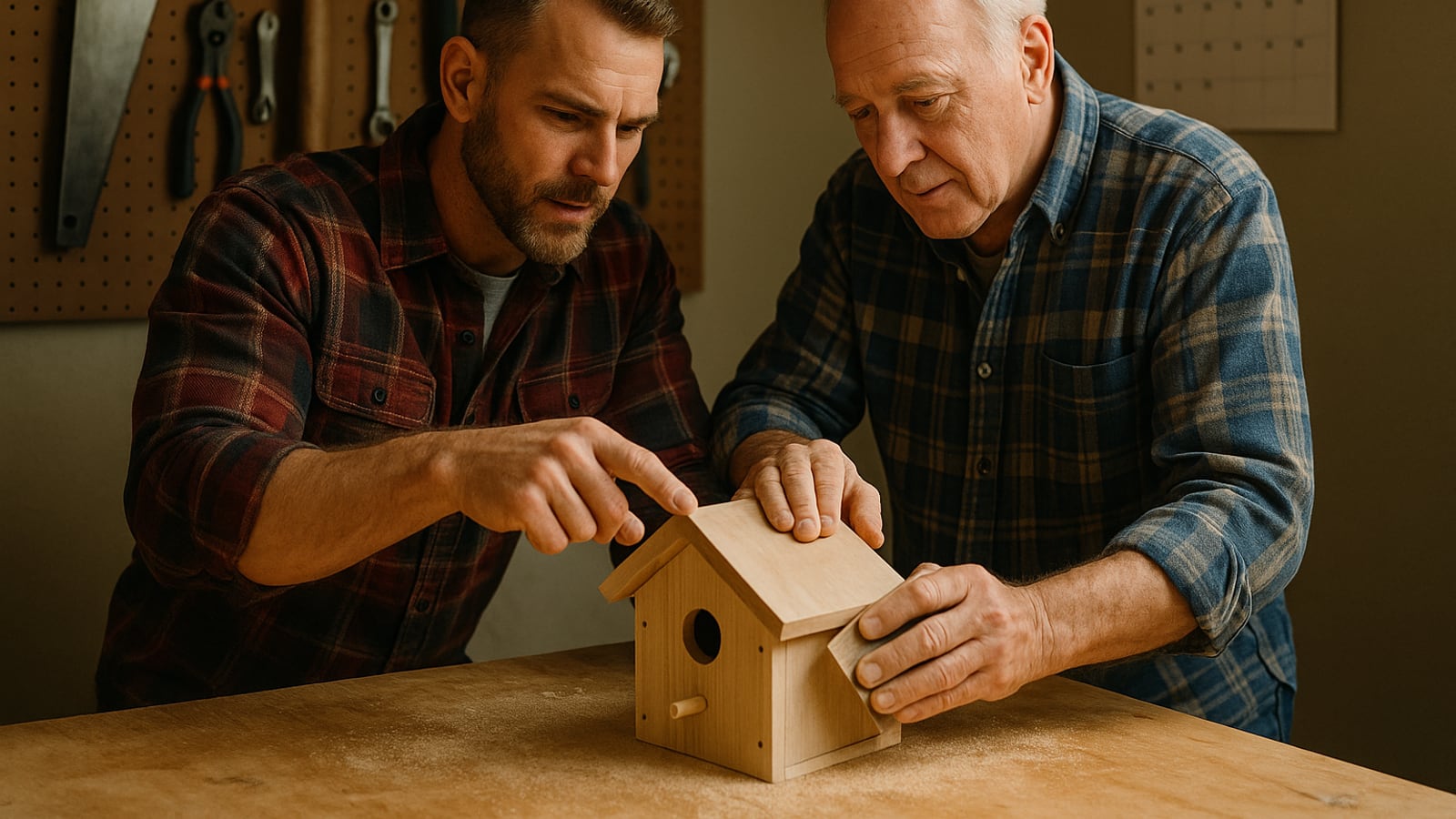
- A workshop. Woodworking, small engine repair, a car club with actual cars in bits.
- A league. Bowling, dominoes, horseshoes, pickleball. The scoring matters less than the fixture list.
- Coaching or reffing kids' sport. You've got forty years of knowing how to run a group of people. Somebody's short a coach right now.
Pure conversation groups work for plenty of men too. But if you've tried one and it felt like hard labor, the problem may have been the format, not you.
Pick things you can still be doing in five years
This is where good intentions die. Choose on logistics, not enthusiasm.
Distance first. Anything more than about fifteen or twenty minutes away gets skipped the first bad-weather morning, and skipping once is how it ends. Time of day next. If your night vision isn't what it was, an evening group is a group you'll quietly stop attending in November. Cost after that. Whatever you sign up for, pick the version you can pay for on a fixed income for years without thinking about it.
And give any new thing eight visits before you judge it. The first three are always awkward. Everyone already knows each other, the in-jokes go over your head, and you drive home wondering why you bothered. Around the fifth or sixth, somebody saves you a seat. That's the whole trick, and most men quit at three.
Be the one who organizes
Someone in every circle of men is the one who books the table, sends the reminder, remembers who's had a rough month. It's a real job and it's usually unpaid and unthanked.
Do it. You've run departments. You can run a Tuesday coffee.
Keep an actual list of names with a note of when you last spoke to each. It feels clinical for about a week and then it just feels like being a competent friend. Two phone calls a week, ten minutes each, gets you round a list of eight or nine people every month. A call is worth ten of anything typed. You hear the tiredness in a man's voice that he'd never put in a message.
The two traps particular to married men
The first is outsourcing. Your wife remembers the birthdays, keeps up with the couples, arranges the dinners, and you go along. It works beautifully right up until it doesn't. If every social connection you have runs through her, you have no friendships of your own, you have guests. Keep at least one standing commitment that's yours, that you'd attend if she were away for a month.
The second is the opposite failure, and it shows up in widowers hardest. Couples invite couples. When a man loses his wife, the invitations thin out, not from cruelty but from a kind of social awkwardness nobody admits to. If that's happened to you, you'll have to break the pattern yourself by inviting rather than waiting. If it's happened to a friend of yours, put his name in your calendar on a repeat and keep it there.
While we're being practical: if the flatness has lasted weeks rather than days, if you're sleeping badly and can't be bothered with things you used to enjoy, say so to your doctor. Isolation and low mood feed each other, and both are treatable. That's a conversation for a professional, not a hobby group.
What it looks like when it's working
You've got two or three fixtures a week that happen whether you feel like it or not. You've got a handful of numbers you'd dial without a reason. Somebody calls you when their brother's in the hospital. When you miss a week, a man texts to ask where you were.
None of that arrived. It was built, slowly, by a man who kept turning up to the same room on the same morning until the room was his.
Your first Tuesday is next Tuesday. Pick the person and send the message tonight, before you talk yourself into next month.
Cal Brennan
Fitness
Strength coach. Trains fathers, tradesmen and desk workers, which means programmes that survive a bad week.

Watch
Worth an hour of your evening
More from BRO Seniors.
From channels we rate. Plays on YouTube.
Read next