
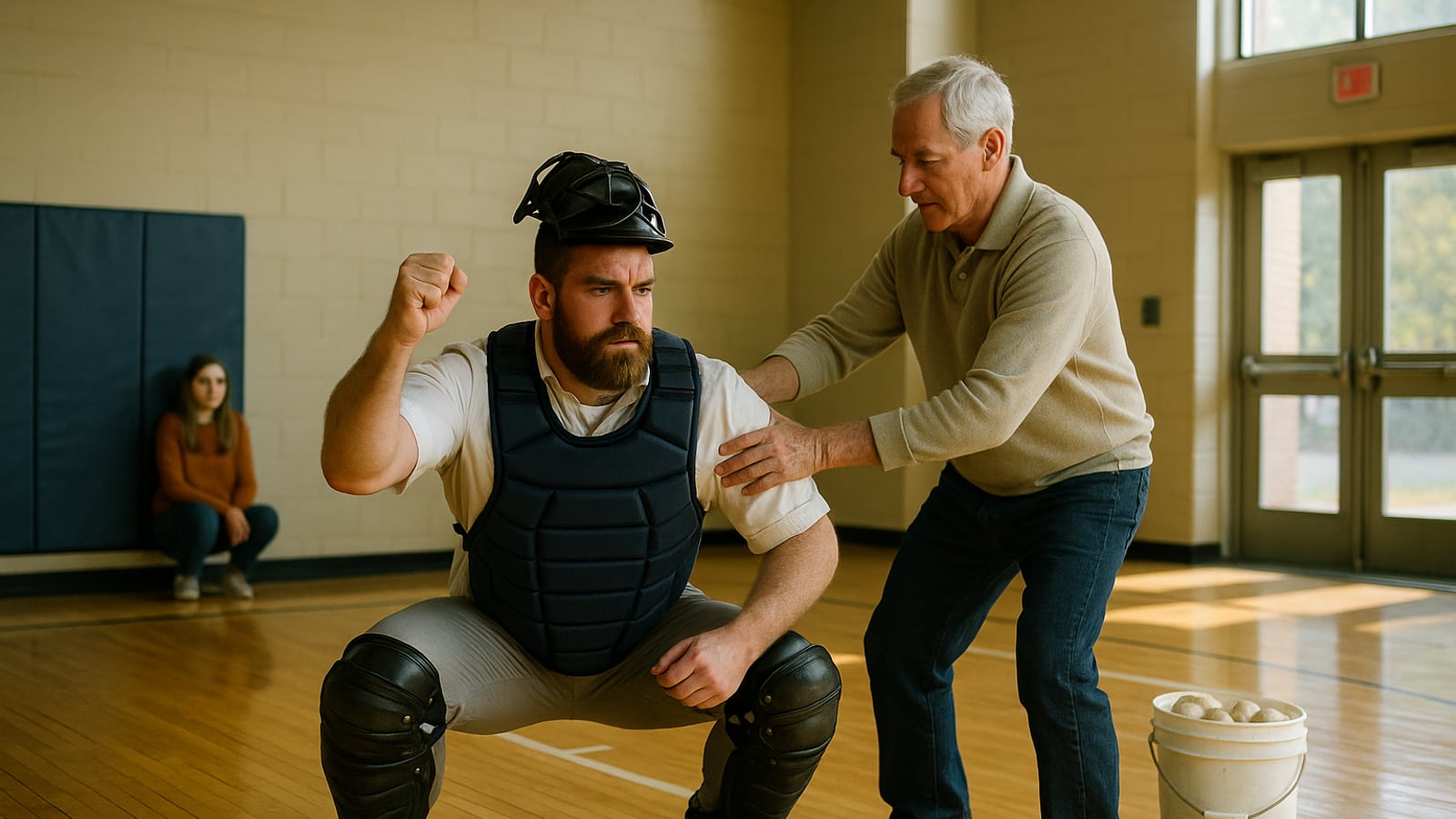
Quick answer: Pick the sport you know best, ask to start with the youngest age group, and call your league's umpire or referee coordinator this week. Most rec leagues will train you, hand you a rulebook and have you on a field within a month.
It's 9 a.m. on a Saturday. The game is 10U baseball at the town park, and the man behind the plate is somebody's grandfather in a golf shirt and a borrowed mask. He isn't there because he loves umpiring. The scheduled ump didn't show, and when the coach asked for help, he was the only adult who didn't stare at his shoes. By the third inning a dad in the bleachers is explaining the strike zone to him at full volume.
That dad could solve the whole problem. He'd just have to walk down and put on the gear.
The shortage isn't about the rulebook
For years the National Federation of State High School Associations and the state associations under it have warned that officials are leaving faster than new ones arrive. They name abuse from adults as a leading reason. You've probably seen the results without connecting them. A JV game gets moved to a Thursday. A middle school doubleheader shrinks to one game. A rec league asks parents to "help out" behind the plate.
Nobody quits because the infield fly rule is confusing. People quit after the fifth parking-lot conversation with a man who's sure his nephew was safe at second.
That's actually good news for you. The hard part of officiating is learning to stay calm and in position while somebody yells at you, and that's a character skill. You learn the rules in a few weeks. The composure takes a season, and it carries over into the rest of your life.
Start where the stakes are smallest
Ask for the youngest games your league has: 8U baseball, U8 soccer, the Saturday-morning rec basketball game where half the players are shorter than the ball rack.
Nobody there's going to argue a balk. The coaches are volunteers too, and most of them are just glad you came. You get to practice everything that matters without pressure. That means where to stand, when to blow the whistle, how loud to call a strike, and how to keep the game moving when a six-year-old stops to look at a dandelion.
Spend a full season there. Then move up one age group. People who jump straight to 12U travel ball to prove something usually don't come back for a second year.
How to get in, sport by sport
Baseball and softball. Call your Little League or rec league and ask for the umpire coordinator. Many local leagues and districts run umpire clinics every spring before opening day. Expect a volunteer application and a background check, which Little League requires every year for its volunteers. If you want to move up to high school games, which are paid, go through your state high school association. There's usually a registration, a rules test and a required rules meeting, and a local officials association handles the game assignments.
Soccer. Youth referees are usually paid per game, and many of them are teenagers. The entry route is the U.S. Soccer grassroots referee course through your state's referee program. You do online coursework and then an in-person field session. If your kid has just moved into club play, this primer on the travel soccer world explains why those leagues are always looking for referees.
Basketball and football. Rec basketball usually runs through the parks department, and it's the easiest officiating job to get. High school basketball and football go through your state association and local officials groups. Football has one real advantage: you work as part of a crew. New officials often start on youth or middle school games next to veterans who'll tell you on the sideline, kindly, exactly what you did wrong.
What you actually need
Less than you'd think, and the league often lends the expensive pieces.
- Baseball plate umpire: mask, chest protector, shin guards, plate shoes with a protective toe, a ball bag, an indicator for counting balls and strikes, and a plate brush. Borrow the league's set for your first season and buy your own once you're sure you'll stay.
- Soccer referee: a Fox 40 Classic whistle, a watch you can start and stop without looking, yellow and red cards, a notebook and a pencil that actually writes.
- Basketball: a whistle, a lanyard, the black-and-white stripes and black shoes. That's the whole list.
The habits that make a rookie look like a veteran
Wait a beat. New umpires call strikes before the ball reaches the catcher's glove. Let the pitch finish, count "one" silently, then make the call. Almost every early mistake happens because someone called it too fast.
Hustle into position. Being in the right spot heads off most arguments. When a coach sees you standing ten feet from the bag, he's much less likely to question the call. When he sees you watching from the pitcher's mound, he'll argue.
Sell it. Say "Strike!" like you mean it. Signal an out with a firm fist. A weak call brings out every loud voice in the crowd. A confident one quiets most of them, even on a close play.
Own the miss, briefly. If you blew one, it's fine to say "I may have missed that, coach" once, quietly. Don't reverse it because the crowd got loud, and don't apologize to the bleachers. You won't win the bleachers, so don't try.
The coach, the parents and your own temper
You're there to serve the kids. Serving them means holding the line, because a game where the loudest adult wins isn't a game anymore.
Talk only to the head coach. Give him one calm sentence about what you saw and why you called it, then say "Let's play." Don't talk to parents at all. Before your first game, find out what your league lets you do about an adult who won't stop. It might be a warning, removal from the field or a call to the league director. When you need it, use it early. Handling one loud dad in the second inning is easier than facing four of them by the sixth, and the kids notice when an adult finally says no to another adult.
When this isn't a good fit
Don't umpire your own kid's games if the league has anyone else. You'll either be too hard on his team to prove you're fair or too easy without meaning to, and he's the one who pays for it at school on Monday.
If your temper runs hot, start on the bases or as an assistant referee with a flag. You'll learn the job without being at the center of every close call.
And be honest about the time. A season of Saturdays is a real cost to your family. Pick a number of games per month before the assignor starts calling, and stick to it.
Leave the field better than you found it
Get there thirty minutes early. Walk the field and look for broken glass, sprinkler heads sticking up and the soft spot in left field where somebody's going to roll an ankle. After the last out, grab a rake and help drag the infield. Nobody puts that on a list of your duties, but the grounds crew is often one tired volunteer, and they'll remember you.
You'll also notice something the bleachers can't show you. A ten-year-old strikes out looking, glances at you, and sees an adult who made a hard call, stood by it and didn't make a show of it. That lesson reaches well past baseball. Small towns understand what they lose when games stop happening. And very often a game stops happening because nobody showed up to officiate it.
The next time the dad in the bleachers starts explaining the strike zone, you'll know exactly what to tell him.
The league's looking for umpires.
Sam Ortiz
Dads & Family
Father of three. Writes about presence, discipline and the long game, without pretending any of it's tidy.

Watch
Watch how it's done
Picked for this article.
From channels we rate. Plays on YouTube.
Official Finders
The Basics of Umpiring | Umpire Training
Read next