
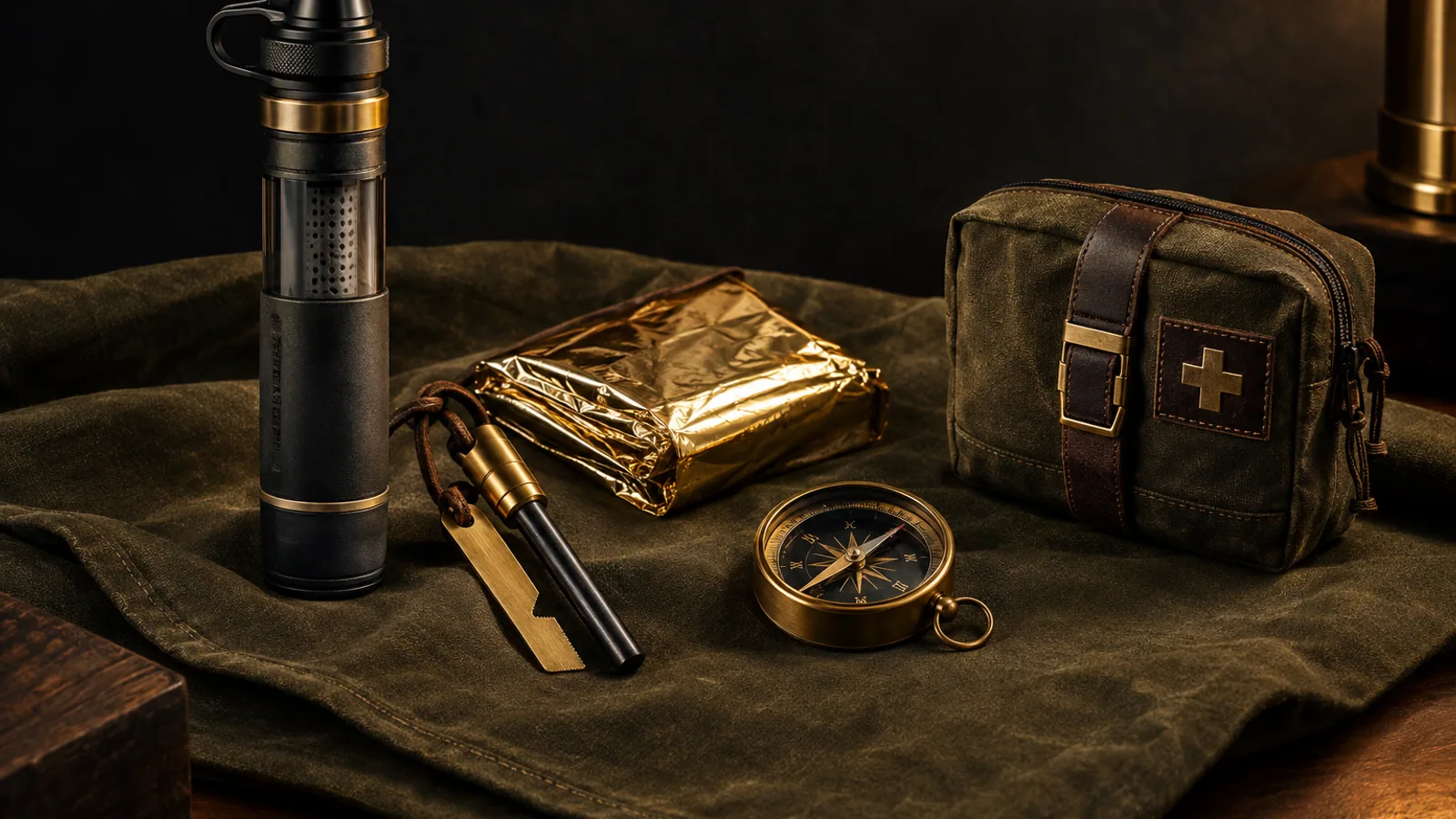
Quick answer: If water covers the road, turn around. If it's already rising around your car, seat belt off and window open at once, kids out first, and don't wait for the door. A $15 window punch within arm's reach is the cheapest insurance you'll buy this year.
It's 10:40 p.m. and it's been raining for three hours. The county road dips ahead, and your headlights land on a smooth sheet of black water where the asphalt should be. A pickup's taillights are already on the far side. He made it. The water looked about ankle deep on him.
That's the moment. Not the minute the car starts floating. This one, with the engine running and your foot on the brake.
What you can't see from the driver's seat
The National Weather Service has taught the same rule for years: Turn Around, Don't Drown. Their numbers are worth memorizing. Six inches of moving water can reach the underside of most passenger cars, enough to cost you control or stall the engine. A foot can float many vehicles. Two feet can carry away most cars, and that includes SUVs and pickups.
Water is heavy, about 62 pounds a cubic foot, and moving water pushes with all of it. Your car isn't heavy enough to argue.
The depth isn't even the main problem. You can't see what's under the surface. The road may be washed out entirely, with the pavement gone and a ditch where your lane used to be. It looks like a puddle until the front wheels drop. At night you've got no chance of reading it.
And if the engine swallows water, it's done. A stalled car in a current is no longer a vehicle. It's a box with you in it.
Why you'll want to go anyway
The truck ahead made it. Maybe it's lifted. Maybe he knows the road. Maybe he got lucky. You don't know which, and his crossing tells you nothing about your car, your tires or the six inches of road that washed out after he passed.
Then there's the clock. You're tired, you're late, and the detour adds forty minutes. People talk themselves across because turning around feels like losing.
It isn't. If you've got your family in the car, turning around is the job. Put others first, but keep a spine about it. If someone in the passenger seat says "just go, it's fine," you can say no. You're driving. The forty minutes is a cheap price.
Many states fine drivers who go around barricades. Arizona's so-called Stupid Motorist Law can bill a driver for the cost of their own rescue. Laws vary by state and county, so check yours. But you shouldn't need a statute to tell you not to drive past a barricade.
If the water is already rising around the car
Say you didn't see it in time. The road dipped, the car slowed, the water's at the doors. Don't sit and think about it. Move in this order.
- Seat belt off. Window down. Do it now, while the electrical system still works. Power windows may run for a short while underwater. Don't count on it.
- Skip the door. Water pressure outside holds it shut until the cabin fills. By then you've spent your best minutes. The window is your exit.
- Kids next. The usual teaching is to unbuckle the oldest child first, since they can climb out and help, then the youngest. Get them through the window before you go. If you've got an infant, hold the baby against you as you go out.
- Out and up. Climb onto the roof if the water is moving and you can't see a safe way to shore. If the car has stopped and the water around it is shallow and still, move to higher ground. Don't wade into moving water. Six inches of fast water can knock an adult off their feet.
- Then call 911. Once you're out and holding on, not before. If you've got a phone in your hand during step one, fine. Don't spend ten seconds finding it.
If the window won't open, you need a tool. And that's where most people's plan falls apart.
The $15 that makes this survivable
A spring-loaded window punch with a seat belt cutter runs about $10 to $20 at any auto parts store. It's a small steel tool you press against glass, and it breaks the window with a click. A hammer-style one does the same.
Three things go wrong.
- It's in the glove box. You won't reach it in a sinking car. Keep it clipped to the visor, on your keys, or in the center console where your hand already goes.
- It won't break your glass. Most side windows are tempered and shatter easily. But some newer vehicles have laminated side glass, the same kind used in windshields, and a punch won't go through it. Check your owner's manual or ask a dealer. If yours is laminated, your plan is the window opening, not breaking it. That makes steps one and two even more urgent.
- You've never held it. Take it out of the package. Put it in the car. Sit in the driver's seat with your eyes closed and find it with your hand.
Aim for a corner of the side window, not the middle. The corners break first.
Add a few other items to the car for about twenty dollars total: a whistle, a small flashlight, and a waterproof phone pouch. None of it matters if you're not in the car when the road is under water.
Plan before the rain
A flash flood watch means conditions could produce flooding. A warning means it's happening or about to. If you're under a warning and you don't have to drive, don't.
Know the low spots on your regular routes. Every county has two or three dips and underpasses that flood first. Decide now which way you'd go around them. Teach your teenager the rule before they learn it from a ditch.
And talk it through with the family. Who unbuckles whom, who goes out first, who holds the baby. It's the same logic as deciding who goes where if someone breaks in at 2 a.m.: jobs assigned in daylight get done in the dark. If you want to go deeper, ask your local emergency management office or fire department about swiftwater awareness training. Some offer it. A hands-on class beats an article every time.
It's also the same habit as what to do in the first hour you're lost in the woods. The people who do well stop early, before the problem has teeth. Avoidance isn't weakness. It's the whole skill.
If you see water over a road and no barricade, call your county's non-emergency line. The next driver won't have your warning. Leave the road safer than you found it.
Let the truck go ahead. Sit there with your hazards on for a moment, then put it in reverse. You've got people in the back seat, and a long way around beats a short way across.
Dean Shaw
Gear & Garage
Reads the warranty, the parts list and the long-term owner reviews before anything else. Trucks, tools, watches, and the cheap version that costs more.

Watch
Worth an hour of your evening
More from Survival & Self-Defense.
From channels we rate. Plays on YouTube.
Read next