

A swivel won't save a bolt. The wrong one will round it.
The swivel socket doesn't stop stripped bolts on its own. Here's what actually does, when the cheap one is fine, and when it costs you a Saturday.
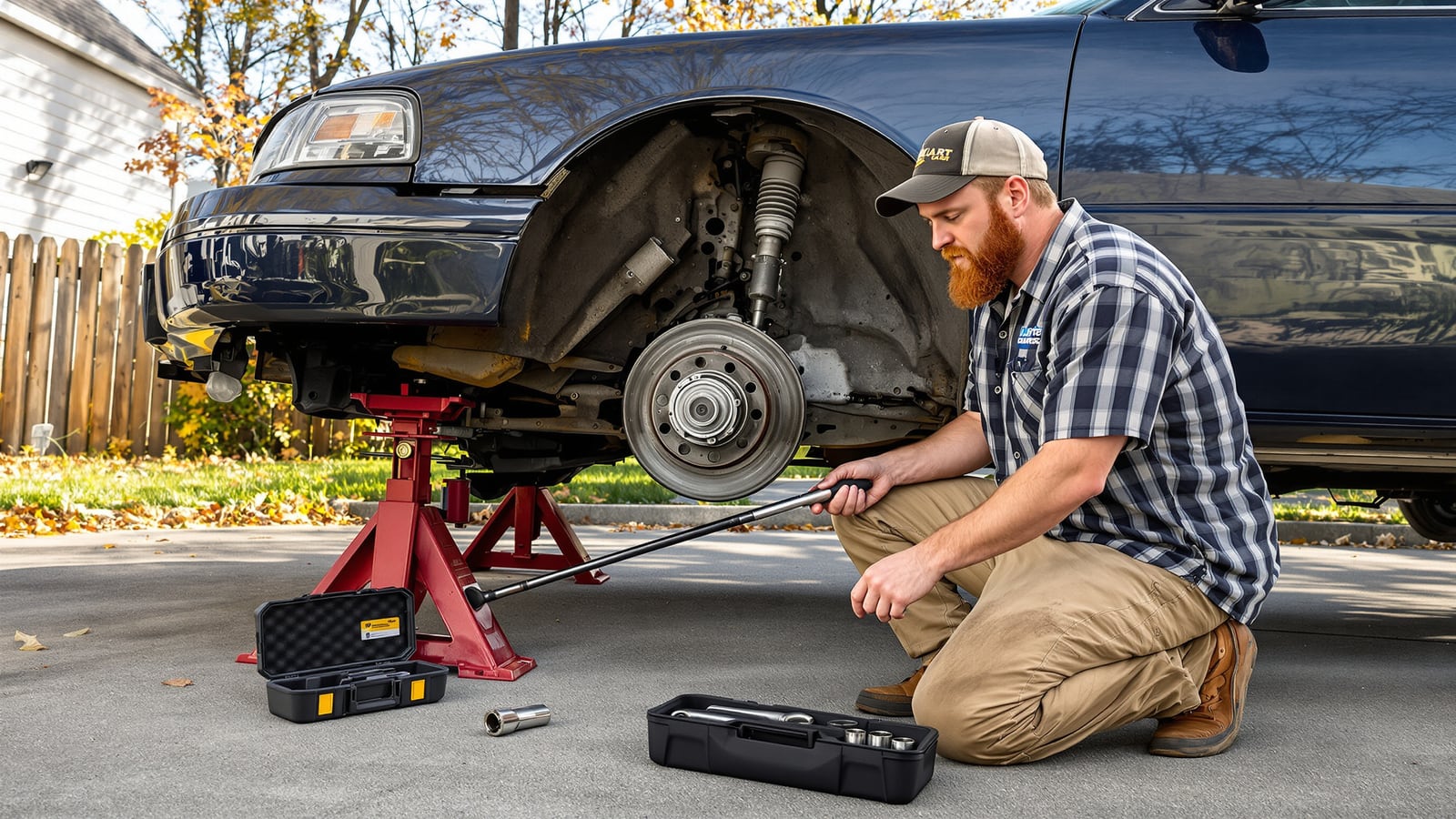
Quick answer: No swivel prevents a rounded bolt. A tight one keeps the socket seated, and a sloppy one lets it tilt and chew the corners. Buy a mid-priced swivel for anything that matters, and a cheap one for bolts that are already loose. Break every stubborn bolt free with a straight socket and a breaker bar first.
What the swivel actually does
A swivel socket, or universal joint, lets you reach a bolt from an angle your ratchet can't get to. That's the whole job. It was never built to protect a fastener.
The sales pitch gets muddy because the good ones do help. A well-made swivel moves smoothly and holds the socket square on the bolt head while the ratchet sits at an angle. The bolt takes the turning force on its flat sides, where it should.
A cheap one has slop in the joint. You pull on the ratchet, the joint takes up its looseness, and the socket cocks a few degrees off true. Now it's biting the top edge of the head instead of gripping the whole thing. Corners round off in about three good pulls.
Where the damage really happens
Most rounded bolts come from four things, and the swivel is usually only the last one.
- Twelve-point sockets on a tight bolt. They grip the corners, which is where a bolt is weakest. A six-point grips more of the flat and forgives more.
- A socket that's worn or a hair too big. Put it on the head and rock it. If it wobbles, it'll slip under load.
- Not seating the socket all the way down. Half-engaged sockets round heads fast.
- A bent joint under heavy load. That's the swivel. The more angle, the more the force wants to twist the socket sideways instead of around the bolt.
So the order of operations matters more than the swivel. Use a six-point socket, push it all the way on, and put the breaker bar on a straight line with the bolt. Break it loose that way. Only then, once it's moving, drop the swivel in to spin it out of the tight spot.
That one habit saves more bolts than any tool you can buy.
What to look for when you buy
You can judge a swivel in the store, or on your bench the day it arrives.
Check the slop. Bend it to about thirty degrees and wiggle the socket end side to side. A little play is normal. If it clacks, put it back. That clack is the sound of a rounded head waiting to happen.
Check the retention. A good swivel has a detent ball or pin that holds the socket firmly. If a socket slides off with a light tug, it'll slide off at the worst moment, usually into a drip pan or down behind the engine.
Check the finish and the stamping. Clean machining, even finish, and the drive size and "impact" marked on the body. Rough castings and a soft, shiny plating are what cheap ones look like.
Match it to the tool. If you're running an impact gun, buy an impact-rated swivel, usually the dull black ones. Chrome sockets and joints are harder and more brittle. Under impact they can crack, and shrapnel from a cracked socket is a trip to the emergency room. Wear safety glasses either way.
Buy it from a company that will swap it. The tool-brand names that stand behind their sockets over the counter are worth a few extra dollars. That's the same logic as in buy-it-for-life should mean repairable, not expensive. If the joint wears out, you walk in and walk out with a new one.
What the cheap one really costs
The cheap swivel doesn't cost you the price on the tag. It costs you the bolt.
Picture a valve cover bolt tucked behind an alternator. You grab the bargain swivel from the bottom of the drawer, it flexes, and the corners go. Now you're hunting for a bolt extractor socket, tapping it on with a hammer, soaking the head in penetrating oil, and wondering whether you'll have to drill it out. A ten-minute job is now a Saturday. Maybe it's a tow to somebody who does this for a living.
The swivel was nine dollars. The extractor set, the new bolt, the afternoon, and the grumpy mood run past that fast. And if the bolt is a brake caliper, a wheel stud, or anything holding a part that moves or stops the vehicle, a rounded head is a safety problem as well as an annoyance.
When the cheap one is the right call
Don't spend extra where it buys you nothing.
- You do this job once a year. If you'll use the swivel to pull the same drain plug or battery terminal bolt on your mower, a budget swivel is fine. Low load, easy access.
- It's only spinning loose bolts. After a breaker bar has done the hard part, the swivel is just a pivot. It's not carrying real torque.
- You'd replace the bolt anyway. Cheap fasteners on a cheap job don't deserve premium tools.
- You need a sacrificial one. Keep a bargain swivel in the box for greasy, awkward spots where a tool may get dropped or damaged. Nobody cries over it.
That's the same rule behind buy the cheap pry bar, never the cheap ladder. Where failure is cheap and visible, save money. Where failure rounds a bolt or hurts you, pay up.
If a head starts to round
Stop the second you feel it slip. Pulling harder just finishes the job.
- Back the socket off and look at the head. If the corners are shiny and slightly softened, switch to a six-point socket one size smaller and tap it on with a hammer.
- Soak it with penetrating oil and give it time. Fifteen minutes beats five.
- Try again with a straight breaker bar, no swivel.
- If it's still slipping, move to a bolt extractor socket, which grips the round head with spiraled flutes.
Don't hit it with a bigger hammer and hope.
One more thing
Don't trust a torque spec through a bent swivel. The angle changes what the wrench reads. Snug the bolt with the swivel, then finish it with a straight socket and the torque wrench if the number matters.
And when you're done, wipe the tool down before it goes back in the drawer. Dirt in the joint is what makes a good swivel feel like a cheap one in a year.
Wes Dunbar
Country & Skills
Grew up on an acreage and never quite left. Covers trucks, trades, land, and how to do the thing yourself.

Watch
Worth an hour of your evening
More from Gear.
From channels we rate. Plays on YouTube.