

Penetrating oil frees it. It doesn't keep it free.
One can frees a rusted bolt, another keeps a hinge quiet for years, and a third gums up everything it touches. Most garages own the wrong one for the job.
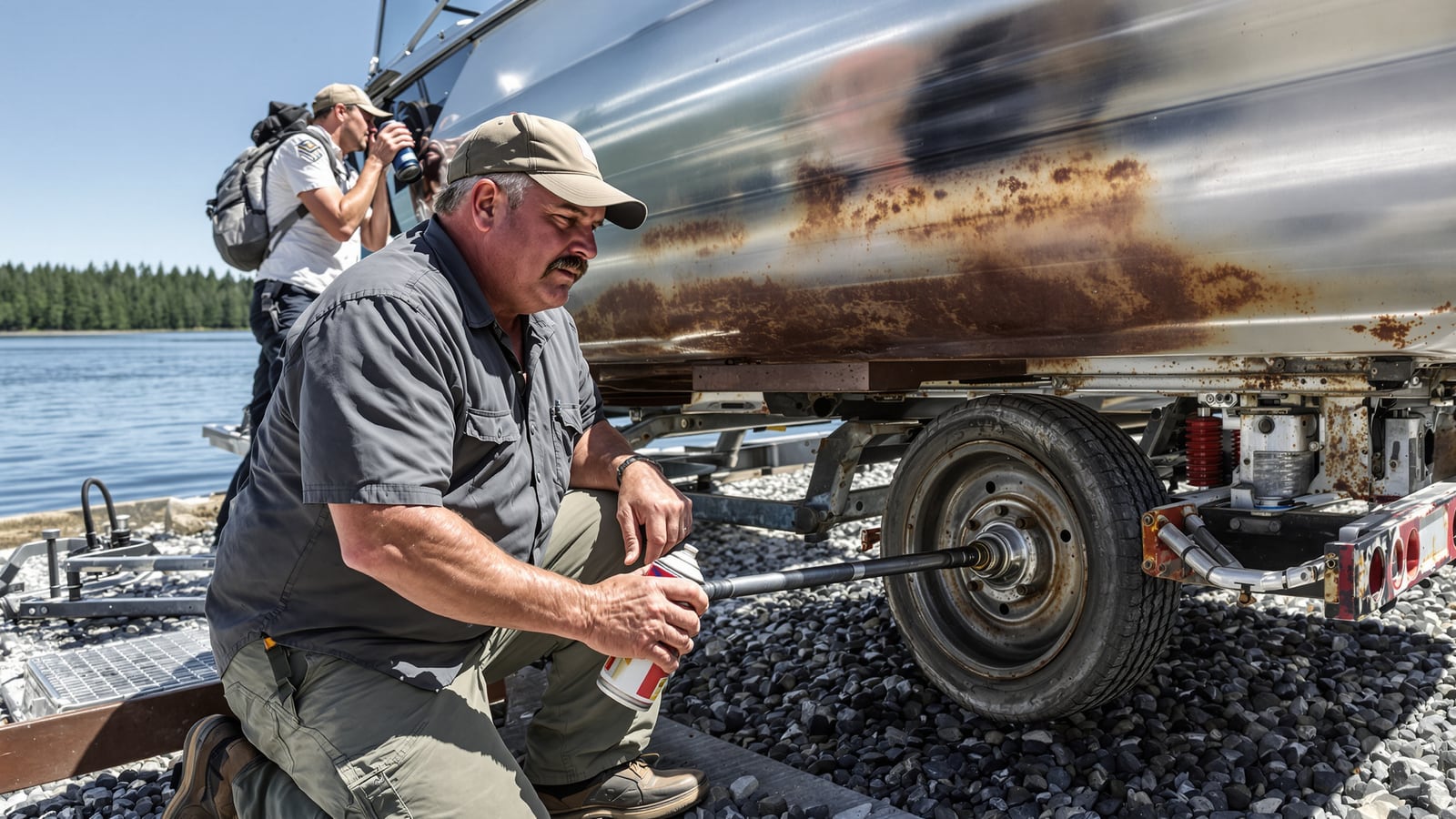
Quick answer: Buy a true penetrating oil (PB Blaster is the cheap one that's right) for seized fasteners. Buy a separate lubricant for anything that moves. Keep WD-40 for what it was built for, which is driving out moisture, and quit asking it to do both jobs.
You've got a lawn mower blade bolt that's been on there since the Obama administration. You spray it down with whatever's on the shelf, wait ninety seconds, lean on the wrench, and round off the head. Then you spray the same can into the garage door track, because it's the only can you own.
That's two mistakes with one can.
Three jobs, three cans
A spray can does one of three things, and the label rarely says which.
Freeing. Penetrating oil is thin, solvent-heavy and built to creep into the hairline gap between a rusted bolt and its threads. It's a wedge made of liquid. It isn't meant to stay put, and it isn't meant to lubricate long-term.
Lubricating. Grease, silicone spray and dry PTFE sprays stay where you put them and reduce friction for months. They're thick enough to do the job and don't evaporate.
Protecting. Wax- and oil-based coatings seal bare metal against rust. Think trailer hitches, tool blades in storage, the underside of a plow.
The trouble starts when one can gets used for all three. A penetrant left in a tight mechanism doesn't stay a thin oil. The light solvents evaporate and the heavier fraction stays behind as a tacky film. Dust sticks to it. A year later the lock is stiff, the hinge is gritty, and you're spraying more of the same, which feels like it's working because the fresh coat loosens things for a day.
What to buy to free a seized fastener
Penetrating oil is the one category where cheap is right. The bargain can works fine because the job is short: spray, wait, wrench, wipe off the leftovers.
- PB Blaster. The one you'll find at any hardware store or parts counter. It's the sensible default, and it costs less than the bolt you'll snap without it.
- Liquid Wrench. Same job, same aisle. Either is a fine buy.
- Kroil. The one to own if you wrestle rust often. Machinists and mechanics talk about it the way woodworkers talk about a good hand plane. It has a reputation for creeping into tight spots where others stall. If you free a stuck fastener twice a year, skip it. If it's twice a month, buy it.
The technique matters more than the brand. Wire-brush the threads first so the oil has a path in. Spray, then walk away. Ten minutes beats ten seconds, and overnight beats ten minutes on anything truly seized. Tap the bolt head with a hammer to send small shocks into the threads, then try the wrench. If it moves a hair, work it back and forth rather than forcing it one direction. Reapply as you go.
For the stubborn ones, a six-point socket on a breaker bar beats an open-end wrench every time. The extra grip is what keeps a salvageable bolt from becoming a drilling job.
A warning. Penetrating oil is flammable, and plenty of people reach for a torch when oil alone fails. If you heat a fastener, wipe off every trace of oil first and keep the area clear of anything that burns. Never heat anything near a fuel line or tank. That's a job for a shop.
What WD-40 is actually for
The name tells you. WD stands for water displacement. It was developed to push moisture off metal, and it still does that well. Spray it on wet tools, a damp lock in January, or a battery terminal that's been in the rain, and it clears the water and leaves a thin film.
It can loosen a mildly stuck screw. It can lift sticker residue and wipe grime off a tool before storage. It earns its place in the toolbox.
It isn't a great penetrant for a bolt that's rusted solid. And it isn't a lasting lubricant, because that thin film wears off and the residue left behind turns tacky over time. A lock is the classic example. Locksmiths generally steer people toward a dry graphite or PTFE lube for lock cylinders, and for good reason. Anything sticky in a tiny mechanism collects dust and slows it down.
Keep the can. Just know what it is.
What to buy to keep things moving
This is where people spend the least and regret it most.
- Hinges, latches, door tracks, bike chains, sliding drawers: a silicone spray or a PTFE-based lube like Tri-Flow. Wipe off the overspray. Anything that collects dust gets the dry version.
- Heavy pivots, trailer hitches, tractor joints, anything under load: grease. A tube of lithium grease and a grease gun, or even a small tub and your finger, outlasts any spray.
- Bare steel in storage, outdoor equipment, trailer parts: a protective coating like Fluid Film. It's a thicker, wax-like coat meant to stay put and keep rust off. It's messy, and you'll get it on your sleeve. That's the trade-off for a coating that lasts through a winter.
Your firearms deserve their own line here. Don't use penetrating oil or a general-purpose spray as a gun lubricant. Use a product made for firearms, such as a CLP like Break-Free, and follow the maker's instructions for your gun. A cleaning kit and the right oil are cheap compared to the rifle. If you own one, you owe it that.
What the cheap one really costs
The cheap can isn't the problem. The cheap can used wrong is.
A few dollars for penetrating oil is money well spent. A few dollars for a multi-purpose spray you then use on a lock, a chain, a hinge and a mower deck is how you end up with gummed parts and a half-day cleaning job. The expensive mistake isn't the can. It's the stripped bolt, the rounded head, the sheared stud you now have to drill out.
So buy two or three cans and know which does what. Mark them with a strip of tape and a Sharpie if you have to: FREE, LUBE, PROTECT.
If you borrow a tool from a neighbor and it comes back stiff, return it cleaner than it left. Wipe it down, hit the pivot with the right lube, and hand it back working better than it did. That's how you stay the guy people lend things to.
Pair this with a sound set of basics and you've covered most of what goes wrong in a garage. Our truck kit that handles almost every roadside problem has a spot for a small can of the freeing kind, because you'll want it on the shoulder someday. And if you're debating how much to spend on any of it, buy-it-for-life should mean repairable, not expensive is the rule of thumb. Oil and grease are what make that repairing possible.
Free it, lube it, protect it. Three cans, three jobs, and a bolt that comes off the first time.
Wes Dunbar
Country & Skills
Grew up on an acreage and never quite left. Covers trucks, trades, land, and how to do the thing yourself.

Watch
Worth an hour of your evening
More from Gear.
From channels we rate. Plays on YouTube.
Read next