

Your cheap bench grinder is fine. The wheel on it isn't
A $70 grinder, a $30 wheel and a honing board by the bench will keep every edge you own sharp. Here's the setup people actually use.
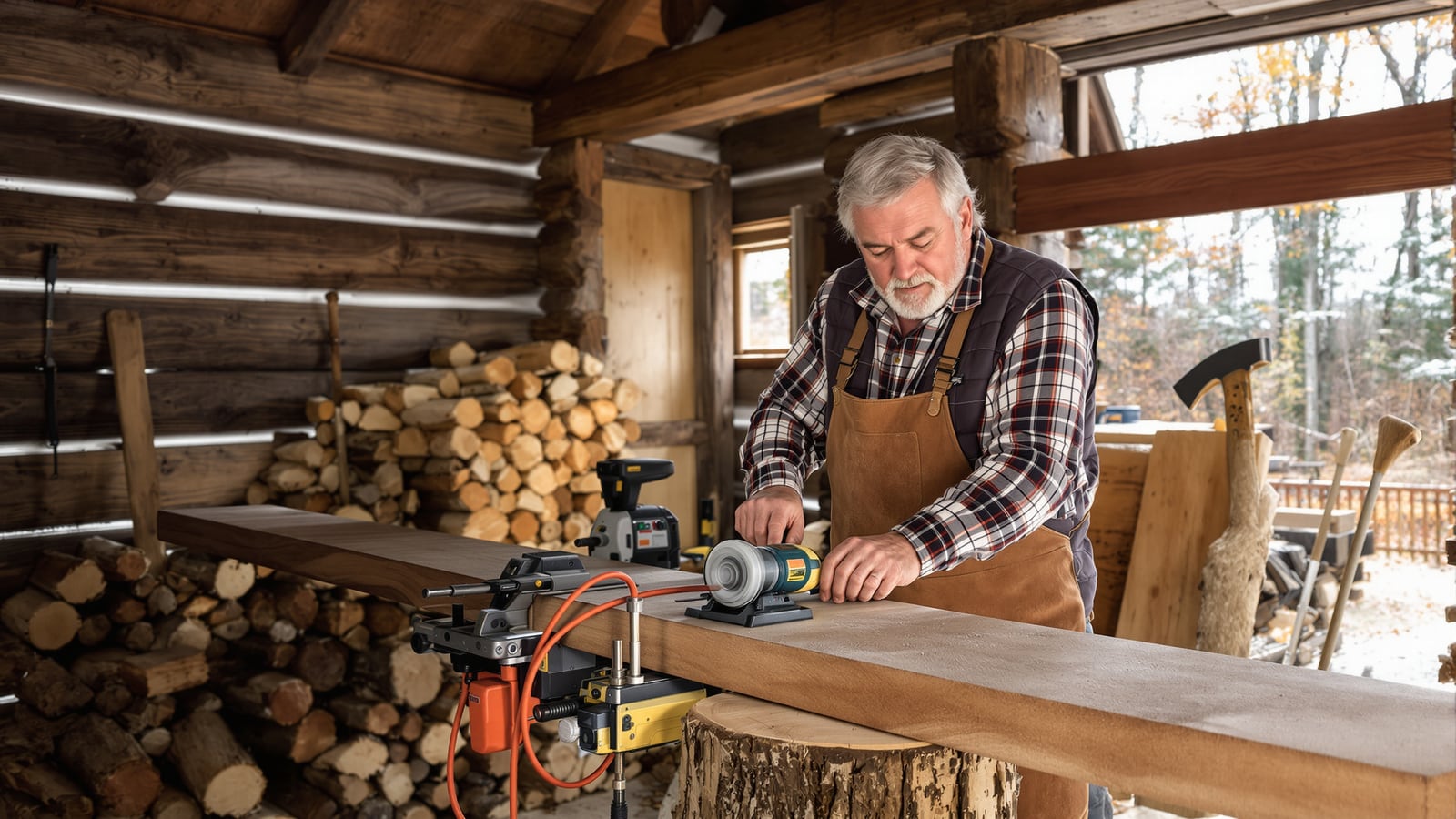
Quick answer: Buy a 6-inch grinder, replace the stock wheel with a white aluminum oxide wheel, and keep a coarse-to-fine honing board within arm's reach of your bench. The grinder reshapes an edge a few times a year. The board keeps it sharp the other 360 days. Prices below are rough street ranges, so check current ones.
The grinder gathers dust because it's used wrong
Most guys buy a grinder, touch a chisel to it, watch the steel turn blue, and decide sharpening is a dark art. Blue means you cooked the temper out of the edge. The tool is now softer at exactly the spot that matters.
Nothing is wrong with you or the grinder. Two things are wrong with the setup. A standard grinder spins at about 3,450 rpm, which makes heat fast. And the gray wheel that ships on a budget machine is hard, coarse and a little out of true.
What the cheap one gets right and wrong
A WEN 6-inch grinder runs roughly $60 to $90. Harbor Freight's Bauer and Central Machinery lines land in the same neighborhood. For that money, you get a motor that will outlast your interest, a pair of wheels and a rest that's usable if you tighten it.
What it gets right: it spins, it's quiet enough, and it'll shape a dull screwdriver, a shovel or a mower blade all day.
What it gets wrong:
- The stock wheels are coarse and often vibrate. Vibration chatters the edge and wears out your patience.
- The tool rests are thin stamped steel and wander when you push.
- The eye shields scratch and fog. Wear real safety glasses under them anyway.
Fix the wheel first. A Norton 3X white wheel runs about $25 to $45 and cuts cooler, so the steel is far less likely to burn. Buy the 6-inch by 3/4-inch size to match your machine. Check that the wheel's rated rpm is at or above your grinder's. It's printed on the wheel blotter.
If you'll sharpen a lot of chisels and plane irons, the step up is a slow-speed 8-inch machine. Rikon's 8-inch slow-speed models run roughly $150 to $250. They spin about half as fast, which makes bluing an edge hard to do. I'd skip it unless woodworking is your habit, not your occasional project.
Set it up so it's safe
Do these before the first spark.
- Bolt it down. Screw it to a bench or a dedicated stand. A walking grinder is how people get hurt.
- Set the tool rest about 1/16 inch from the wheel. Wider than that and a tool can get yanked into the gap.
- Ring-test a new wheel. Hang it on a finger and tap it lightly with a screwdriver handle. A good wheel rings. A dull thud means a crack. Don't mount it.
- Stand beside the wheel, not in line with it, for the first thirty seconds after you flip the switch. A bad wheel fails at startup.
- Dress the wheel with a dressing stick (about $10 to $20) until it runs flat and clean.
- Dress for it. Safety glasses or a face shield, no loose sleeves, hair tied back. Skip gloves near the wheel. They can snag.
- Move the sawdust. Sparks and a pile of shavings are a bad pair. Keep the grinder away from your sander and dust collector.
Keep a cup of water beside it. Dip the steel every few seconds. If you can't hold it, you're overheating it.
The honing board is the real sharpening setup
This is the part that actually gets used. The grinder makes the shape. A board makes it sharp in ten minutes at the bench, with no cord and no sparks.
Here's the build, and it's a $120 job.
- Diamond plate: a DMT DiaSharp 8-inch coarse/fine runs roughly $70 to $90. It stays flat, needs no soaking, and handles chisels, plane irons, and even a dull pocket knife.
- Finishing stone: a King 1000/6000 combination waterstone, about $45 to $60. Use the 1000 side to refine and the 6000 to polish.
- Strop: a scrap of leather glued to a board, with a stick of green compound (about $8). It's the last ten seconds that makes an edge feel scary sharp.
- Honing guide: the basic side-clamp type runs $10 to $20 and holds the angle for you. Use it until your hands learn the angle. It's no insult to your skill.
- Backer board: a piece of plywood with a cleat to catch it against the bench edge, plus strips of rubber shelf liner so nothing slides.
Mount it where you can reach it without moving anything. If the setup takes more than thirty seconds to start, you won't use it. That's the whole reason it works for some guys and collects dust for others. Where Every Tool Goes and Why You'll Actually Put It Back covers why a tool's place matters more than its price.
Where a belt sander fits
A benchtop 1x30 belt sander runs roughly $60 to $120 and earns its keep on metal. It cleans up a rough weld, shapes a hook, and profiles the end of a hand-forged anything. If you make knives, step up to a 2x72, but that's a $1,000-plus hobby and a different article.
A handheld belt sander is a different animal. It's for rough stock removal on wood, not for edges. A 3x21 like the Makita 9903 runs roughly $150 to $250. The Makita 9403, a 4x24, costs more and is worth it only if you flatten a lot of wide boards. A WEN 3x21 at around $50 to $80 is a fine first one. It's loud, it vibrates, and the belts cost a few dollars each. You get what you pay for.
One handheld rule: let the machine's weight do the work and keep it moving. Stop in one spot and you'll gouge the board in about two seconds.
When to rent instead
Don't rent a grinder. It's cheap enough to own, and you'll want it the day a mower blade dulls.
Do rent a floor drum sander if you're refinishing hardwood. Home-improvement stores charge tens of dollars a day, plus you buy belts by the sheet. A drum sander is a ten-hour tool, not a lifetime tool. The Tools You Should Rent and the Ones You Should Just Buy draws that line clearly.
The weekend plan
Saturday morning
- Buy the grinder, a Norton 3X wheel and a dressing stick. Total about $110 to $150.
- Mount, ring-test, dress, set the rest.
Saturday afternoon
- Sharpen the mower blade first. Pull the spark plug wire before you tip the mower. Take the same amount off each side, then hang the blade on a nail to check balance. Whichever end dips needs a touch more grinding.
- Reshape any chisels or shovels you've been ignoring.
Sunday
- Build the honing board with the plate, stone, strop and guide.
- Put it where the work happens. How to Lay Out a Real Shop in a One-Car Garage helps if you're short on bench.
- Sharpen one chisel start to finish. Time it. It should take under ten minutes.
Total spend lands somewhere around $200 to $250. That's less than a good set of new chisels, and these will cut better.
Then do the thing nobody mentions. Hand a freshly sharpened kitchen knife back to your wife or a neighbor, and watch what happens to your reputation.
Dean Shaw
Gear & Garage
Reads the warranty, the parts list and the long-term owner reviews before anything else. Trucks, tools, watches, and the cheap version that costs more.

Watch
Worth an hour of your evening
More from Tools & Organizing.
From channels we rate. Plays on YouTube.
Read next