

The Jigsaw Is Mandatory. The Other Two Have to Earn It
Three saws all cut curves, and only one belongs in every house. Here's how to tell whether a band saw or scroll saw deserves your bench.
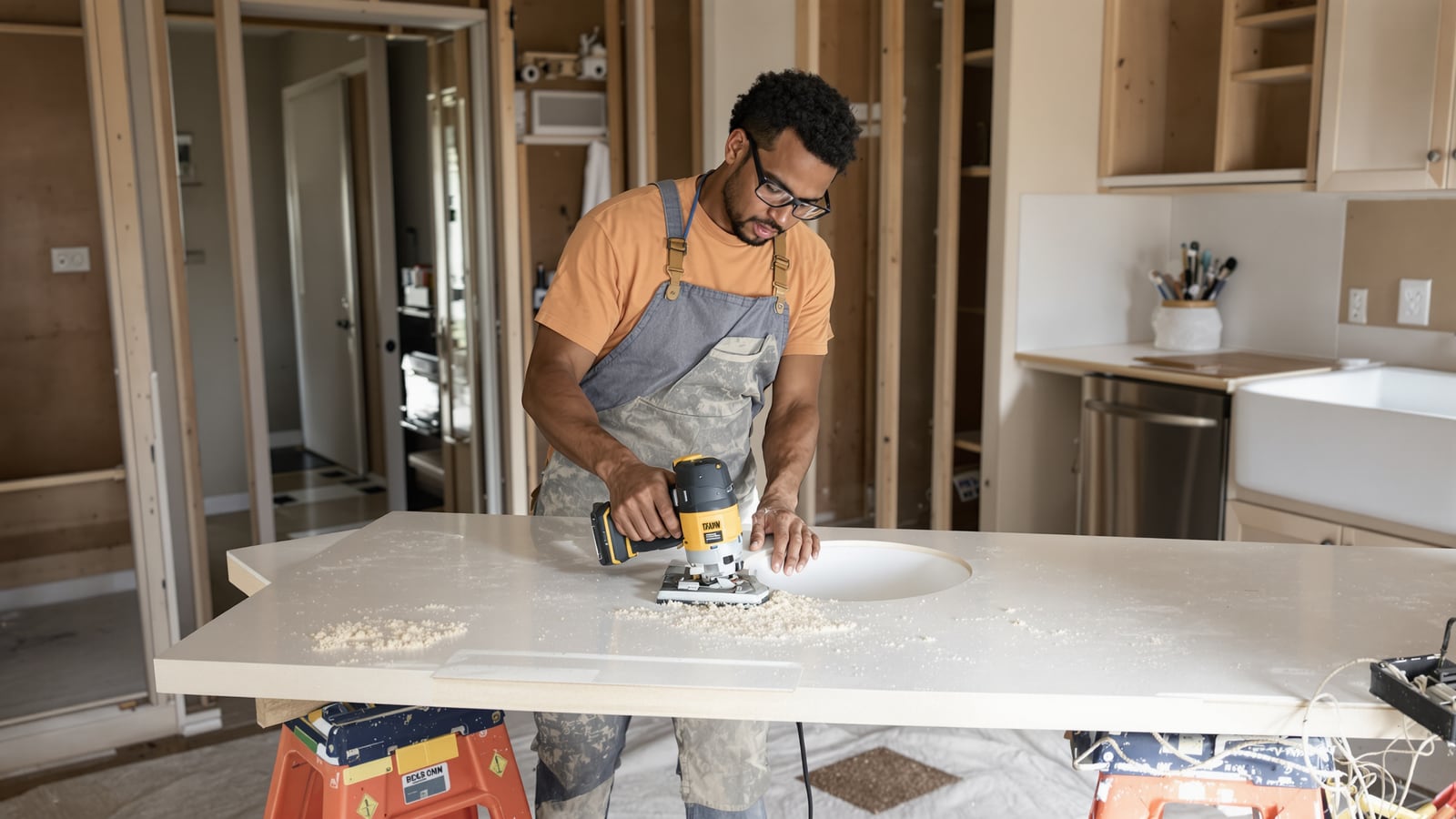
Quick answer: Buy the jigsaw first, because nothing else cuts a sink hole in a countertop. Add a 10-inch benchtop band saw if you cut curves in thick wood or build furniture. Buy a scroll saw only if you already know you want fine, detailed work in thin stock. If you're not sure, you don't need one.
The mistake is buying by the word "curve"
All three saws cut curves, so they get shopped as substitutes. They aren't. They cut different things, and the right question is what you'll cut most.
- Big sheets, installed work, odd holes: jigsaw.
- Curves and straight cuts in thick lumber, plus resawing: band saw.
- Tight, delicate patterns in thin wood: scroll saw.
Think about the last three things you cut. If one was a notch in a shelf and another was a hole in plywood, the answer is a jigsaw. If you can't name a single project that needs a scroll saw, you've got your answer there too.
The jigsaw: the one nobody skips
A jigsaw goes to the work. You carry it to the countertop, the plywood sheet on sawhorses, or the cabinet side that needs a cutout for a pipe. The other two saws make you carry the work to them, and a sheet of plywood doesn't fit on a bench.
What the cheap one gets right: It makes the cut. A $30 to $60 corded jigsaw from Black+Decker or Skil will cut a plumbing hole in a sheet of subfloor and won't care who's watching.
What it gets wrong: The base plate flexes, the blade wanders, and the cut leans out of square as the blade goes deeper. Cheap saws have little or no orbital adjustment and weak blade clamps. Blades bend and break. In 3/4-inch hardwood you'll get a cut that looks like a seismograph.
What a good one costs: Roughly $100 to $200 for a corded barrel-grip like the Bosch JS470E, which gives you a stiffer blade guide and a cleaner line. Cordless runs about the same as a bare tool, such as the DeWalt DCS334 or the Milwaukee M18 Fuel. If you've already picked a battery system, buy the bare tool and read how to pick a cordless tool platform you won't regret first.
The blade matters more than the saw. A $10 pack of good T-shank blades in the right tooth count will outperform a $200 saw running the dull junk blade that came in the box. Fine teeth for plywood and laminate, coarser for framing lumber, and turn the orbital action down or off for clean finish cuts.
Safety: Clamp the workpiece. Let the saw reach full speed before it touches the wood. Keep your free hand behind the blade, never under the board. And unplug it or pull the battery to change a blade.
The band saw: the one that grows into the shop
A band saw has a continuous loop blade that cuts downward, so the table holds the work and the blade doesn't kick it back at you. That's why many woodworkers think it's the safest saw in the shop. It's also the only one of the three that can resaw, which means slicing a thick board into two thin ones.
What the cheap one gets right: The WEN 3962 10-inch, typically in the $150 to $250 range, will cut a decent curve in 1-inch pine. It's a perfectly good first band saw for cutting out toy parts, shop jigs and rough chair shapes.
What it gets wrong: Small motors bog in hardwood. Thin tables flex. Fences are an afterthought, and you'll spend the first evening tuning the blade tracking and guide blocks. Resawing a wide board on a budget 10-inch saw is a fight, since the motor and frame aren't built to hold the blade straight.
What a good one costs: A solid 10-inch benchtop, such as the Rikon 10-305, runs roughly $300 to $450. A true 14-inch cast-iron floor model starts around $600 and climbs past $1,000, and that's a different decision with a different footprint. For a one-car garage, read how to lay out a real shop in a one-car garage before you commit to floor space you can't get back.
Blade choice is the secret. A 1/8-inch blade turns tight curves. A 3/8-inch blade is the general-purpose pick. A wide 1/2-inch blade is for resawing and straight cuts. One wrong blade makes a good saw feel broken.
Safety: Set the upper guide about 1/4 inch above the workpiece, not at full height. Use a push stick near the blade. Never back a board out of a long curve with the blade running, because you can pull the blade off the wheels. Make relief cuts so you don't pinch the blade in tight turns.
The scroll saw: the specialist
A scroll saw has a thin blade clamped at both ends, moving up and down fast, and a throat deep enough to swing a piece around. It cuts intricate patterns, fretwork, puzzles, inlay and lettering in thin stock. It's slow, quiet, and almost impossible to hurt yourself on compared with the others, which is why it's a popular first saw for kids and for retirees with a workshop hobby.
What the cheap one gets right: The WEN 3921, usually around $100 to $150, runs smoothly enough to learn on, and a variable speed dial is a real feature at that price.
What it gets wrong: Vibration. Cheap scroll saws walk across the bench and shake your cut line. Blade changes are fiddly, and the blade clamps loosen. A Dremel Moto-Saw is cheaper still at around $100, but it's for craft work and trim, not for real stock.
What a good one costs: The DeWalt DW788 is the one you'll see recommended, at roughly $600 to $700. That's a lot for a tool with one job. Pay it only if the hobby has already pulled you in.
Safety: Wear eye protection and a dust mask, because the fine dust hangs in the air and the blade can snap. Keep the hold-down foot adjusted so the work doesn't chatter. Pay attention to the work. The blade is thin, but it still cuts fingers.
The decision, in plain terms
Buy the jigsaw now. Spend the extra $60 on a good one.
Buy the band saw when you've got three projects waiting that need curves in 1-inch or thicker stock, or you're tired of paying a lumber yard to resaw. If you only need a single resaw job, ask a local lumber yard or cabinet shop whether they'll do it for a small fee. Most tool rental counters don't stock band saws, so check before you count on renting, and call before you drive. For the broader rent-or-buy question, see the tools you should rent and the ones you should just buy.
Buy the scroll saw when a project has already made you say, "I wish I could cut that pattern." Not before.
If you're building out a shop from scratch, the three saws a home shop needs and what they cost puts these next to the table saw and miter saw so you can see where the money goes first.
Prices shift with sales and the season, so check current street prices before you buy. The ranges above are where these tools usually land.
What we'd buy, what we'd skip
Buy: Bosch JS470E or a cordless DeWalt or Milwaukee jigsaw, plus a $10 pack of quality blades. Then a Rikon 10-inch band saw when the projects call for it.
Skip: A $30 jigsaw if you plan to cut anything more than a rough hole. A bargain scroll saw you buy "just to try," because it'll wobble, frustrate you, and end up on a shelf.
The best tool for a home shop is the one you'll actually pull out and use on a Saturday. Everything else is counter space you're renting to dust.
Dean Shaw
Gear & Garage
Reads the warranty, the parts list and the long-term owner reviews before anything else. Trucks, tools, watches, and the cheap version that costs more.

Watch
Worth an hour of your evening
More from Tools & Organizing.
From channels we rate. Plays on YouTube.
Read next