

That black grit in your gutters is your roof talking
Shingle granules in the gutter and at the downspout are the cheapest early warning your roof gives. Here's how to read them without climbing up.
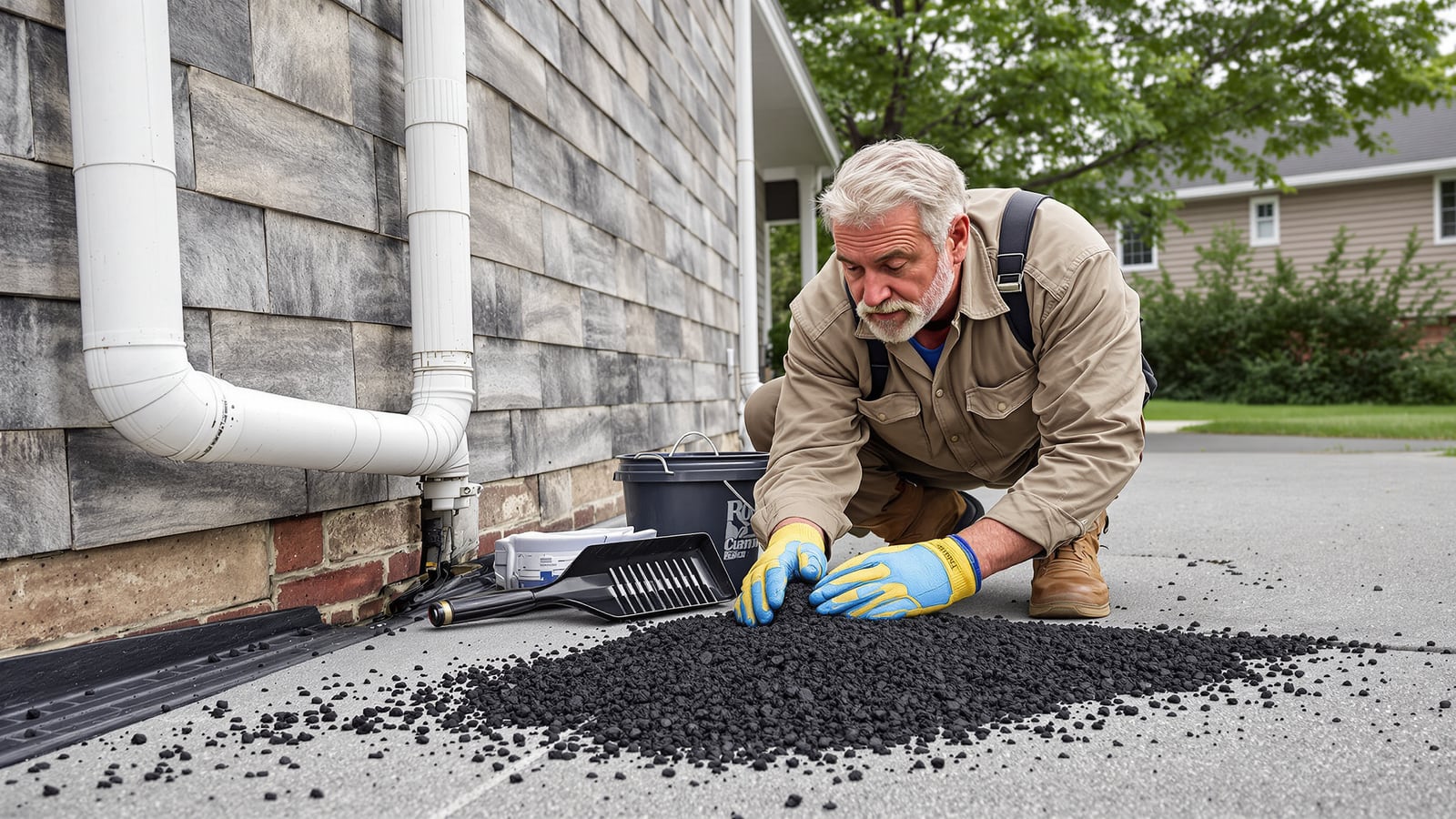
Quick answer: A pinch of grit at the downspout is normal. A layer of it on the gutter floor, or a drift of it where the water comes out, means the shingles are losing the coating that protects them. Check the roof from the ground, then call a roofer for an inspection before you call one for a quote.
You're cleaning the gutters and your scoop comes up with something that looks like coarse black sand. Or you notice a dark fan of it on the driveway where the downspout empties. Most people flick it into the bucket and move on.
Don't. That grit came off your roof.
What the grit actually is
Asphalt shingles are covered in granules, tiny bits of crushed rock with a ceramic coating. They aren't decoration. They shield the asphalt underneath from sun, and sun is what kills a shingle. Once the granules wear away, the asphalt bakes, dries out, curls and cracks.
So the grit in your gutter is armor, and it's leaving.
Every roof sheds a little. New shingles drop loose granules in their first months, and you'll find some after the first few rains. That's manufacturing leftovers, and it's no reason to worry. The warning sign is heavy, steady loss on a roof that's been up for years.
Read the evidence from the ground
Start with where the grit is, because that tells you more than how much.
- Gutter floor: A thin sprinkle mixed into the usual leaves and muck is nothing. A gritty layer, like sand on a beach, is something.
- Downspout outlet: Water carries granules down and drops them at the bottom. Look for a dark drift in the splash block, the flower bed or the driveway.
- The pile after a storm: If a heavy rain leaves a visible fan of grit, the roof is shedding fast.
If you have gutter guards, they're hiding the evidence from you. Check the downspout bottoms and the ground under the drip line instead. Granules pass right through most guards and land where nobody looks.
Take a photo of what you find, with a coin beside it for scale. Next spring you'll know whether it's getting worse.
Then look at the roof, from the ground
Stand back far enough to see the slopes, preferably in low, angled light, morning or late afternoon. Binoculars beat a ladder here. What you're looking for:
- Dark or shiny patches where the surface has worn through to the asphalt, usually on the slopes that take the most sun.
- Shingle edges that curl up or cup in the middle.
- Cracked or missing shingles.
- Nail heads showing.
- Bare spots in a line, which can point to a manufacturing problem rather than age.
Granule loss plus any of those is a roof asking for attention. Granule loss alone on a roof that's clearly young is more likely a quirk, but it still deserves a second look.
One more cause to know about: hail. A hailstorm can knock granules loose in round, bruised spots, and the grit in your gutter after a storm may be the first sign. Insurance policies carry deadlines for storm claims, and they vary. If a bad storm just went through, read your policy for the filing window before you wait and see.
How long a roof should last
Asphalt shingles don't have one lifespan. The basic three-tab kind generally wears out sooner than thicker architectural shingles, and climate matters a lot. A roof on a hot, sunny slope ages faster than the same roof on a shaded one. Your install paperwork or the shingle brand's warranty will tell you what the maker expects. If you don't know when the roof went on, ask the previous owner or look through the home's records.
A roof in its second half of life that's shedding grit isn't an emergency. It's a countdown, and the point of catching it now is that you get to choose the timing.
Ladder rules, because this is where people get hurt
Cleaning gutters and inspecting a roof are two different jobs, and the second belongs to people with the gear.
- Stay off the roof. Pitched asphalt shingles, especially old ones, are slippery and brittle. Walking on them also strips more granules. Leave it to the inspector.
- Set the ladder properly. One foot out from the wall for every four feet of height. Firm, level ground. Both feet of the ladder planted.
- Keep your belt buckle between the rails. If you have to lean out to reach, climb down and move the ladder.
- Watch the wires. The service line often runs right by the eave. Use a fiberglass ladder near it and stay well clear.
- Have somebody home. Tell them you're going up.
If your roof is steep, two stories or wet, hire the gutter cleaning out. It costs less than the ER.
Who to call and what to ask
If the roof looks tired, get a roofer out for an inspection. Ask for the findings in writing, with photos of problem areas, and ask plainly whether it's a repair, a few years of life left or a replacement.
Be wary of anyone who knocks on your door after a storm and tells you the roof has to go. A good contractor will put the evidence in front of you and let you decide. Get at least two opinions, and the habits in knowing when to stop and how to get a quote you can trust apply here more than anywhere. A replacement is one of the biggest bills a house hands you, so check licensing, insurance and local references before you sign anything.
If the verdict is "a few more years," good. Start a roof fund now. Setting aside a fixed amount each month means the day the roof goes, it's a planned expense and not a crisis. Your tax professional or a financial adviser can tell you how to handle the money side for your own situation.
Gutter grit is also a good reason to work through the home maintenance calendar that prevents the big repairs. Spring and fall gutter checks catch this early, every year, for free.
If you're buying the house
Sellers don't mention this. Walk to the downspout outlets and look at the ground. Scoop a handful from the gutter if you can reach it safely. A heavy drift of granules on a house that's listed with a "newer roof" deserves a hard question.
An inspector will note the roof's condition, but they won't tell you what a replacement will cost or how soon you'll need one. What your home inspector won't check, and what you should covers where to push. Get a roofer's opinion before closing, and use it in the negotiation.
The grit never lies. A roof can look fine from the street for years while its coating drains into the gutter, one rainstorm at a time. Scoop it out, look at it and decide what it's worth to you before the first stain shows up on the ceiling.
Wes Dunbar
Country & Skills
Grew up on an acreage and never quite left. Covers trucks, trades, land, and how to do the thing yourself.

Watch
Worth an hour of your evening
More from Home.
From channels we rate. Plays on YouTube.
Read next