

The three-dollar part behind the toilet that runs all night
A running toilet is usually a worn rubber flapper. The fix takes fifteen minutes, one trip to the hardware store, and no plumber.
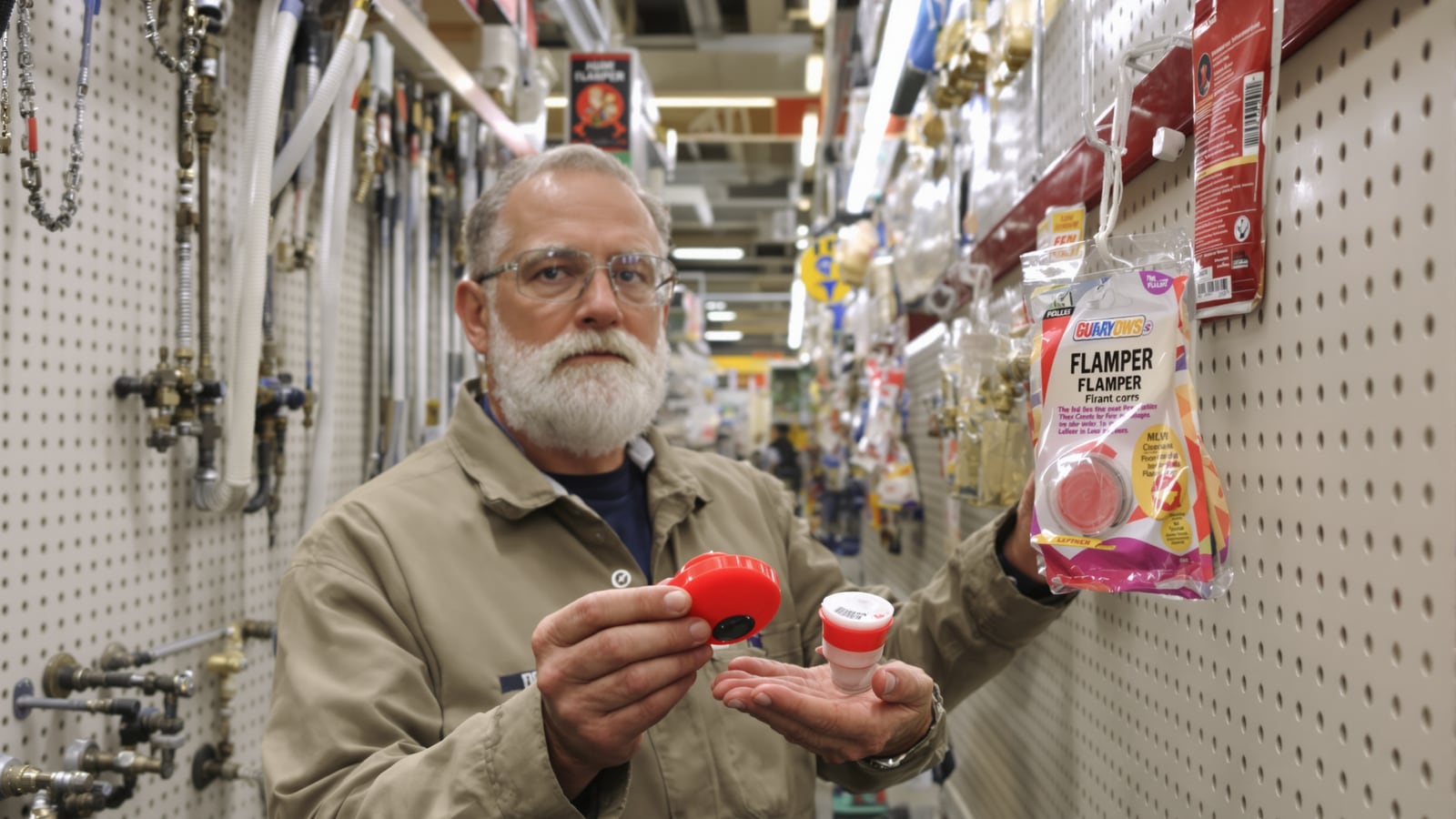
Quick answer: If the toilet hisses or refills on its own, the flapper at the bottom of the tank is probably leaking. Shut off the water, swap it for a new one, set the chain with a half inch of slack, and test it. If the shutoff valve won't close or water shows up on the floor, stop and call a plumber.
It's 2 a.m. and the house is quiet except for a thin hiss from the hall bathroom. Every few minutes the tank groans and refills for no reason. You jiggle the handle. It stops. You go back to bed. Tomorrow night it does it again.
That jiggle is the diagnosis. You've been nudging a worn piece of rubber back into place, and the fix costs about three dollars.
Why it runs
The tank holds water behind a rubber flapper. When you flush, the flapper lifts, the tank empties into the bowl, and the flapper drops back down to reseal. Over the years, that rubber goes soft, warps, or gets coated in mineral film. It stops sealing. Water seeps past into the bowl, the tank level drops, and the fill valve opens to top it off. That's your hiss at 2 a.m.
Drop-in bleach tablets make it worse. They're sold to keep the bowl clean, and they eat rubber. If there's one in your tank, take it out and don't buy another.
Confirm it before you buy anything
Lift the tank lid and set it somewhere it won't get dropped. Porcelain lids crack, and a replacement costs more than the repair.
Look at the water level. There's a tall open tube in the tank called the overflow tube. If water is spilling over the top of it, the problem is the fill valve or the float, not the flapper. That's a different fix, covered below.
If the level sits about an inch below the top of that tube and the toilet still refills now and then, it's the flapper. Prove it with the dye test:
- Put ten or so drops of dark food coloring in the tank.
- Don't flush. Walk away for twenty minutes.
- Check the bowl. If the color has shown up there, the flapper is leaking.
Nothing in the bowl means the flapper is sealing, and you've saved yourself a trip.
You can also check the water meter. Turn off everything in the house that uses water, then watch the meter's small dial or flow indicator. If it's moving, water is going somewhere. Close the shutoff valve behind the toilet. If the meter goes still, you've found the leak, and it's the toilet.
Buy the right one
Flappers aren't one-size. Most toilets use a 2-inch flapper, and a lot of newer ones use a 3-inch. Measure the drain opening in the bottom of the tank the flapper covers. Or do what works best: shut off the water, pull the old flapper, and carry it into the store. Match it against the wall of flappers and buy the one that looks the same.
If the tank has a brand name stamped on the inside, take a photo of it. Some brands want their own part. A universal flapper handles most of the rest, and it'll cost you about what the headline says.
Buy a second one while you're there. The next toilet in your house is a few years from needing it.
The fifteen-minute swap
- Turn the shutoff valve behind the toilet clockwise until it stops. Hand pressure only.
- Flush to empty the tank. Hold the handle down so it drains fully.
- Unhook the chain from the flush lever arm.
- Pull the flapper off. Most have two small ears that snap onto pegs on the sides of the overflow tube. Some have a ring that slides over the tube instead.
- Wipe the rim the flapper sits on, called the flush valve seat. Use a scrub pad or a rag. If there's slime or grit on it, the new flapper won't seal either.
- Snap the new flapper on and hook the chain to the lever arm.
- Open the shutoff valve slowly. Let the tank fill and watch it for a minute.
The part everyone gets wrong
The chain. It runs from the flush handle to the flapper, and it has to hang with about half an inch of slack when the flapper is closed. That's the width of a pencil eraser, not a hand span.
Too tight and the chain holds the flapper slightly open, which is the same leak you just paid to fix. Too loose and the chain slides under the flapper as it drops, and it can't seat. If you've got a long tail of extra chain, clip it off or tuck it away so it can't tangle.
After the tank refills, flush it three times and watch the flapper close each time. Then run the dye test again. If the bowl stays clear, you're done.
When it isn't the flapper
If water is going over the top of the overflow tube, the fill valve is letting in too much. Look for the adjustment screw or a clip on the float. Lowering the float so the water stops about an inch below the top of the tube is often the entire fix.
If it still won't shut off, the fill valve itself is worn out. Replacing one is a step up from a flapper. It costs a little more and takes a little longer, but it's still a driveway job. The ten tools in this list cover it. One adjustable wrench does most of the work.
Where you hand it to a plumber
Some jobs aren't worth your Saturday, and a few are worth stopping for.
- The shutoff valve won't turn, or it drips when you do. Old valves seize and crack when forced. Leave it alone and call someone.
- Water collects at the base of the toilet. That could be a failed seal under the bowl, and it can rot a floor quietly.
- The tank is cracked. Replace the tank or the toilet. No flapper fixes porcelain.
- The flush valve seat is pitted or eaten away. A new flapper can't seal against a rough surface, and replacing the seat means pulling the tank.
- You can't find the main shutoff to the house. Find it before you need it. If you can't, that's a first conversation to have.
For the larger question of when a repair stops being yours, there's a good rule of thumb here. A flapper isn't on that list. It's one of the five house repairs you should stop paying someone else to do.
Leave it better
When you're done, wipe down the tank lid and the rim before you set the lid back. Dry the floor where you knelt. Take the old flapper out with the trash, and wipe your hands on something that isn't the good towel.
If you've got a son or a daughter old enough to hold a flashlight, hand them one and let them watch. A kid who learns on a toilet tank at ten will tackle bigger things at twenty. Put the repair on your maintenance calendar and check the flappers every couple of years.
That night, the house is quiet. You lie there listening to nothing. It's a good sound, and it cost three dollars.
Wes Dunbar
Country & Skills
Grew up on an acreage and never quite left. Covers trucks, trades, land, and how to do the thing yourself.

Watch
Watch how it's done
Picked for this article.
From channels we rate. Plays on YouTube.
jeffostroff
How to Change a Toilet Flapper, Fix Running Toilet
WRD Official
How to Replace a Toilet Flapper
Read next