

That ceiling stain is the roof's last warning, not its first
By the time water shows up on the drywall, it has already soaked through the roof, the decking and the insulation. Here's how to find where it got in.
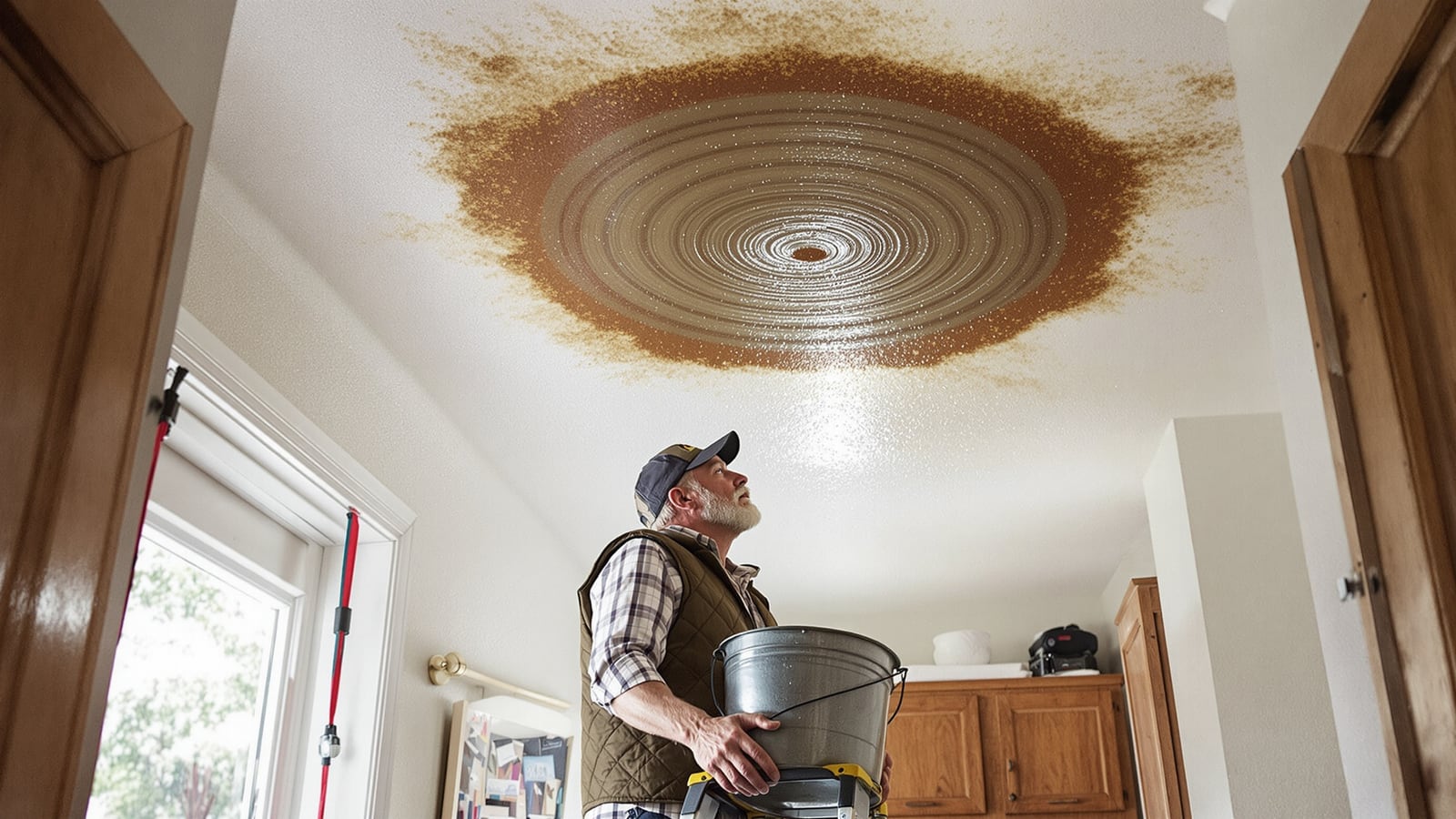
Quick answer: The stain is not where the leak is. Water enters the roof, runs along wood and insulation, and drops through the ceiling wherever it finally finds a low spot, often several feet from the hole. Dry the area, find the entry point from the attic, and get a roofer up there before the next hard rain. Painting over it fixes nothing.
The stain is a receipt
A brown patch on the ceiling looks like the problem. It's the bill for a problem that started weeks or months earlier.
Think about what water has to get through before you see it. Shingles. Underlayment. Roof decking. Then the insulation in the attic, which soaks it up like a sponge. Only when all of that is saturated does the drywall below start to discolor. So when you finally spot a stain, a lot of wet material sits between you and the sky.
That's why a small stain can mean a big repair. And it's why the stain you see this spring may be the second or third time that spot has gotten wet. Look closely. A single flat tan patch means one wetting. Rings, like the growth rings in a tree stump, mean it has dried and gotten wet again, over and over. A roof that's been dripping politely for a year is a roof that's been rotting the wood above your head for a year.
Before anything else: the safety part
If the ceiling is bulging or sagging, water is pooled behind it. Put a bucket under it. Stand off to the side, not directly beneath, and poke a small hole in the lowest point of the bulge with a screwdriver so it drains in a controlled way. A ceiling full of water can come down all at once, and wet drywall and insulation are heavy.
If water is anywhere near a light fixture, ceiling fan or outlet, shut off power to that circuit at the breaker panel before you touch anything. Don't flip the switch on the wall and call it done. If you can't tell which breaker feeds the area, or the panel itself is wet, stay out of it and have an electrician look.
Don't climb onto the roof to investigate. A wet roof is slick, and falls off roofs hurt people badly. If you can't see the problem from the ground with binoculars or from a ladder you've set up properly, that's the roofer's job.
Find where it actually got in
Go into the attic with a good flashlight, ideally during or just after rain, since that's when the evidence is fresh. Wear a dust mask and gloves. Step only on the joists or on planks laid across them, never on bare insulation or drywall.
Start directly above the stain, then work uphill. Water runs downhill along the underside of the decking and the rafters, so the entry point is almost always higher on the roof than the stain. Look for:
- Dark streaks or rings on the underside of the roof decking
- Insulation that's matted, damp or discolored
- Daylight coming through anywhere
- Rusted nail tips, which sweat when warm air hits cold metal and can look like a leak
- Wet wood that feels soft when you press it with a screwdriver tip
Then think about the usual suspects. Almost every roof leak comes from a short list.
Flashing. The metal where the roof meets a chimney, wall, skylight or valley. It fails far more often than the shingles around it.
Plumbing vent boots. The rubber collar around the pipes sticking out of the roof cracks in the sun. It's a cheap part that causes expensive damage.
Exposed or backed-out nails. They lift shingles and open a path.
Aging shingles. Asphalt shingles commonly last somewhere in the range of twenty to thirty years, depending on climate and quality. Curling edges, bare patches and granules collecting in your gutters mean the roof is tired, and that stain may be the first of several.
Make sure it's even the roof
Not every ceiling stain comes from above. Run through these before you call anyone.
A stain that appears only after rain points to the roof. A stain that shows up regardless of weather, or grows when someone showers upstairs, points to plumbing. A bathroom fan that vents into the attic instead of outside dumps steamy air against cold wood and creates its own wet spots. Winter stains with no rain in sight, especially after snow, can mean ice damming at the eaves.
If you've got a second floor, check the bathroom above for a failing tub seal or supply line before you blame the shingles.
What not to do
Don't put roofing tar or caulk on the spot you think is above the stain. You'll be guessing at the location, and a blob of sealant on top of a failed system tends to trap water instead of shedding it.
Don't paint the stain and move on. Stain-blocking primer is fine after the repair, and only after everything has dried completely. Painting a wet ceiling seals moisture in. That's how you get mold.
Don't wait for a dry week and decide it fixed itself. It didn't. Dry weather just stopped the evidence.
Dry it, document it, then call
Pull wet insulation out of the affected area. Run a fan, and a dehumidifier if you have one. Drywall that stays wet more than a day or two can start growing mold, and anything that's crumbling or sagging has to be cut out and replaced.
Take photos of the stain, the attic, the wet insulation and anything you find on the roof from the ground. Date them. If you carry homeowner's insurance, read your policy and call your agent. Whether a leak is covered often depends on the cause, such as sudden storm damage versus long-term wear, so ask a professional before you assume either way.
When you call roofers, get more than one, and get the quote in writing. Knowing when to stop and how to get a quote you can trust covers what a straight estimate looks like and what should send you looking elsewhere. Be wary of anyone who shows up uninvited right after a storm and insists the whole roof has to go today.
A good roofer will find the actual entry point, tell you whether it's a repair or a replacement, and show you the failure instead of just describing it.
If you're buying the house
A freshly painted ceiling patch in a house you're about to make an offer on deserves a long look. Fresh paint in one spot, a slightly different sheen, or a ceiling that's been recently repainted while the rest of the house looks tired are all signs. Ask directly whether there's been a leak and what was done about it. Then have the inspector check the attic and the roof decking, ideally with a moisture meter. What your home inspector won't check, and what you should is worth reading before that appointment.
Make it a habit, not an emergency
The cheapest roof repair is the one you do before the stain exists. Twice a year, from the ground, look for lifted or missing shingles, cracked sealant around the flashing, and gutters packed with debris or shingle granules. Put it on your seasonal list alongside the smoke detector batteries. The home maintenance calendar that prevents the big repairs lays out a rhythm that works.
A roof doesn't fail on the day you notice it. It fails quietly, a little at a time, while you're at work or asleep. The stain is the first thing it tells you, so listen to it. The roofer's bill goes up with every storm you let it ride.
Wes Dunbar
Country & Skills
Grew up on an acreage and never quite left. Covers trucks, trades, land, and how to do the thing yourself.

Watch
Worth an hour of your evening
More from Home.
From channels we rate. Plays on YouTube.
Read next