

The tile's fine. It's the grout that's failing
Grout is the soft, cheap part of a tile floor. When it goes, water reaches what's underneath. Learn which cracks are a weekend job and which aren't.
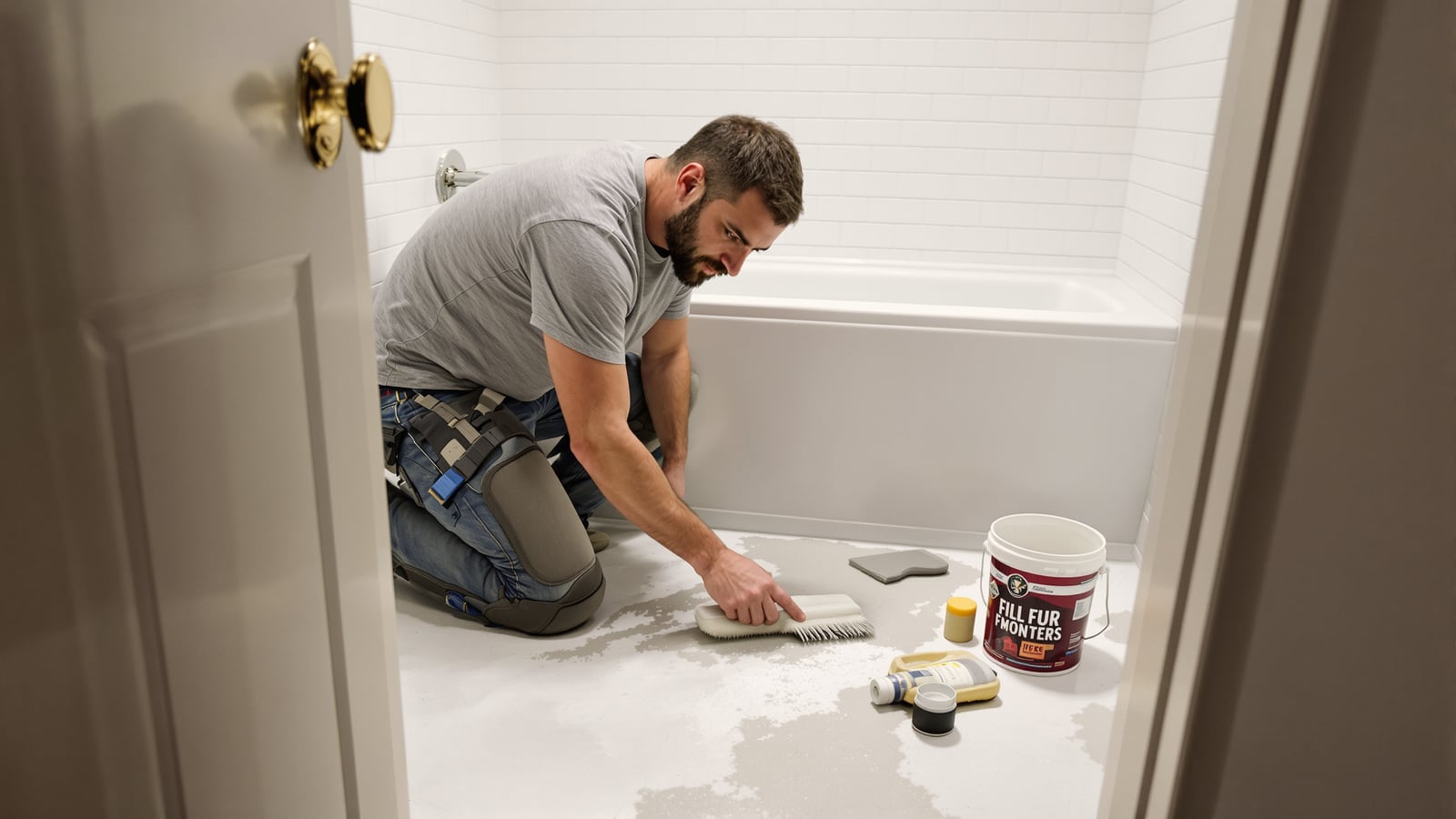
Quick answer: Crumbling or missing grout is a weekend repair if the tiles are tight and the floor is dry. If tiles sound hollow, rock underfoot, or crack in a line that runs through the grout, stop. The problem is underneath, and so is the bill.
Get down on your knees in the hallway and drag a flashlight across the floor at a low angle. Every dip, pit and dark gap in the joints jumps out. The tiles will look fine. They always do. They're fired ceramic or porcelain, and they'll outlast the mortgage.
The grout won't.
Why the grout goes first
Standard grout is cement and sand. It's porous, it's soft next to the tile, and it sits in a narrow trench that takes every grain of grit that comes in on a boot. It also does the job nobody thanks it for: filling the gap so water, dirt and movement don't get under the tile.
When it fails, the tile isn't the casualty. What's beneath it is. Water gets down to the adhesive and the subfloor, and that's where a $30 repair turns into a gutted bathroom.
Grout also gets help dying. Vinegar is the usual culprit, because acid dissolves cement, and "natural cleaner" is a bad trade when the thing you're cleaning is cement. Harsh scrubbing and a steam of bleach do the rest. Add a house that settles a little every season and joints that were packed with too much water in the first place, and you have a floor that's been failing for years before you notice.
Read the floor before you touch it
Do this first. It takes ten minutes and decides everything.
- Tap every tile near a failing joint. Use the handle of a screwdriver or a coin. Solid tiles give a sharp tick. A hollow one gives a dull, drummy sound. A few hollow tiles in a field of good ones is a bond problem. A whole area of them is a bigger one.
- Press a foot on the edges. Any tile that shifts or clicks is loose.
- Look at the crack pattern. Random crumbling in high-traffic spots is wear. A crack that runs straight across several tiles and through the grout is the floor underneath moving.
- Smell and look near plumbing. Dark staining, a musty smell, or a soft feel around a toilet, tub or dishwasher means water has already been getting in.
If the tiles are tight, the sound is solid, and the damage is just worn or missing grout, you're in DIY territory.
The weekend job: regrouting
You need a carbide grout blade for an oscillating multi-tool, or a hand grout saw if you've got more patience than power tools. You also need a vacuum, a rubber grout float, two buckets, a big sponge, new grout and a penetrating sealer. If you've already built the kit from ten tools that cover ninety percent of household repairs, you own half of this.
Protect yourself first. Sanded grout contains silica sand, and cutting it out makes fine dust. Wear safety glasses and an N95 respirator or better. Run the vacuum as you cut, not after. Open a window.
- Cut out the old grout to at least two-thirds of the joint depth. Keep the blade centered. Slip and you'll chip a tile edge, and that chip stays forever.
- Vacuum every joint, then wipe with a damp sponge and let it dry. New grout won't bond to dust.
- Match the grout type to the joint. Joints narrower than about an eighth of an inch take unsanded grout. Wider joints take sanded. Read the bag.
- Mix a small batch. Follow the water ratio on the bag exactly, then let it rest the number of minutes it says. Too wet and it shrinks and cracks. That's likely how you got here.
- Pack the joints with the float held at roughly 45 degrees, working diagonally across the lines so you don't drag grout back out. Do about ten square feet at a time.
- Wipe with a damp, wrung-out sponge once the grout firms up, usually somewhere between fifteen and thirty minutes. Rinse the sponge constantly. A soaked sponge pulls grout out of the joints.
- Buff the haze off the tile with a dry cloth after it dries.
- Seal it with a penetrating sealer once the grout has cured for as long as the bag says. Skipping this is why the next floor fails too.
The color problem nobody mentions
Old grout fades and darkens, so the new stuff will look wrong next to it. To find the original color, scrape a bit from a spot that's been protected, like under a baseboard or a cabinet kick. Take it to the store.
Even then, you've got a choice. Patch only the bad stretches and you'll see the patches for a year or two. Do the whole room and it looks like one floor. A full regrout is more work, but it's the honest fix.
Caulk where the floor meets anything
Here's a mistake that ruins good regrouting jobs. Grout is rigid. Where tile meets a wall, a tub, a shower pan or a cabinet, things move at different rates, and rigid material cracks. Those joints want flexible caulk, not grout.
When you cut out old grout along a wall or tub edge, replace it with a caulk made for tile and rated for the room, matched to the grout color. If you see grout in those joints, that's likely your leak path.
Keep it from happening again
- Clean with a pH-neutral cleaner. Skip the vinegar.
- Wipe up standing water in bathrooms. It's the fastest way to keep a joint from soaking.
- Reseal on the schedule the sealer's label gives. Put it on a calendar. The home maintenance calendar is a good place for it.
- If you borrowed the multi-tool, bring it back clean with a fresh blade in the case. Same rule for the vacuum.
If you want a firmer finish for a shower or a wet area, epoxy grout resists stains and water better than cement grout. The trade-off is that it sets fast and fights back when you're working it. Most first-timers should use cement grout and seal it properly.
When to stop and call someone
Call a professional if:
- Tiles sound hollow across an area, or move when you step on them.
- Cracks run through tile and grout in straight lines.
- You find soft subfloor, black staining, or a musty smell.
- The house is old enough that the adhesive or backing under the tile may contain asbestos. Get it tested before you cut or grind anything. Don't guess.
And hold the line on the quote. A contractor who tells you the whole floor has to come up because of cracked grout needs to prove it with a tap test and a moisture reading. Ask for a regrout price next to the retile price. Knowing when to stop and how to get a quote you can trust covers how to ask without being steamrolled.
The tile did its job for twenty years. Give the grout a Saturday, and the floor does it for twenty more.
Wes Dunbar
Country & Skills
Grew up on an acreage and never quite left. Covers trucks, trades, land, and how to do the thing yourself.

Watch
Worth an hour of your evening
More from Home.
From channels we rate. Plays on YouTube.
Read next