

Deep snow, a dead elk, and a two-day walk out
When the pack out takes two days, the knife work is the easy part. The job is keeping 200 pounds of meat cold, clean and safe from everything that wants it.
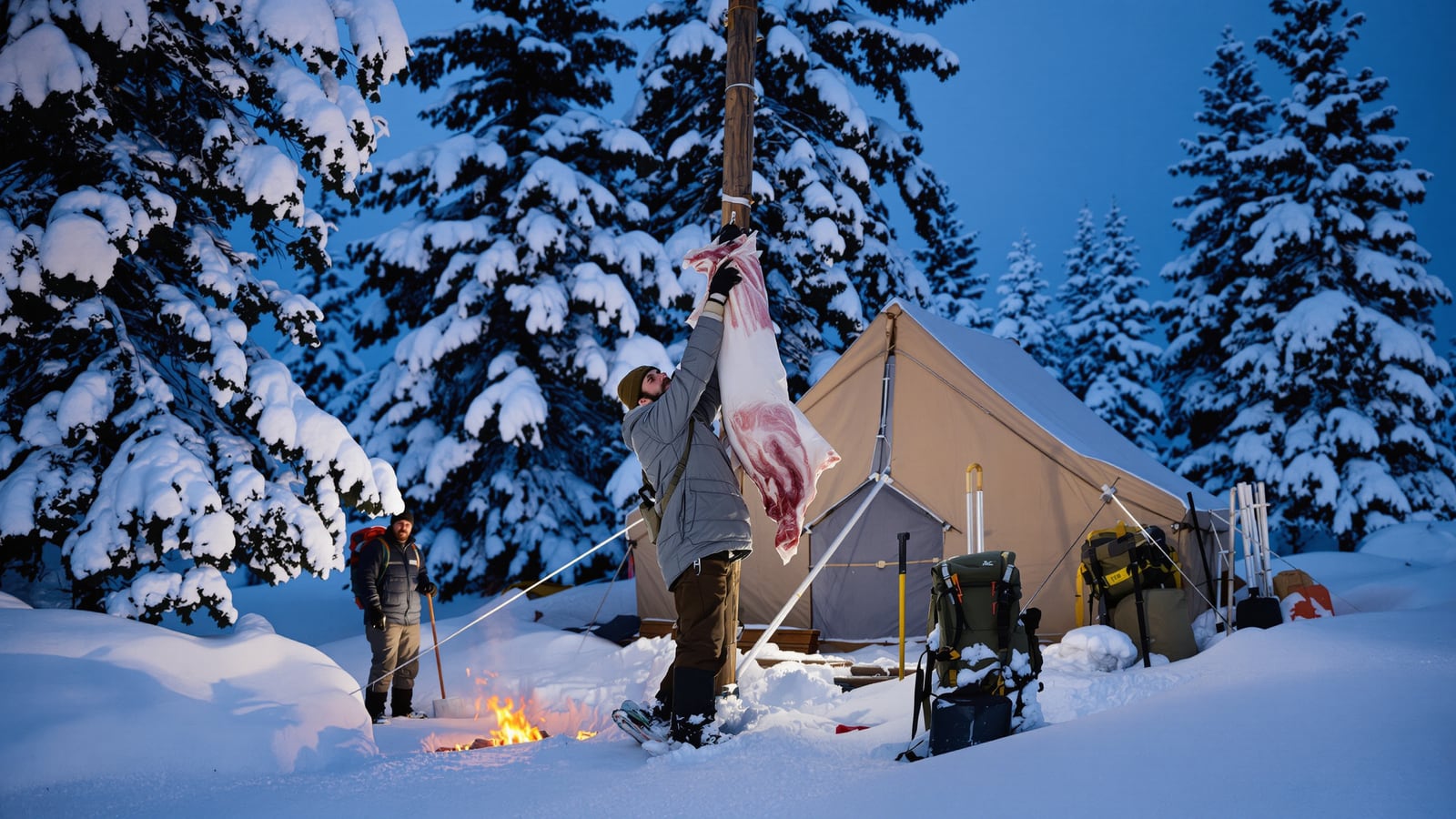
Quick answer: Get the meat out of the hide, off the ground and cooling before dark. Bone it, bag it, stage it away from the carcass, and carry it in loads you can handle on snowshoes. Check your unit's rules on evidence of sex, bone-in requirements and disease testing before you leave the truck. They vary by state, unit and sometimes by season.
The decision comes before the knife
It's 3:40 in the afternoon. The bull is down in a drainage with snow past your knees, sunset is a bit after five, and the truck is a day and a half away. Most guys start cutting right then. That's the mistake.
Stand there for five minutes first. Where does the meat go tonight? Who knows where you are? How many trips will this take, and what's the weather doing tomorrow? A two-day pack out is a logistics problem with a knife attached.
If you haven't read it yet, field dressing alone and getting the meat out covers the basic sequence. This piece is about what changes when the snow is deep and the walk is long.
Rules first, because they bite hardest out here
Wardens don't care that it was a hard pack. Before you go, find out from your state wildlife agency:
- Whether proof of sex has to stay attached to the meat, and in what form
- Whether meat can be boned out in the field or must stay on the bone
- Whether antlers and skull must be packed out with the meat, in the same trip or at all
- Whether the unit is under chronic wasting disease rules that limit moving the head and spine
- How and when your tag must be validated or notched
Waste-of-game laws are real, too. Leaving edible meat to spoil isn't just bad form. In many places it's a citation. Conservation starts with the plan to bring every pound out.
Build a work platform
Snow is the problem and the tool. Stomp out a flat area beside the animal with your snowshoes, packing it hard. Lay a tarp over it. Now you've got a clean surface that won't swallow your knife, your bags or your gloves.
Use the gutless method. Skin one side, pull the front quarter (there's no collarbone, it just lifts away), then the hindquarter, the backstrap and the tenderloin. You never open the gut cavity, which keeps the mess, the smell and the steam down. Roll the animal or work the second side as terrain allows. In deep snow you won't roll a bull alone, so skin as far over the back as you can and work from there.
Bone out every quarter right there. The bone is dead weight on a long carry, and it holds heat deep in the thickest muscle. A boned-out hindquarter cools much faster than one hanging off a femur. If your unit requires bone-in, that changes the plan, so you'd want to know that at home.
Cool it, don't cook it
Snow doesn't mean the meat's safe. A big hindquarter can sour from the inside while the outside feels like a cold beer.
Get each piece into a breathable cotton or synthetic game bag, never plastic. Lay the bagged meat on a clean, shaded patch of snow or hang it so air moves around it. Give it time to shed the animal's heat before it goes into a pack, where it can't breathe.
Don't rinse it. Wipe off hair and debris, let a dry crust form, and leave it alone. Water is how you grow bacteria.
Watch the sun. A south-facing slope on a bright afternoon can thaw a cache you thought was frozen. Shade is your friend and so is wind.
Stage it away from the carcass
Ravens find a kill within hours. Coyotes follow. In bear country, nothing on that hillside is more interesting than the gut pile, and you don't want to be sleeping or working near it.
Move the bagged meat a hundred yards or more from the carcass, upwind if you can, and hang it from a sturdy branch well off the trunk and well off the ground. If you're in grizzly country, follow the local food storage orders to the letter and carry bear spray where it's allowed and you know how to use it. That's not optional gear in that country.
Keep the firearm and the knife handy, and keep both lawful for where you are. And skip the temptation to bury the meat in a drift. Snow gets into the bags, melts against warm muscle and leaves you with soggy meat and a worse problem.
Plan the carries like a supply run
Take the best meat first. Tenderloins, backstraps and the boned hindquarters are your dinner. The neck, ribs and trim can ride the second trip. If a warm spell or a hungry bear costs you something, you want it to be the neck roast.
Pack the load so the heaviest weight sits close to your back and high on the frame. Balance matters more than raw poundage in deep snow, because a stumble with a heavy load can twist a knee a long way from help. Use trekking poles. Take breaks before you need them.
If a sled is legal and workable on your terrain, it can save your back. Many wilderness areas ban wheeled carts and sometimes other equipment, so don't assume. Look it up.
Walking out in the dark on a steep, snow-loaded slope is a decision you make carefully. If it's not safe, you stay put. That means you packed a way to stay warm overnight.
The part that actually kills hunters
It's not the elk. It's sweat and cold.
You'll work hard and sweat through a base layer. Then you'll stop to bag meat, the temperature drops, and the wet fabric against your skin starts pulling heat out of you. So strip layers before you start cutting. Add them the second you stop. Eat. Drink. Keep your hands dry, because cold hands drop knives.
Wear cut-resistant gloves or at least keep the blade sharp and your stance steady. A slip that opens a hand or a thigh is serious when you're hours from a road. Know basic first aid and pack a real kit, not a bandage and a hope.
Tell someone exactly where you're going, what unit, what trailhead and when to expect you. Give them a time to worry. And if you miss it, they know to contact local authorities and search and rescue. Check your gear list against your knife, your saw, and what else the pack has to carry, and add headlamps with spare batteries.
What goes wrong anyway
You'll underestimate the second carry. You'll find the load heavier at hour six than hour one. A storm might close in, or a branch you trusted might not hold.
That's why the shot decision matters so much before any of this starts. If you're not sure of the shot, and you're also two days from the truck, you already know the answer.
Walk out slow. The meat's cold, bagged and hung, and it'll keep. You'll get home with the whole animal, and that's the only kind of success worth bragging about.
Wes Dunbar
Country & Skills
Grew up on an acreage and never quite left. Covers trucks, trades, land, and how to do the thing yourself.

Watch
Worth an hour of your evening
More from Hunting & Shooting.
From channels we rate. Plays on YouTube.
Read next