

Train the Storm on a Sunny Day
A dog doesn't learn to handle thunder during thunder. The real work happens weeks earlier, with a speaker, a pocketful of treats and some patience.
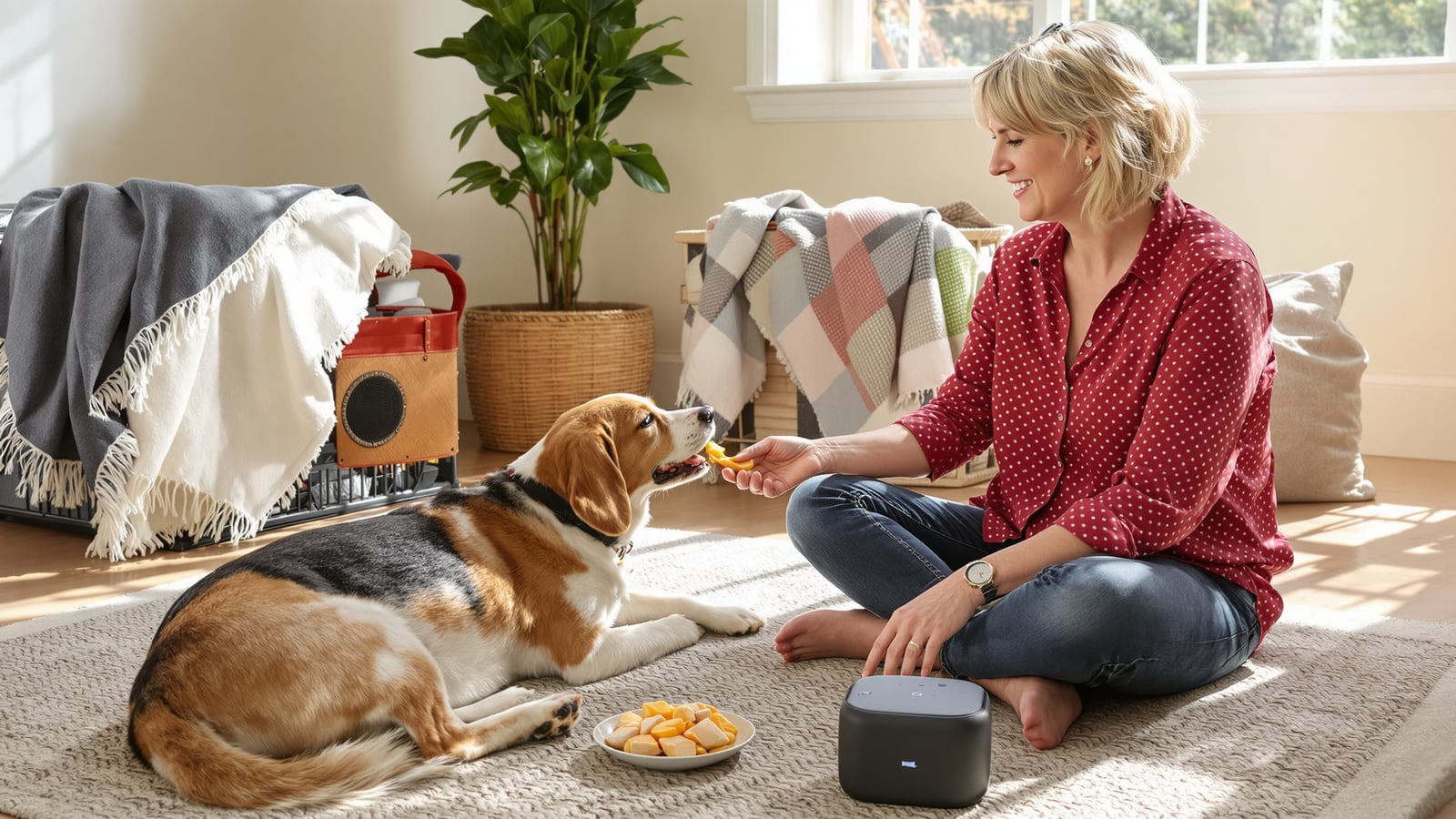
Quick answer: Start six to eight weeks before the Fourth of July or storm season. Play recorded thunder or fireworks at a volume so low your dog barely notices, and feed him something great while it plays. Raise the volume a notch at a time. Give him a quiet den of his own, and get a vet's okay first if the fear is new or severe.
The mistake almost everybody makes
The first boom goes off, the dog starts shaking, and you decide it's time to do something about it.
Too late. A dog in full panic can't learn anything. His brain is busy trying to survive a sky that's falling down. Treats get ignored, commands don't register, and you end up as a nervous person holding a nervous dog.
The fix is boring and it works on a calm Tuesday afternoon. You teach the dog, in small doses, that the sound predicts something good. Trainers call it desensitization and counterconditioning. You can call it taking the sting out of the noise before the noise shows up.
Build the sound ladder
You need three things: a recording of thunder or fireworks (free ones are all over the internet), a speaker you can control, and high-value food. Boiled chicken, string cheese or hot dog slices cut pea-sized. Not his regular kibble. This is the good stuff, and he only gets it during training.
Run it like this:
- Pick a quiet room and a time when he's relaxed. After a walk is ideal.
- Start the recording so low you can hardly hear it. If he doesn't look up, you're in the right place.
- The moment the sound starts, begin feeding him small treats, one after another, for about thirty seconds.
- Stop the sound. Stop the treats. The food only exists when the noise does.
- Keep sessions to five minutes. Do a few a week.
That's the whole mechanism. Sound on, chicken arrives. Sound off, chicken leaves. Over time the dog starts looking at the speaker the way he looks at the treat jar.
Read him, not the clock
The only rule that matters is staying below the level where he gets worried. Watch for the early signs:
- Ears pinned back or eyes going wide
- Lip licking or repeated yawning when he isn't tired
- Panting in a cool room
- Pacing, or turning down the chicken
Turning down the chicken is the big one. A dog who won't eat is over his limit. Turn it down two notches, end the session on something easy, and try the next one quieter than where you stopped.
Move up in tiny steps, and only after he's relaxed at the current level for a couple of sessions in a row. Expect this to take weeks. Anyone promising a fix in a weekend is selling you something.
I'll concede the annoying part. Speakers don't shake the floor, and a recording doesn't change air pressure or flash light through the windows. Real storms have more going on than a file can fake. The training still carries over for a lot of dogs, but not all of them, and not perfectly. Treat it as a big head start, not a guarantee.
Give him a den
While you're building the ladder, set up the place he'll go when the real thing hits. Dogs under stress often want something small, dark and enclosed.
- If he's crate-trained and likes it, throw a blanket over three sides and put it in the quietest room in the house.
- If he isn't, don't start forcing the crate now. Use an interior room, a bathroom or a basement corner with a bed he already knows.
- Add a fan or white noise machine, and keep the TV or radio going at a normal volume.
- Teach a "go to your spot" cue on a mat on a normal evening, with treats. The sit, stay and come routine is a good base for it, because settling on a mat is the same skill with a longer fuse.
Let him pick. If he'd rather wedge himself behind the couch or in the shower, that's his den. Don't drag him out of it to prove a point.
The night itself
Fireworks night is a test, and you can stack the odds before the first one goes off.
Wear him out early. A long walk or a hard game of fetch in the afternoon, finished before dusk. A tired dog has less fuel for panic.
Feed him something that takes work. A stuffed frozen Kong or a lick mat. Chewing and licking are calming for a lot of dogs.
Shut it all out. Windows closed, curtains drawn, lights on, noise machine running.
Stay with him and stay boring. You can sit beside him and pet him. You won't make a fear worse by being kind to a scared animal. What you can do is act scared yourself. Keep your voice flat, move normally and carry on like it's a regular night. Dogs read the room, and you're the room.
If he's still taking treats, keep feeding them. That's the training paying off in real time.
The part people skip: the escape plan
Frightened dogs bolt. Every year, more dogs go missing around the Fourth than any other time, and it's usually the dog that's never run off before.
- Check that his collar fits and his ID tag has a current number on it.
- Make sure his microchip is registered and the contact information is up to date. A chip with your old phone number does nothing.
- Never leave him tied or fenced outside during fireworks, and don't take him to a show.
- Walk him on a leash near the house, even in the yard, that evening.
Being a good neighbor helps too. If someone down the street is planning a backyard show, a heads-up costs you thirty seconds and gives you time to prepare.
Where the vet comes in
Call your veterinarian first if the fear is new, if it's getting worse, or if your dog has started acting jumpy about everyday sounds. Pain and other health problems can make a dog more reactive, and an older dog who suddenly hates storms is worth a checkup. The old dog piece covers what else changes with age.
Some dogs panic hard enough to hurt themselves, chewing through a door, tearing at a crate or not eating for a day. That's beyond a training problem. Your vet can look at the whole picture, rule out medical causes, and refer you to a certified behaviorist if it's warranted. Needing that help isn't failure. It's the right call for a dog who's suffering.
Gear like pressure wraps and calming diffusers is cheap and some owners like it. Add it to the plan if you want, but don't lean on it as the plan.
Starting with a puppy gives you a head start, since quiet, positive exposure to everyday noise belongs in those first seven days at home and the weeks after.
The storm is coming either way. The only question is whether your dog hears it for the first time that night, or the fortieth.
Wes Dunbar
Country & Skills
Grew up on an acreage and never quite left. Covers trucks, trades, land, and how to do the thing yourself.

Watch
Worth an hour of your evening
More from Dogs & Pets.
From channels we rate. Plays on YouTube.
Read next