

Fix a door that sticks, drifts or slams with a screwdriver
Most bad doors come down to one loose hinge and a few thousandths of an inch. Diagnose first, then fix it in order, using tools you already own.
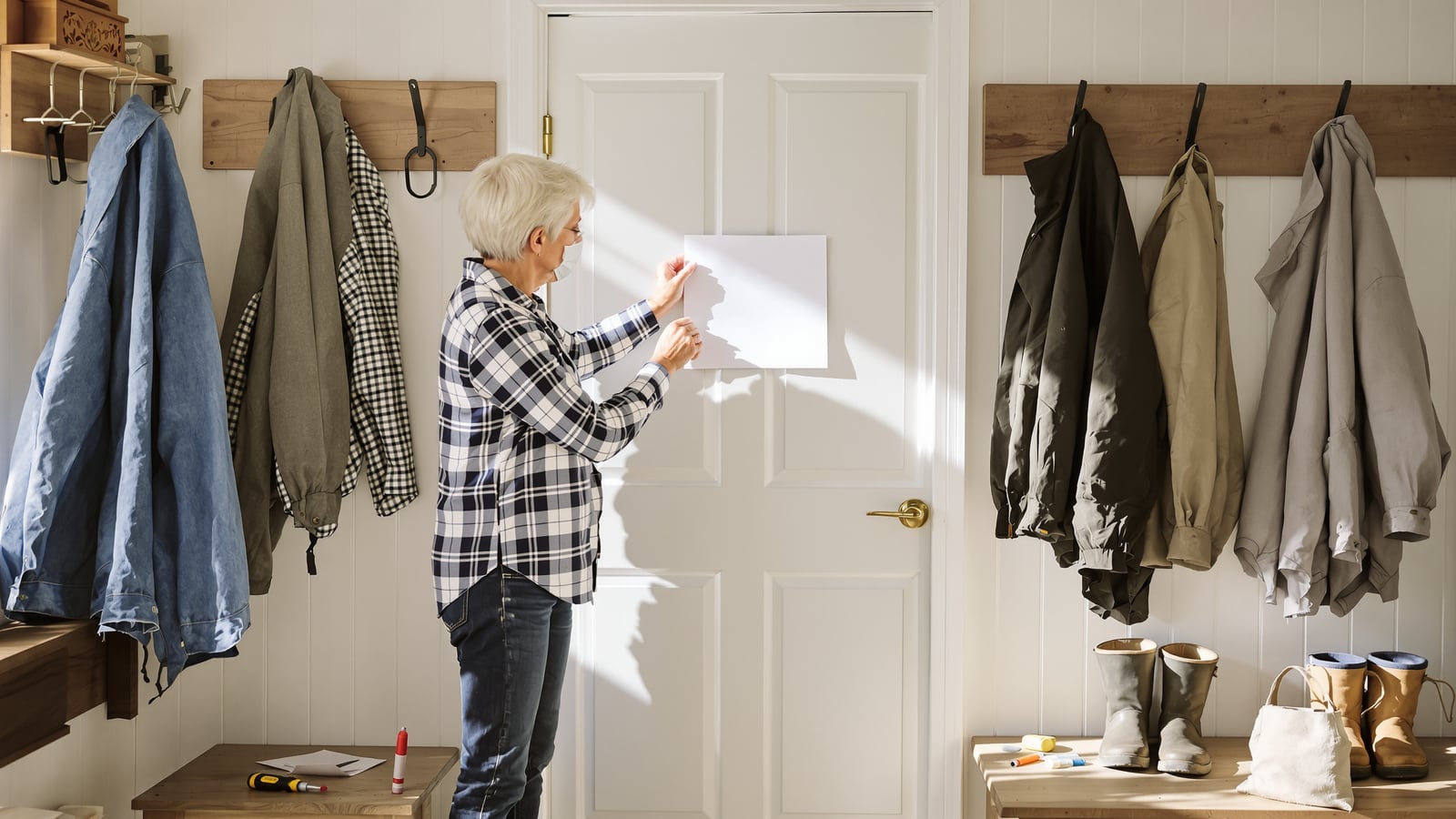
Quick answer: Tighten every hinge screw first, and swap one screw in the top hinge for a 3-inch screw that bites the wall stud. If the door still rubs, slip a cardboard shim behind a hinge. A shim at one hinge closes the gap nearby and opens it at the far end.
That fixes most doors in under an hour. Skip the plane and the chisel until you've done those two things.
Read the door before you touch it
Close the door and look at the gap around it. It should run about an eighth of an inch on the top and latch side, roughly two stacked quarters. Now work out which problem you have.
- Rubs at the top corner of the latch side: The top hinge has pulled loose and the door is sagging. This is the most common one by far.
- Gap at the top of the latch side, tight at the bottom: The door is leaning the other way. It's usually the bottom hinge or the frame.
- Swings open or shut by itself: The hinges aren't plumb. The frame has settled out of true over the years.
- Slams: Usually nothing is wrong with the hinges. Wind, a tight house or a weak latch is doing it. We'll deal with it at the end.
To find a rub point, slide a sheet of paper into the gap and pull it along. Where it grips, the door is tight. Or rub a crayon along the jamb edge, close the door and open it again. The wax transfers to the door where it touches.
Gather the tools and set up safely
You need a screwdriver (a hand driver beats a drill here, because a drill strips soft wood in a second), a few 3-inch #9 wood screws, a cereal box and scissors, a hammer and a nail, a pencil, and a 2-foot level if the door drifts.
Wear safety glasses when you tap on pins or drive long screws. Old paint chips and rusty pins fly.
Keep one hand off the edge of the door while it's swinging. Hinge sides pinch fingers, and a kid's hand is the usual victim. If the door is a solid one, get a second person for any step where you lift it. Solid-core doors are heavy enough to hurt your back and take the trim with them.
Never take out more than one hinge screw at a time while the door is hanging. A door that drops is the worst way to find out which screw was holding it.
Step 1: Tighten what's there
Open the door and check every screw in all three hinges, both the door side and the jamb side. A loose one will turn easily. Snug them down firmly, but don't crank. You can still strip a hole at the last quarter turn.
If a screw spins without gripping, the hole is stripped. Pull the screw, dip two or three toothpicks in wood glue, and tap them into the hole. Snap them flush, then drive the screw back in. The wood fills the void and the screw bites again.
Close the door. Half the time, that's the whole job.
Step 2: Anchor the top hinge to the framing
The screws that come with a hinge are short, usually three-quarters of an inch. They only grab the thin door jamb, and the jamb can flex. A door swings on that jamb about twenty times a day, so the screws wear their way loose.
Take out the middle screw on the jamb leaf of the top hinge. Drive a 3-inch screw in its place. It passes through the jamb and shim space and into the stud behind it. As it tightens, it pulls the jamb toward the stud and lifts the latch side of the door.
Check the gap as you go. Stop when it looks even. If the screw spins without biting, the hole may sit between studs. Use the other jamb-side hole.
Do the same on the bottom hinge if the door still leans.
Step 3: Shim a hinge if it's still off
If the door still rubs or the gap is uneven, the fix is a shim.
Cut a strip of cardboard the size of the hinge leaf, with notches cut around each screw so it sits flat. A cereal box is about 1/32 inch thick, which is plenty. Business cards run thicker. Use one layer first.
Remove the hinge's jamb-side screws, one at a time, and slip the cardboard behind the leaf. Put the screws back in.
The rule is simple. A shim pushes the door toward the latch at that hinge. So:
- Door rubs at the top latch corner: Shim the bottom hinge. It tilts the top away from the jamb.
- Gap too wide at the top, tight at the bottom: Shim the top hinge.
Add one layer at a time. Two layers of cardboard is the most I'd ever use. If you need more, the problem is the frame, and you're better off planing the door.
Step 4: Check for drift
A door that swings open or shuts by itself is hanging on hinges that lean. Set the level against the hinge barrels, the part with the pin, and watch the bubble. Do it on both the top and bottom hinge. If the bubble tilts, the hinges are off plumb.
You don't need to re-hang the frame. Adjust with a shim at the appropriate hinge, or tighten the one that's pulling. Move one hinge at a time and check the level after each. The door should stay put at any angle you leave it. A little drift is normal in an old house. A door that races shut is a problem.
If your door is out of whack on the hinge side and the screws are all tight, check for paint buildup. Paint on the hinge knuckles and mortises can bind a door by itself. Scrape it with a utility knife, and that alone has fixed doors I'd given up on.
Step 5: Quiet the slam
If the door closes fine but bangs, don't blame the hinges. Fix the slam directly.
Stick felt or silicone bumpers on the door stop, two or three along the strike side. They run a couple of dollars at any hardware store. If the latch doesn't catch smoothly, the strike plate is probably off by a hair. Close the door slowly. If the latch hits the plate edge, file the opening on the strike plate a little wider, or move the plate.
For a door that's slammed shut by wind or air pressure, a small hydraulic closer will slow it down. It's an easy install, though it takes patience.
If a hinge squeaks, pull the pin by tapping a nail up from the bottom. Wipe it clean, put a thin coat of white lithium grease on the pin, and tap it back in. Spray lubricant runs down the door and stains the paint.
Leave it better than you found it
Sweep up the toothpick bits and the paint flakes before you put the tools away. Wipe the hinge leaves. If the door was dented or scuffed, touch it up. Do this and nobody even knows you were there, which is how a job like this ought to go.
If your repair involves a loose door in a house where the wiring is questionable, don't poke around the wall. Some jobs are worth doing yourself and some aren't. A hinge is on the first list.
A well-hung door doesn't ask for attention. It opens, it closes, and it holds its place. Your wife won't thank you for it, but she'll stop asking about it, which is better.
Wes Dunbar
Country & Skills
Grew up on an acreage and never quite left. Covers trucks, trades, land, and how to do the thing yourself.

Watch
Worth an hour of your evening
More from Skills.
From channels we rate. Plays on YouTube.
Read next