

The seam that quits first on work pants
Work pants don't wear out at the knees. They split where the legs meet, and the fix is in the stitching and the length.
Quick answer: Buy pants with a gusset where the legs meet and a felled or double-stitched inseam. Size the length so the hem sits at the top of your boot heel with a slight break, and size up in the seat before you size up anywhere else.
Work pants rarely die at the knees. Patches, pads and thick canvas deal with the knees. The pants quit on the inside of the thigh, on a ladder, usually with somebody watching.
The word "inseam" also pulls double duty. It's the length of the leg, and it's the seam running down it. Both decide whether a pair lasts four years or four months.
Why that seam goes first
Four seams meet at the fork of a pair of pants. Every squat, kneel and ladder rung pulls them in opposite directions. A cheap pair has one row of thin thread holding all that tension, and the thread loses.
Look for three things.
A gusset. That's a diamond or triangle of fabric sewn in where the legs meet. It spreads the stress across more cloth. A pair without one will tell you so the first time you step up to a rung that's a foot higher than you planned.
A felled seam. The fabric is folded over itself and stitched through, so you see two parallel rows on the outside. It's the same idea as a good jeans seam. A plain seam with the edges overlocked on the inside is fine for office slacks and wrong for this job.
Tight stitching. Count the stitches in an inch. Eight to ten is a decent target. If you can see daylight between them, put the pants back.
The test you can do in the aisle
Don't just hold the pants up and nod. Put them on over what you'd wear to work and do the job in front of the mirror.
- Drop into a full squat and stay there for five seconds. Nothing should bind or pull at the waist.
- Raise one knee as high as a ladder rung. Rungs are typically a foot apart, so that's the height you're copying.
- Kneel on one knee and note where the hem goes.
- Grab the inseam in both hands and give it a firm pull. Watch for stitches that open up.
- Sit. The back of the waistband shouldn't gap and the seat shouldn't feel like it's fighting you.
The salesman may stare. Let him. It's cheaper than finding out on a roof.
Getting the length right
Length is where most guys guess wrong, and they guess in both directions.
Too short, and the hem rides halfway up your shin the moment you kneel. Debris goes straight into your boots. Too long, and the hem stacks on the boot, picks up mud, and then you step on the back of it. That's how the hem frays through, and a pair with a gnawed hem looks worn out long before the fabric is.
The rule that works: with your work boots on, the front hem should graze the top of the laces and the back should reach the top of the heel. A slight break is right. A pile is not.
If the pants come unhemmed, buy long and hem them yourself or have a tailor do it. Wash and dry them first. Heavy cotton duck often loses a half inch or more on the first trip through the dryer, and you want to cut to the final size, not the label's.
Pants sold in sizes like 32x32 are a compromise. If you're between lengths, take the longer one and shorten it. You can't add cloth back.
Buy the seat first
This one runs against instinct. Most guys pick their pants by the waist number and hope the rest follows. But a seat that's snug is the main thing pulling on that inseam. Every ladder rung puts the load right there.
Buy for the biggest part of you, which is usually the thigh or seat, and let a belt handle the waist. A good strap does that job well, and buying the strap right is worth its own ten minutes.
Look for a relaxed or "carpenter" cut with room in the thigh. A little extra cloth won't hurt you. A seam under constant strain will.
If you like denim, the same logic applies and buying jeans you can actually work in covers the cuts and weights.
Catch it when it's still a stitch
Pants don't blow out all at once. Look inside the legs every few weeks. You're hunting for a short run of broken stitches, a seam that's turned fuzzy, or fabric that's gone thin and shiny right at the fork.
At that stage it's a ten-minute fix, not a funeral.
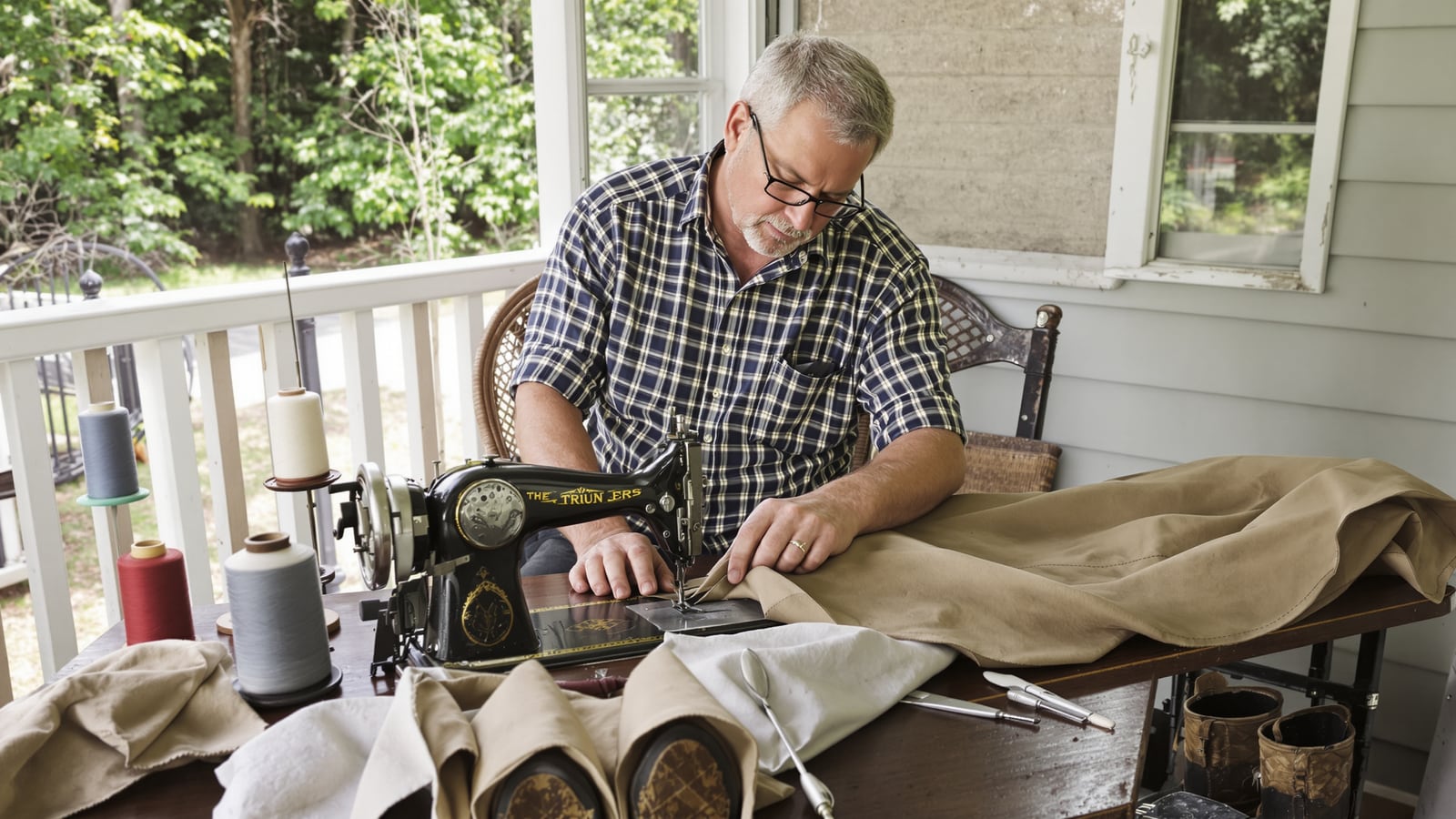
If you have a sewing machine, or a neighbor or wife who does, the fix is simple:
- Turn the pants inside out and sew a second line of stitching an eighth inch from the old one, starting a couple of inches past each end of the weak spot.
- Use heavy bonded polyester or nylon thread and a denim needle. Ordinary cotton thread is what you're replacing in the first place.
- If the fabric itself has thinned, sew a patch of scrap canvas or denim over it on the inside before the stitching.
A repair like that often outlasts the original seam. It's also cheaper than a new pair, and you've done what a sensible man does with gear. You've kept it going.
A patched pair makes a decent hand-me-down, too. A nephew starting his first job on a crew doesn't care about a clean-looking inseam. He cares that they hold.
Treat them like they cost money
Heat is the enemy of thread and cloth. Wash work pants in warm or cool water, not hot, and hang them or tumble on low. Hot dryers shrink the fabric faster than the thread, and that mismatch puts stress right on the seams.
Empty the pockets before you wash. A utility knife left in the back pocket does nothing for the stitching around it.
And keep your work pants for work. Once they've gone soft and faded and you want something for after hours, dress for the part after you clock off with a separate pair so the good ones aren't earning double duty.
The only pair worth buying
Ignore the logo on the patch. A pair with a gusset, a double-stitched inseam, room in the seat and a hem you've cut to your own boots will go years. A pair without those will go in a season, no matter what the tag cost.
The ladder doesn't read labels.
Tobias Reed
Style & Grooming
Spent a decade in menswear retail watching men buy the wrong size. Believes fit is ninety per cent of it and says so weekly.

Watch
Worth an hour of your evening
More from Country Style.
From channels we rate. Plays on YouTube.
Read next