

Fish the Ugly Water Other Bass Anglers Drive Past
The best bass spot on the map is often a muddy slough nobody wants to walk to. Here's how to find it, get in quietly and fish it right.
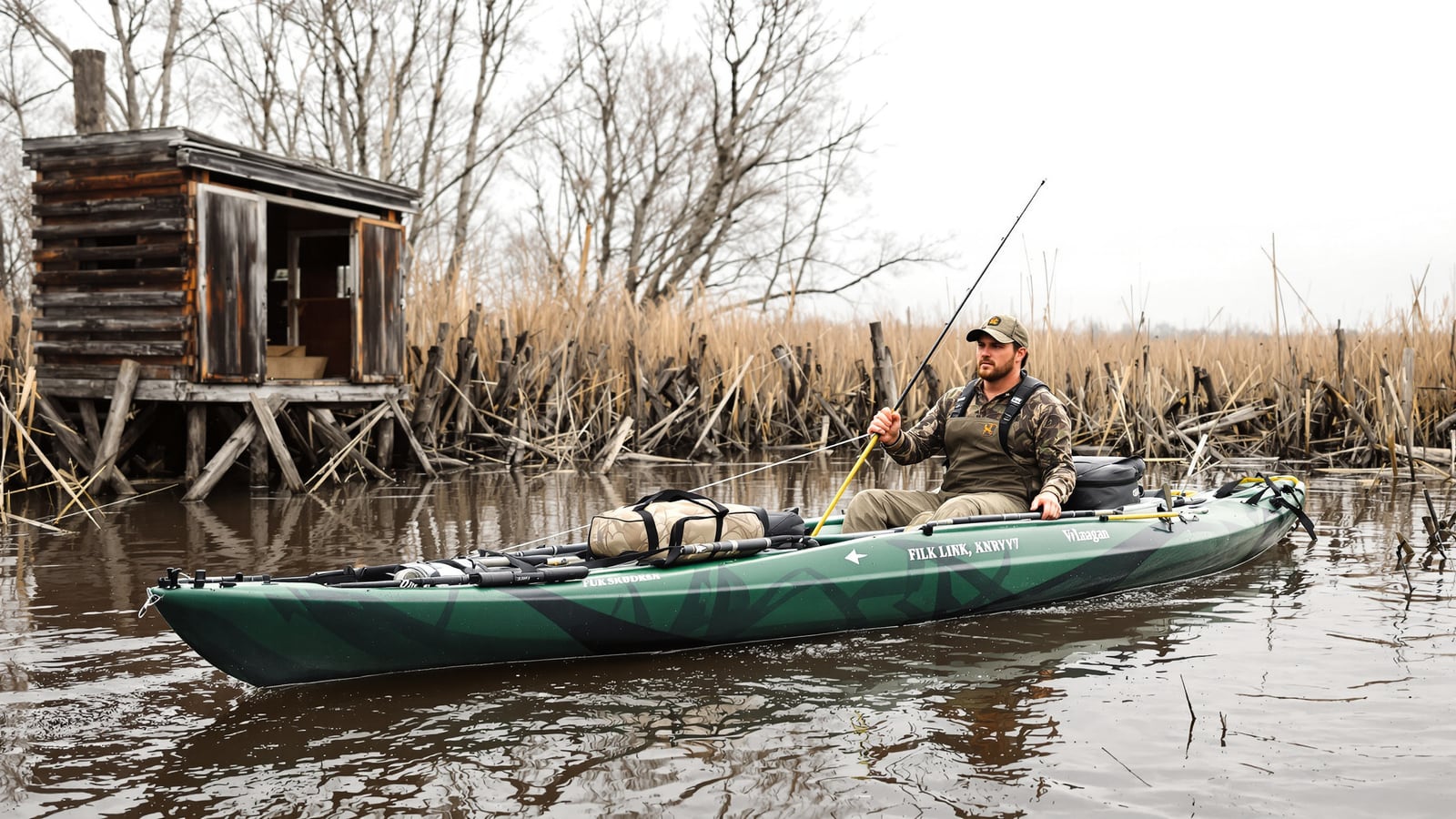
Quick answer: Pull up aerial imagery and look for the water that's hardest to reach: dead-end sloughs, oxbows, creek pockets, canal laterals, drainage ditches. Walk or paddle in light, throw weedless baits into the cover, and make your first cast count.
The boat ramp lot is full by 6 a.m. Eleven trucks, eleven trailers, and every one of those guys is going to fish the same rock pile off the same point. Meanwhile a quarter mile up the road, behind a gate and a line of cattails, sits a slough with a duck blind and a rotting stump field. Nobody's fished it since last fall.
Go there.
Why the ugly water holds fish
Bass don't care what looks pretty to you. They care about three things: cover, food and a place to hide from pressure. A backwater has all three packed into a small space.
Shallow, dark-bottomed water warms faster than the main lake or river in spring, so baitfish and bass move in early. After a river rises, bass push into flooded backwater to feed and stay there until the water drops. In summer, shade and thick vegetation give them a place to ambush. A bass in a slough that sees one lure a week is a very different animal from one on a famous lake that sees fifty.
The annoying part is that the same things that keep the pressure off also make the water hard to fish. Mud. Brush. Mosquitoes. Snags that eat tackle. That's the price of admission, and it's why the fish are still there.
Find it before you drive
Spend twenty minutes at the kitchen table with aerial imagery on your phone or laptop. You're looking for:
- Oxbows and old river channels cut off from the main flow. Look for curved water that doesn't connect cleanly at both ends.
- Creek mouths and pockets off a reservoir, especially the ones behind a road fill or culvert.
- Drainage ditches and canal laterals with a dark green edge, which usually means vegetation and depth change.
- Borrow pits and old gravel ponds near highways and railroad beds.
- Back ends of coves where the shoreline turns brushy and no boat has an easy line in.
Then check your state or provincial wildlife agency's website. Many publish public access maps, wildlife management areas and walk-in access points. Licenses, access rules and season dates vary by state and province, so look up yours before you go. Some backwaters sit inside refuges or management areas with their own rules on gear, boats or hours.
Get permission, and get in quietly
If the water's on private land, find the owner and ask. Knock on the door. Take your hat off. Say who you are, what you want and when you'll be there. Offer to share a few fish or to pick up trash on the way out. A lot of farmers and landowners will say yes to the polite guy who asked and no to the stranger who just showed up. Respect the no.
On public ground, access is the filter. Walking in with a short rod and a small bag beats dragging a boat over a mud flat. A kayak or small jon boat works where the bank's too brushy to walk, and our guide to kayak fishing without going swimming covers the basics. Chest waders help, but stay out of soft mud you can't see the bottom of. Tell somebody where you're going and when you'll be back. In warm climates watch for snakes in the brush and alligators in southern water, and keep your distance from both.
Move slow. Shallow water carries every footstep and every thump of a paddle. Stop thirty feet short of your first target and let the water settle.
What to throw
Backwater means cover, and cover means weedless. Keep the box short:
- A hollow-body frog over mats, lily pads and duckweed. Braid in the 50-pound range gives you the grunt to rip a fish out of the green.
- A Texas-rigged soft plastic, a creature bait or a worm on a 3/0 extra-wide-gap hook with a bullet weight pegged tight. It slides through brush and drops into holes.
- A weedless spinnerbait or a swim jig for stumps, laydowns and open pockets between cover.
- A wacky-rigged stick worm for a slow fall along a bank that looks too clean to hold fish but does.
You'll lose some gear. A 7-foot medium-heavy rod with a fast tip handles most of it, and you can fish the whole day with four lures in one small bag.
Work it like it's a puzzle
Every piece of cover is a question. Is there a fish under it? Cast past it, bring the bait across, and let it hit the edge. The first cast to a spot is your best one, because that's before the fish knows anything is wrong. Make it quiet, accurate and a little tight to cover.
With a frog, give it a pause when it crosses an opening. Most strikes come in the stop. When a bass blows up on it, wait a beat until you feel the weight, then set hard. Hard hooksets feel wrong to a guy who learned on finesse lures. In thick cover they're the only thing that works.
Fish the shaded side of the slough in summer. Fish the sun-warmed side on a cold morning. If you get two or three bites from a stretch and then nothing, move. Don't beat a spot to death. Small water doesn't forgive that.
Landing a fish is its own fight. Keep the rod tip up and steer the bass away from the bush it wants to wrap you in. If you can, reach down and grab it by the lip rather than lifting it through branches.
Keep it, or let it go
Both choices are honorable. Plenty of anglers keep a few bass for the table, and that's legal and traditional where the rules allow it. Plenty prefer to release everything. Either way, remember that small water holds a limited number of fish. A pond or slough can't take the same harvest as a big reservoir. If you keep fish, keep what you'll actually eat, and know your state's size and creel rules. Our piece on size limits, slot limits and the rules that keep fish coming explains why they're written the way they are.
If you release, do it right. Wet your hands, support the fish, and don't drag it up a muddy bank. How to release a fish so it actually lives walks you through it.
Leave it better
The old rule holds on the water as much as anywhere else. Pack out what you bring in, and take a little more than that. A bag of cans and fishing line tangles pulled from the bank is a fair rent for a spot nobody else has found. Close the gate behind you. Don't post the GPS pin on social media.
The spot stays good only if nobody's told fifty guys about it. Keep it quiet, keep it clean, and next spring you'll have somewhere to go.
Wes Dunbar
Country & Skills
Grew up on an acreage and never quite left. Covers trucks, trades, land, and how to do the thing yourself.

Watch
Worth an hour of your evening
More from Fishing.
From channels we rate. Plays on YouTube.
Read next