

Bit Set or Handle Set? You Need Both, Bought Differently
A drill and a bit set beat a handle on speed. A handle beats them on feel. Here's where each wins, what to spend, and what to skip.
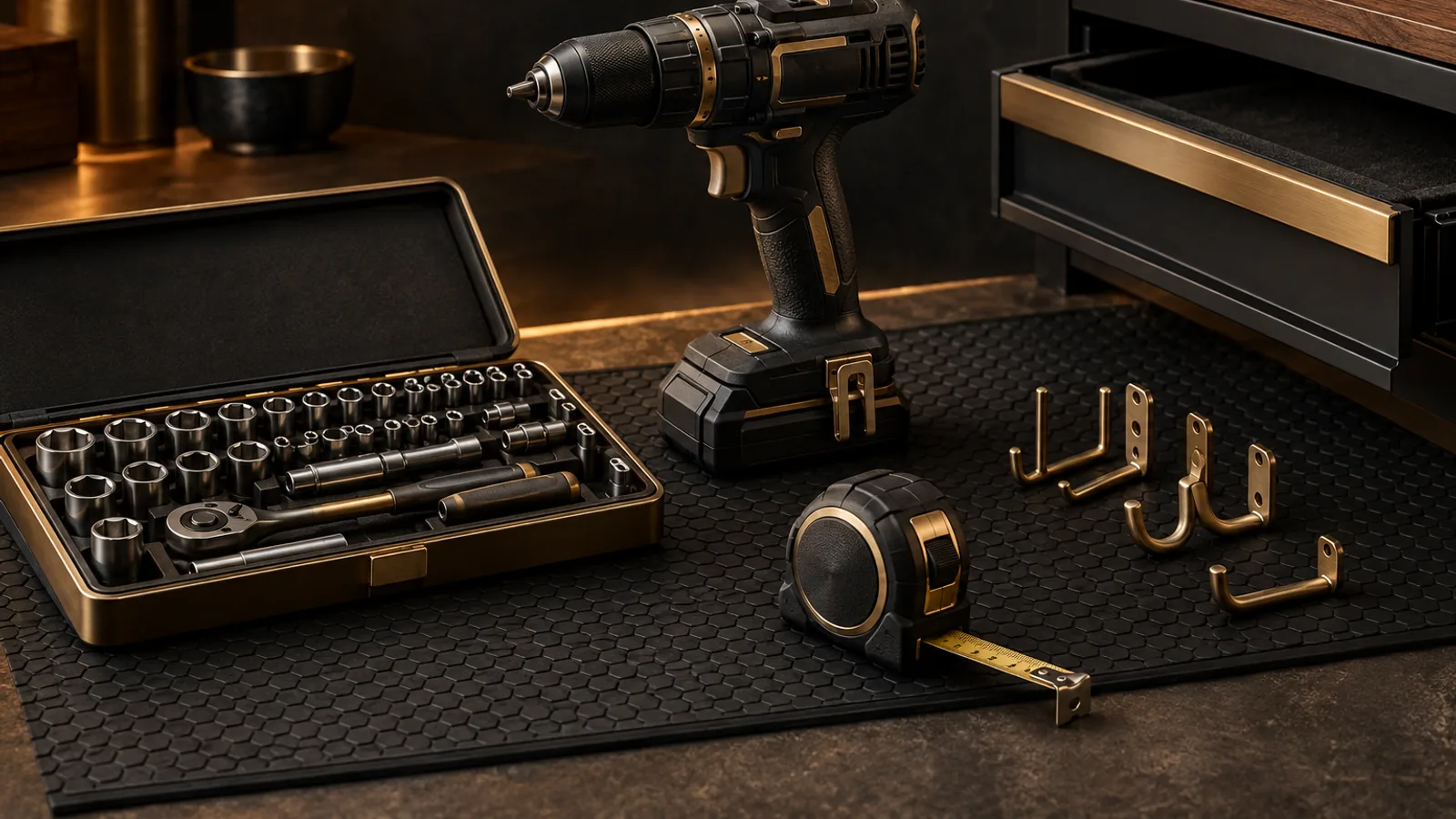
Quick answer: Use a bit set in a drill or impact driver for anything with more than a dozen screws. Use a handle for small, stuck, delicate or electrical work. Put your money into the tips, not the number of pieces in the case.
The fifty-screw test
Mount a TV bracket, build a set of garage shelves, hang a door. Somewhere around screw number fifteen with a handle, your wrist files a complaint.
That's the whole case for bits. A drill spins a screw home in a second or two. Your hand takes ten. Over a deck, a subfloor or a shed, the difference is an afternoon.
A bit set also costs less per tip and takes up less room. A good 30 to 50 piece set runs roughly $15 to $40 and fits in your palm. A handle for every size and type would fill a drawer.
If you don't own a drill yet, start with this guide on what to spend on a drill and impact driver. Buy that first and the bit set follows.
Where the handle wins
A drill is a blunt instrument. It's the wrong tool in a handful of places, and that's where a handle earns its drawer space.
- Small screws in soft material. Cabinet hinges, outlet covers, drawer slides, anything threaded into particleboard. A drill strips that hole before you've felt it start. Even with the clutch set low, a hand tells you the instant a screw bottoms out.
- Stuck or rusted screws. A handle lets you lean your weight into the head while you turn. A drill spins the bit up and out, and you've chewed the head before you've loosened it.
- Electrical work. Insulated screwdrivers rated to 1,000 volts are handles only. Wiha and Klein both make them, and a small set runs roughly $30 to $60. If you work in a panel or on a switch, buy these and don't improvise.
- Tight spots with no room for a drill body. Behind a toilet tank, inside a cabinet, under a dashboard.
- Eyeglasses, remotes and small electronics. That's a precision set, a different animal. A decent one runs about $10 to $30 and lives in a kitchen drawer.
What the cheap handle set gets right and wrong
The $10 to $20 multi-bit handles, the ones with six tips stored in the shaft, aren't junk. They're handy to throw in a glovebox. The Klein 11-in-1 is the standard of the type, roughly $15 to $25, and it's built better than its price suggests.
What they get wrong is the metal. Cheap tips are soft. They round off, and a rounded tip is how a screw head gets ruined. The handle also tends to be thin, so you get blisters before you get torque.
What they get right is the one-size-fits-most flexibility. For a toolbox in a truck or a spare in the junk drawer, that's enough.
For your main handles, spend real money on two or three: a #2 Phillips, a 1/4-inch slotted and a #1 Phillips. A single good handle in the $10 to $25 range from Klein, Wiha or Wera will outlast a whole bargain set. Wera's Kraftform line has a reputation for tips that bite and hold. The set of ten or so runs roughly $50 to $100, and that's the high end of what a home shop needs.
Where the cheap bit set bites you
Bit sets have the opposite problem. The bargain case of 100 pieces has maybe six bits you'll use and ninety-four you won't. And the six that matter are made from the same soft steel.
Three things to look for:
- Impact-rated. If you use an impact driver, and most people do now, buy bits marked for impact. Regular bits can shatter under the hammering. Milwaukee Shockwave and DeWalt FlexTorq sets are common examples, roughly $20 to $40 for a good one.
- A proper fit. Most trouble is the wrong bit in the right screw. A Phillips #2 and a Pozidriv #2 look nearly the same and aren't. Pozidriv screws have tiny tick marks around the cross. Put a Phillips bit in one and you'll feel it wobble, and you'll strip it. Match the bit to the screw, and when in doubt, test-fit the tip before you drive.
- Length. One-inch bits are for most work. Two- and three-inch power bits reach into recesses, and a magnetic holder, roughly $8 to $15, fixes the dropped-screw problem on ladders.
Stock a few extras of the sizes you use the most. A #2 Phillips and a #2 square (Robertson) bit go dull faster than anything else in your kit, and a dull bit is the first step toward a stripped screw. Spare ones are about a dollar apiece.
When to rent, and when not to
You don't rent a screwdriver. If the job is big enough to make you wonder, the answer is rarely a different driver. It's a different tool, such as a collated screw gun for a whole room of drywall or a deck. The rent-or-buy breakdown covers that line.
Borrowing is different. If a neighbor lends you a screwdriver, wipe it down and hand it back cleaner than it came. If he lends you a bit set, check the case before you return it and replace any bit you wore out. That's how you get invited to borrow again.
The shopping list
This is the system. It covers nearly everything a house throws at you, for under $150 if you buy the middle option each time.
- Impact-rated bit set, 30 to 50 pieces, with a magnetic holder: $25 to $50
- Two or three good handles (#1 and #2 Phillips, a 1/4-inch slotted): $25 to $60
- A precision set for glasses and electronics: $10 to $30
- A 1,000-volt insulated pair, only if you work on electrical: $30 to $60
- A ratcheting or compact multi-bit for the truck or glovebox: $15 to $25
Skip the 200-piece "mechanic's" screwdriver kits, anything with a flashlight built into the handle, and the six-handle set that costs less than lunch. They look like value, and you'll replace them.
A weekend plan
Saturday morning: Empty the junk drawer and the toolbox. Pull every screwdriver and bit. Throw out anything with a rounded tip or a cracked handle.
Saturday afternoon: Buy what's on the list above that you're missing. Don't buy anything else.
Sunday: Set up a home for them. Handles go in a tray or a roll, sorted by type. Bits go in one case, with the bits you use most up front. This piece on where every tool goes explains how to set it up so it stays that way. If you're still deciding on a cordless platform for that drill, read this first.
Then do one small job. Tighten every loose hinge and cover plate in the house, by hand. You'll feel the difference between a tip that grabs and one that slips, and you'll never forget it.
Dean Shaw
Gear & Garage
Reads the warranty, the parts list and the long-term owner reviews before anything else. Trucks, tools, watches, and the cheap version that costs more.

Watch
Worth an hour of your evening
More from Tools & Organizing.
From channels we rate. Plays on YouTube.
Read next